News:
Spotlight Content
Posted: October 20, 2009
The professional appraiser will survive this RE market
Many people involved in the real estate professions are having difficulty these days. We're spending lots of time trying to promote ourselves and find work. When we find work, most of us are trying our very best to provide a level of service sufficient to encourage future assignments. Luckily, my business has been relatively steady, but much of the appraisal profession has found the workload to be feast or famine.
Lately, I've taken a little bit of my spare time to play golf. I'm not particularly good, but I haven't had difficulty finding someone to play with. Like real estate, it's a very tough game. The littlest things can trip you up. You can play very well and get some bad breaks, and you can play just OK and get some lucky breaks. Like the real estate profession, progress happens, but it is usually glacial. If you're working at it, you're always moving forward, but the real progress is so slow that its hard for you or anyone else to notice. Unlike real estate, in golf you'll never see everyone getting great scores without even trying. And, you'll almost never see almost everyone's scores get worse all of a sudden.
All of us have to admit that the real estate game was too good for too long. Many folks were getting great scores despite their level of skill. Buyers, sellers, brokers, lenders and appraisers were all scoring like Tiger Woods in the period from about 2002 through 2007. And we should have known that it couldn't last for ever. We were all getting too many "gimme" putts from our partners and our competitors. Now that there's less money available, no one can afford to ignore their own performance and no one can fail to gauge the status of their competition.
I'm still getting a reasonable share of the available appraisal work, and I'm still finding people who want to play golf with me. As I said, my skill level in golf is not great, but I work on improving it every chance I get. I play with people who are doing the same. I'm a better golfer than some, and a worse golfer than many ... but I can play with them all because they know I'm honestly trying to get it right. It's the same with real estate. We have our good days and our bad days, but we're always trying to find the secret to the perfect game (by the way, it doesn't exist - in real estate or in golf).
There are a few people I know that no one wants to play with. They've been caught cheating. Maybe it was only a little indiscretion, and maybe it was only to win a $1 bet, but it was noticed. The game of golf has a handicapping system that assures that everyone can compete against everyone else. The handicap lets less skilled golfers play with, and learn from, people who are better than them. It also assures better golfers that they can always find a competitive match. Good golfers play against the course and against themselves. Good real estate professionals do the same. Everyone is a competitor and everyone is a partner in the game of real estate. We're all playing against the course. We all realize that our competitor is struggling just as much as we are. We all realize that we have to be at our very best to win, and no one wins if we try to beat the other guy down.
This is a real estate market when the professionals are surviving. If we perceive brokerage or appraising or lending or operating in the real estate market as a job, we are doomed to fail. If we look at it as a profession, we will succeed. The professional constantly improves his or her skills; they do it though formal education, informal learning, constantly surrounding themselves with people who want to be professional, and who work smart every day. They take what they've learned and try to apply it every day.
The professional will survive this real estate market. If they love their profession, they'll always have a job. Better yet, their job will never feel like work. It will be just one more day of practice in preparation for the big game.
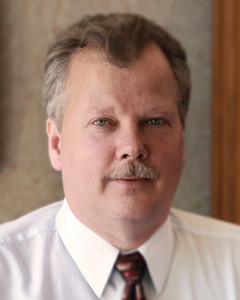
Shaun Fitzgerald is president of Fitzgerald Appraisals, Easton, Mass.
Tags:
Spotlight Content
MORE FROM Spotlight Content

A couple of things at the end of the summer - by William Pastuszek, Jr.
Generalizations about Real Estate Markets. Always dangerous. All real estate is local, except when it isn’t, right? Often, we get so mesmerized by the sheer volume of data out there that we forget the best data is right in front of us and that

.png)


Quick Hits
 (1).gif)

Columns and Thought Leadership

How do we manage our businesses in a climate of uncertainty? - by David O'Sullivan
These are uncertain times for the home building industry. We have the threat of tariffs mixed with high interest rates and lenders nervous about the market. Every professional, whether builder, broker, or architect, asks themselves, how do we manage our business in today’s climate? We all strive not just to succeed, but

Shallow-bay wins on 495/128: A renewal-driven market with a thin pipeline - by Nate Nickerson
The Boston industrial market entered mid-2025 in a bifurcated state. Large-block vacancy remains elevated, while shallow-bay along the 495/128 corridor continues to prove resilient. Fieldstone’s focus on this geography positions us squarely in the middle of a renewal-driven, supply-constrained

As legacy names recalibrate, new entrants are moving in with fresh capital, new technologies, and business models tailored to today’s supply-chain needs - by Michael Harrington
Southern New Hampshire’s industrial market has always punched above its weight. For decades, the region has attracted a mix of advanced manufacturing, beverage and food producers, logistics operators, and specialty

Limited supply fuels landlord‑friendly conditions in Rhode Island’s industrial market - by Julie Freshman and George Paskalis
As we enter the spring of 2026, the Rhode Island industrial real estate market stands on stable footing, following several years of resilience fueled by constrained supply, steady demand, and dynamic economic conditions.

September Promotion