(1).png)
News:
Owners Developers & Managers
Posted: June 14, 2016
The WalkUP Wake-Up Call: Boston
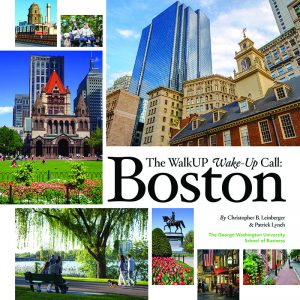 Boston, MA Metropolitan Boston is poised to be one of the most walkable metro areas in the country. This is one of the exciting findings of The WalkUP Wake-Up Call: Boston, a new report unveiled in Boston at LOCUS’s first-ever New England Leadership Summit.
The new research defines—for the first time—the form and function of all land use in metropolitan Boston’s 3,100 square miles, identifying 57 regionally significant walkable urban places (or “WalkUPs”) in metro Boston and ranking them based on economic performance, measured by the real estate valuations for each product type and the fiscal revenues generated for local governments, and by social equity performance, measured by accessibility, opportunity, and affordability for residents. Looking ahead to future opportunities, the report also identifies emerging and potential WalkUPs where new development could go.
As shown by substantial and increasing real estate valuation premiums in all real estate product types (office, hotel, rental apartment, retail, and for-sale residential), the report found strong and growing signs of pent-up demand for walkable urban neighborhoods in the Boston area—marking a reversal in real estate development that has long followed the drivable suburban model. Even more remarkable is the fact that these WalkUPs, account for just 6% of the total land area in the Boston metro region.
The 57 WalkUPs are ranked with platinum, gold, silver or copper ratings on both economic and social equity metrics. On the economic side, high-ranking WalkUPs – such as Back Bay, MIT/Kendall Sq., Beacon Hill and downtown Boston – usually had good access to rail transit service, while low-ranking WalkUPs — such as downtown Beverly, Framingham, Haverhill and Norwood — were mostly located in outlying areas. In terms of social equity, places such as Arlington, Charlestown and Northeastern/Huntington rose to the top with platinum social equity ratings, indicating that they offer high levels of accessibility, lower transportation costs and great opportunities in terms of proximity to employment.
Much like how drivable sub-urban development benefited select jurisdictions in the second half of the 20th century, meeting this demand for new development in walkable urban areas will be a boon to Boston’s regional economy. Real estate values in WalkUPs are 37% higher across all product types than drivable sub-urban development, and walkable urban office and hotel have 134% and 120% valuation premiums, respectively, over drivable sub-urban development. Plus, walkable urban office absorption has over a 50% market share in this real estate cycle and over 80% of new hotel absorption has been in walkable urban places in this cycle. Public revenues from walkable urban development are also substantially higher than drivable sub-urban development: On a per acre basis, walkable urban development generates 12 times the tax revenues as drivable sub-urban.
While the economic outlook for WalkUPs is strong, this drive towards a more walkable future in Boston is not without its concerns. Proximity to transit for households and employers remains a challenge and greater ridership on Boston’s transit system – which has become even more fragile as a result of this year’s blizzards – diminish the value of the system and present substantial risks that may deter investors. Another concern is that the affordability of walkable urban places in Boston will shrink over time as they become more and more popular and more investors stake a claim in their development. This could price lower-income residents out of these areas and into the suburbs, leading to substantial negative impacts on social equity, the environment and opportunity.
In addition to creating more inventory in the long-term, in order to address these challenges it is critical to establish policies that will preserve existing affordable housing in walkable urban places and leverage private sector investments to enhance opportunities for disadvantaged families to live in high opportunity/high accessibility places. As a beacon to other cities, it’s our hope that Boston’s major shift to walkable development will help reshape the way developers approach urban design and planning, regulation, financing and construction nationwide and inspire us to rethink the way we manage our investments in the built environment.
Download the full report, The WalkUP Wake-Up Call: Boston (PDF).
The report was released by the Center for Real Estate and Urban Analysis at the George Washington University School of Business, and the Northeastern University Dukakis Center for Urban and Regional Policy, with the assistance of the Metropolitan Area Planning Council; LOCUS conducted the research in conjunction with leading global real estate advisor Cushman & Wakefield. Our thanks to the Barr Foundation for funding the report.
Boston, MA Metropolitan Boston is poised to be one of the most walkable metro areas in the country. This is one of the exciting findings of The WalkUP Wake-Up Call: Boston, a new report unveiled in Boston at LOCUS’s first-ever New England Leadership Summit.
The new research defines—for the first time—the form and function of all land use in metropolitan Boston’s 3,100 square miles, identifying 57 regionally significant walkable urban places (or “WalkUPs”) in metro Boston and ranking them based on economic performance, measured by the real estate valuations for each product type and the fiscal revenues generated for local governments, and by social equity performance, measured by accessibility, opportunity, and affordability for residents. Looking ahead to future opportunities, the report also identifies emerging and potential WalkUPs where new development could go.
As shown by substantial and increasing real estate valuation premiums in all real estate product types (office, hotel, rental apartment, retail, and for-sale residential), the report found strong and growing signs of pent-up demand for walkable urban neighborhoods in the Boston area—marking a reversal in real estate development that has long followed the drivable suburban model. Even more remarkable is the fact that these WalkUPs, account for just 6% of the total land area in the Boston metro region.
The 57 WalkUPs are ranked with platinum, gold, silver or copper ratings on both economic and social equity metrics. On the economic side, high-ranking WalkUPs – such as Back Bay, MIT/Kendall Sq., Beacon Hill and downtown Boston – usually had good access to rail transit service, while low-ranking WalkUPs — such as downtown Beverly, Framingham, Haverhill and Norwood — were mostly located in outlying areas. In terms of social equity, places such as Arlington, Charlestown and Northeastern/Huntington rose to the top with platinum social equity ratings, indicating that they offer high levels of accessibility, lower transportation costs and great opportunities in terms of proximity to employment.
Much like how drivable sub-urban development benefited select jurisdictions in the second half of the 20th century, meeting this demand for new development in walkable urban areas will be a boon to Boston’s regional economy. Real estate values in WalkUPs are 37% higher across all product types than drivable sub-urban development, and walkable urban office and hotel have 134% and 120% valuation premiums, respectively, over drivable sub-urban development. Plus, walkable urban office absorption has over a 50% market share in this real estate cycle and over 80% of new hotel absorption has been in walkable urban places in this cycle. Public revenues from walkable urban development are also substantially higher than drivable sub-urban development: On a per acre basis, walkable urban development generates 12 times the tax revenues as drivable sub-urban.
While the economic outlook for WalkUPs is strong, this drive towards a more walkable future in Boston is not without its concerns. Proximity to transit for households and employers remains a challenge and greater ridership on Boston’s transit system – which has become even more fragile as a result of this year’s blizzards – diminish the value of the system and present substantial risks that may deter investors. Another concern is that the affordability of walkable urban places in Boston will shrink over time as they become more and more popular and more investors stake a claim in their development. This could price lower-income residents out of these areas and into the suburbs, leading to substantial negative impacts on social equity, the environment and opportunity.
In addition to creating more inventory in the long-term, in order to address these challenges it is critical to establish policies that will preserve existing affordable housing in walkable urban places and leverage private sector investments to enhance opportunities for disadvantaged families to live in high opportunity/high accessibility places. As a beacon to other cities, it’s our hope that Boston’s major shift to walkable development will help reshape the way developers approach urban design and planning, regulation, financing and construction nationwide and inspire us to rethink the way we manage our investments in the built environment.
Download the full report, The WalkUP Wake-Up Call: Boston (PDF).
The report was released by the Center for Real Estate and Urban Analysis at the George Washington University School of Business, and the Northeastern University Dukakis Center for Urban and Regional Policy, with the assistance of the Metropolitan Area Planning Council; LOCUS conducted the research in conjunction with leading global real estate advisor Cushman & Wakefield. Our thanks to the Barr Foundation for funding the report.
MORE FROM Owners Developers & Managers
BGO and Seyon complete acquisition of a 134,413 s/f industrial portfolio
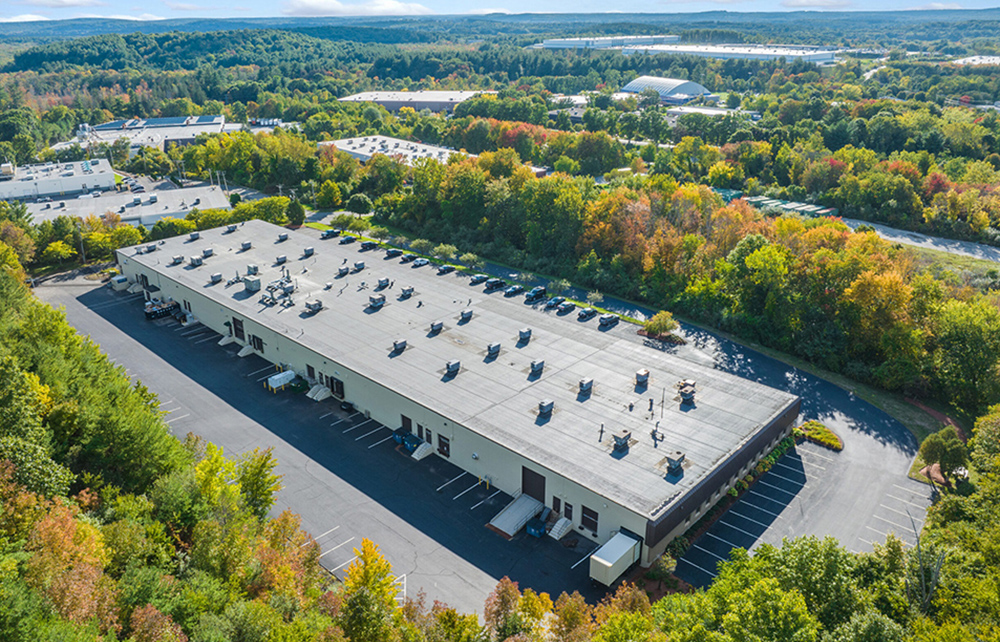
Marlborough, MA BGO, a leading global real estate investment manager, and Seyon, a Boston-based, vertically integrated investor, owner and operator of industrial real estate, have completed the acquisition of a two-building, 134,413 s/f industrial portfolio.



Quick Hits
 (1).png)

Columns and Thought Leadership

IREM president’s message: Our new reality - Staying ahead of supply chain delays - by Yoany Vargas
Supply chain delays are slowing construction, ratcheting up operating costs, and extending turnover timelines across Greater Boston, directly reducing revenue and increasing the workload for multifamily and

Retail infill strategy to activate Pawtucket’s Conant Thread District - by Gaetan Kashala
Until recently, the Conant Thread District consisted of approximately 150 acres of underutilized industrial land spanning Pawtucket and Central Falls. Today, the area is one of the most significant

Revitalized Town Centers: Retail??? - by Carol Todreas
It is now widely accepted that customers want to shop in person at physical stores. Brands know that they do better business in a physical store than just on line so they want to open stores. Demand for retail space by digital merchants, local entrepreneurs, and newly developed national chains

The legislature has spoken: New Hampshire doubles down on housing in commercial zones - by John Sokul
Last year, the New Hampshire Legislature enacted HB 631, a landmark housing measure requiring municipalities to permit multifamily housing in commercially zoned districts. The law generated
September Promotion