


 (1).png)
News:
Owners Developers & Managers
Posted: October 30, 2020
Vermont passes legislation to regulate cannabis for adults
Burlington, VT The Vermont legislature recently sent a bill to the desk of governor Phil Scott that would regulate cannabis for adults and allow for legal commercial cultivation, processing, testing, and sales. The governor allowed the bill to become law without his signature, as well as signing separate legislation to ease the expungement process for cannabis convictions.
S. 54 would create a Cannabis Control Board to license and regulate retailers, cultivators, product manufacturers, wholesalers, labs, and integrated licenses. It would give licensing priority to existing medical cannabis providers, women, and people from marginalized communities who have been disproportionately harmed by prohibition. The legislation would also provide education and incentives for small businesses and environmental sustainability plans. Sales are expected to begin in 2022.
“This is a great day for the entire state of Vermont,” said Aaron Smith, co-founder and chief executive officer of the National Cannabis Industry Association. “Regulating cannabis in the Green Mountain State will create jobs and much-needed tax revenue while finally providing resident cannabis consumers with a safe, reliable, and legal source of cannabis within their own borders.”
In 2018, Vermont became the first state to make possession and limited cultivation of cannabis legal for adults through its legislature. However, the law did not regulate commercial cultivation or sales, facilitating the continuance of an unregulated market within the state and encouraging residents to obtain cannabis in other states.
Cannabis is legal and regulated for adults in neighboring Massachusetts and nearby Maine, as well as in Canada. Lawmakers in New York and New Hampshire are also considering legislation to establish regulated adult markets. Vermont is now the second state to regulate cannabis through its legislature after Illinois did so in 2019.
An economic impact report released in August by Vicente Sederberg, LLP estimates that Vermont will reap tens of millions of dollars annually in adult use cannabis tax revenue.
Cannabis is now legal and regulated for adults in eleven states and the territories of CNMI and Guam. Adult possession and limited home cultivation are legal in the District of Columbia. Thirty-three states as well as several territories have comprehensive medical cannabis laws. The substance is legal in some form in 47 states.
MORE FROM Owners Developers & Managers
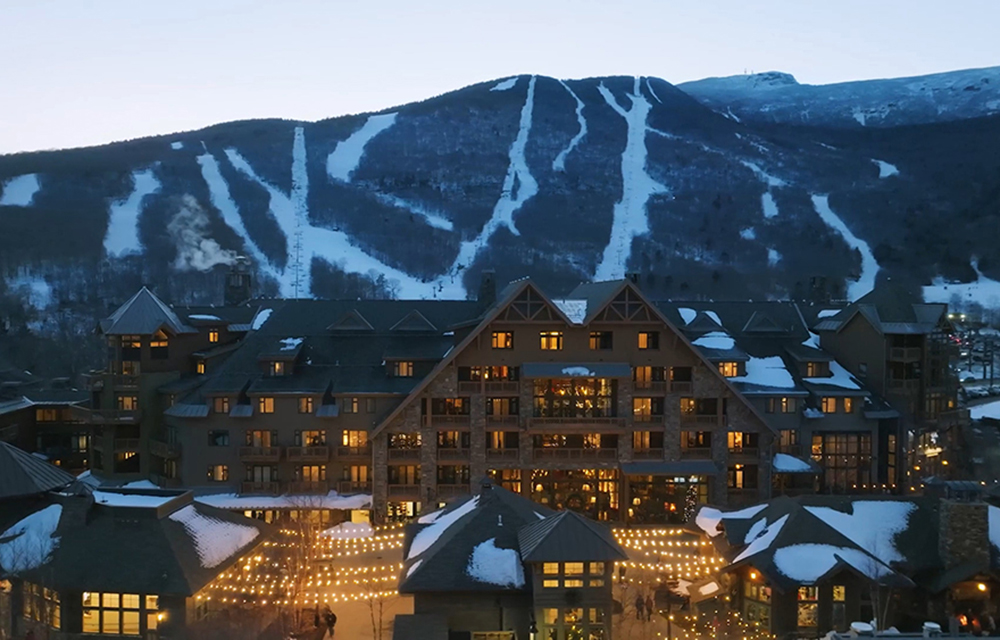
The Lodge at Spruce Peak recognized with Condé Nast Traveler’s 2026 Readers’ Choice Award - #3 in New England
Stowe, VT Condé Nast Traveler revealed the results of its annual Readers’ Choice Awards, with The Lodge at Spruce Peak recognized as the #3 U.S. Resort in New England.





Quick Hits


Columns and Thought Leadership

IREM president’s message: Our new reality - Staying ahead of supply chain delays - by Yoany Vargas
Supply chain delays are slowing construction, ratcheting up operating costs, and extending turnover timelines across Greater Boston, directly reducing revenue and increasing the workload for multifamily and

The legislature has spoken: New Hampshire doubles down on housing in commercial zones - by John Sokul
Last year, the New Hampshire Legislature enacted HB 631, a landmark housing measure requiring municipalities to permit multifamily housing in commercially zoned districts. The law generated

Retail infill strategy to activate Pawtucket’s Conant Thread District - by Gaetan Kashala
Until recently, the Conant Thread District consisted of approximately 150 acres of underutilized industrial land spanning Pawtucket and Central Falls. Today, the area is one of the most significant

Revitalized Town Centers: Retail??? - by Carol Todreas
It is now widely accepted that customers want to shop in person at physical stores. Brands know that they do better business in a physical store than just on line so they want to open stores. Demand for retail space by digital merchants, local entrepreneurs, and newly developed national chains