


 (1).gif)
News:
Finance
Posted: January 13, 2017
What went on in 2016? What might go on in 2017? - by Bill Pastuszek
 Bill Pastuszek, Shepherd Associates
Looking in the Rear View Mirror: What noteworthy trends were found in 2016? A dry year, a mild winter. The drought, other than making for brown lawns, did not bother real estate markets.
Jobs/Unemployment. In the Boston area, job prospects are good. Job growth is occurring. In Massachusetts, jobless rates have continued to trend downward. Massachusetts continues to show unemployment rates considerably lower than that of the nation as a whole. Non-farm payroll employment is positive in most metro areas.
Going Forward.
Population Growth. After decades predicting a drastically shrinking population, Boston’s population has benefited from housing creation in the city and increasing urban job opportunities. Other urban centers have fared less well. Clearly, the Seaport has provided a great boost to the economy but jobs are being created along the 128 rim in Needham, Waltham, Westwood, and other locations where development has taken place or will occur.
Interest Rates. The Fed raised the discount rate again at year end. It’s likely to go up again. Mostly not a problem–markets have been expecting increase–and these most recent increases don’t appear to affect real estate activity meaningfully due to the continuing supply/demand imbalance in most markets. Of course, all this depends on how much and how high interest rates will go. So 2016 was a steady year in terms of interest rates; 2017 may be less so.
Everybody benefited from the low interest rate party. Money continued to be affordable and if you wanted to borrow, there was plenty of it. On the lending side, anecdotally, lenders did a balancing act to maintain discipline and standards where borrowers were aggressively looking for maximum leverage. Some lenders were willing to oblige.
Inflation. Modest changes in the national CPI-U and for Boston. Wondering what happens to inflation with higher interest rates and changes in fiscal policy. Commodity prices, including energy, continued to be cheap with some upward creep likely.
Single Family Housing. MLSPIN notes that there were 49,000 sales transactions in Massachusetts in 2015; in 2016, there were slightly more than 53,000, an increase of about 10%. The median statewide price went from $346,000 in 2015 to $359,900, an increase of nearly 3%. Condos showed similar median price changes.
There was much housing happiness in 2016 for sellers. Days on market moved down from 95 to 84.
What happens is 2017? The housing economy seems to have legs and is likely to continue its run. Investors, consumers, and homebuyers are feeling pretty good about things. Many markets, while overheated, aren’t hurting for buyers will to pay for the privilege of home ownership. The sales price to list price ratio was 98%.
Many existing homeowners who might sell aren’t finding a lot of nearby affordable ownership or rental alternatives. Outlying areas have played catch up, some with a vengeance.
Leading Economic Indicators and Consumer Confidence. The Consumer Confidence Index (Conference Board) improved in December over November 2016. The Index increased over 2016.
Ataman Ozyildirim at The Conference Board said, “The U.S. Leading Economic Index continued on an upward trend through 2016, although at a moderate pace of growth…“The underlying trends in the LEI suggest that the economy will continue expanding into the first half of 2017, but it’s unlikely to considerably accelerate. Although the industrial and construction indicators held the U.S. LEI back in November, the weakness was offset by improvements in the interest rate spread, initial unemployment insurance claims, and stock prices.”
New Construction. Lack of land and expensive land will continue to frustrate developers and continue to make eastern Massachusetts a premium market with low affordability. Overall, optimism for new construction is measured. Overbuilding does not appear to be an issue; depending on how you read the signs. Softness at the upper end of the market may signal the end of a long party.
Multi-Family Markets. Multi-family, despite low cap rates and high per unit prices, is still the darling of investors. Despite major multi-family creation in the Boston Metro, there remains unsatisfied tenant demand and continuing multi-family investor appetites.
Commercial (CRE) Markets. A funny thing happened in early 2016. All the major indexes showed a pause in the CRE markets. Analysts worried that the extended CRE celebration had finally run its course. Interestingly enough, activity recovered and CRE activity continued its upward trajectory across most market. There still is an apparent lack of inventory, and strong investor demand continues to push prices.
Cap rates continue to see more modest compression. Higher financing costs do not presently translate into higher cap rates.
CRE markets experienced another strong year in 2016. The trend is likely to continue for another year at least. The wild cards are interest rates and unexpected economic and geo-political shifts. Domestic and off shore demand will continue. Keep an eye on signs of a bubble.
Conclusion. Plenty of cause for optimism existed nationally and in Massachusetts during 2016. Ample job opportunities, strong residential and commercial real estate markets, a highly skilled workforce, and a diverse population make for a propitious and distinctive combination of factors within the Commonwealth. Based on past performance, and the lack of any significant negative factors in the forecast, there is ample cause to anticipate a positive 2017.
Looking down the road with the foot moderately on the gas, and not driving by looking in the rear view of mirror.
Bill Pastuszek, MAI, ASA, MRA, heads Shepherd Associates, Newton, Mass.
MORE FROM Finance
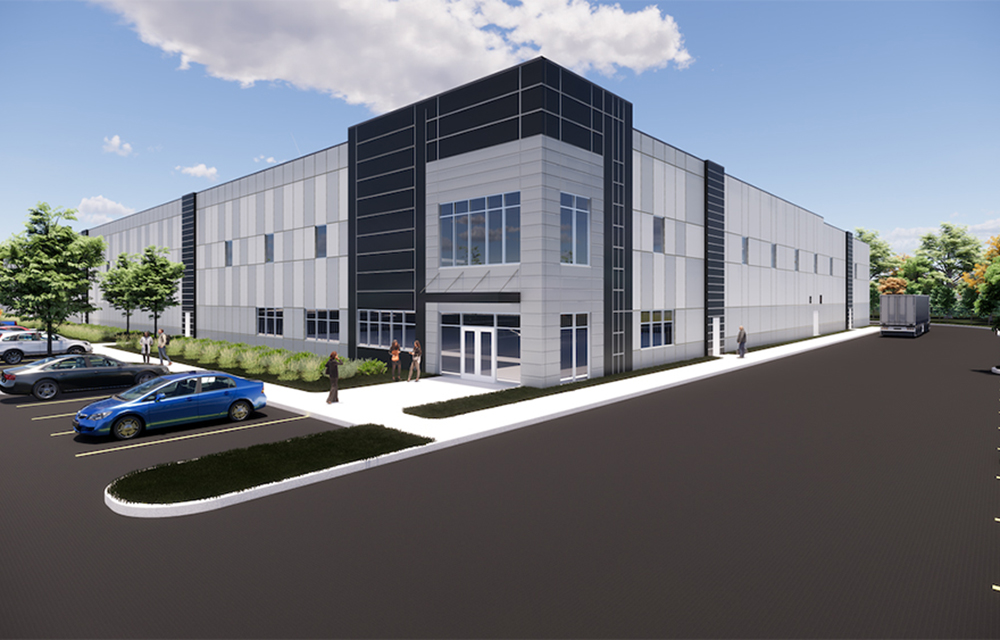
Berkeley Garbe secures $35.4 million debt financing with MetLife Investment Management
Billerica, MA Berkeley Garbe has secured a $35.4 million financing package for 161 Concord Rd., a new advanced manufacturing and innovation hub that is 30% complete following the start of construction in June. The project is on track to be completed in April 2027.


 (1).gif)


Quick Hits

.png)
Columns and Thought Leadership

The focus on price per s/f compared to the comparable sales used in the appraisal report - by Dennis Chanski
Over the past several weeks, I have completed appraisal assignments for private clients. Interestingly, after submitting these appraisals, I received several phone calls – not to question the value, content, or any incorrect information, but rather to discuss the price per s/f compared to the comparable sales used in the report.

Reverse exchanges and the challenges of a competitive real estate market - by Michele Fitzpatrick
Our current, highly competitive real estate market poses specific challenges for investors who are considering taking advantage of a tax-deferred 1031 exchange. In this market, investors will have no problem selling their current property if priced properly, but they may find it difficult to find a suitable replacement property

Are appraisers on the same page as the assessor? - by Richard Seman
The purpose of this article is to address problematic or confusing issues which may help assessors and appraisers to better understand how to value real estate for tax assessment purposes.

Massachusetts real estate transfers over $1 million face new tax rules as of November 1st - by Daniel Meyer
Attention to owners of real estate in the Commonwealth (and the title companies and other professionals who advise them), the Massachusetts Department of Revenue (the “DOR”) recently adopted a new “millionaire’s tax” via 830 CMR 62B.2.4
