


 (1).png)
News:
Owners Developers & Managers
Posted: September 4, 2014
Zero Net Energy the newest trend in High Performance Buildings
For the past century, okay decade, LEED certified buildings have been the premier standard in high performance sustainable buildings. Other standards like the Living Building Challenge, Passivhaus (more recently Passive House), and Zero Net Energy (ZNE) verified buildings were signals of over achieving designers and owners looking to make a statement. These high benchmarks were viewed as complex and expensive goals that design teams were lucky to participate in only rarely. Recently, ZNE seems to be trending throughout Massachusetts and across North America. ZNE buildings currently contribute to a small fraction of all green buildings, but if you have sat through a presentation or read an industry article lately, you know the market is changing.
The New Buildings Institute (NBI) defines Zero Net Energy buildings as buildings with greatly reduced energy loads such that, averaged over a year, 100% of the buildings' energy use can be met with onsite renewable energy technologies. Project teams achieve highly energy efficient designs through thoughtful material choice, passive energy strategies and intelligent system design and sizing. Then apply renewable power generation to reach ZNE status. In the past, owners were reluctant to invest in what was a costly and time consuming project path to ZNE. Through increased incentives, more aggressive energy codes and policy, less expensive renewable energy systems, and more experienced design teams, ZNE now comes at a much smaller additional cost and is gaining market share. An experienced team will incorporate early energy analysis, and an integrated design approach to manage these costs. According to a report released in early 2014 by NBI, the number of buildings achieving or pursuing ZNE across North America has more than doubled since 2012. With those kinds of numbers if it was a product on the popular show Shark Tank, I would invest in it.
ZNE is achievable in a wide variety of regions and climate zones, working for many building types and sizes. These buildings use only a quarter of the energy of average commercial buildings, repaying incremental costs applied during design and construction as significant operational savings. Much like other sustainable building objectives, ZNE is achieved by careful design, selecting the right technology for the project's specific needs, controls, monitoring and constant feedback and commissioning. In other words, a lot of work! But the benefits in terms of energy savings and building resiliency are worth it.
NBI states that 24% of all ZNE verified projects are now renovated existing buildings, once considered a near impossible feat. This bodes well for Americas aging building stock especially in larger cities in the northeast like New York and Boston that have building energy policies, like Boston's Building Energy Reporting and Disclosure Ordinance (BERDO).
ZNE districts are also a growing trend. Communities and campuses are committing groups of buildings to achieve ZNE, taking advantage of economies of scale. Today there are currently 18 ZNE districts in the US. Community district efforts are organizing everywhere. In December 2013 the city of Cambridge, MA created the Zero Net Energy Task Force that has been charged with advancing the goal of putting Cambridge on the trajectory towards becoming a "net zero community".
In the last few years ZNE buildings have gone from impossible to improbable to finally achievable. ZNE buildings are becoming the new standard for achieving significant energy savings and reducing greenhouse gas emissions in the built environment, a market transformation tool much like LEED. Do you remember when LEED certification was a statement?
Suzanne Abbott is business development manger at Gilbane Building Company, Boston, Mass.
MORE FROM Owners Developers & Managers
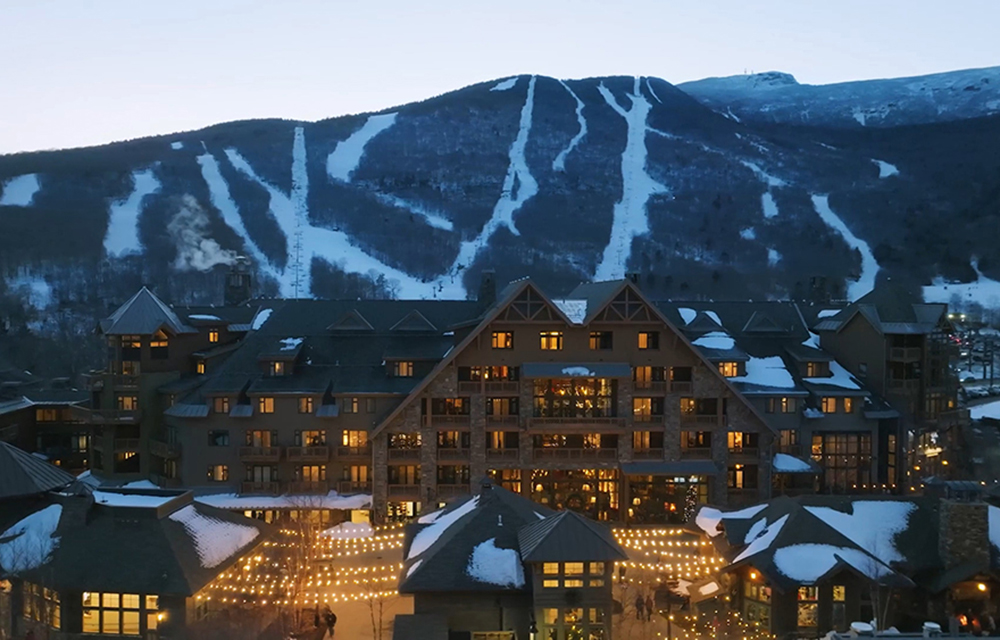
The Lodge at Spruce Peak recognized with Condé Nast Traveler’s 2026 Readers’ Choice Award - #3 in New England
Stowe, VT Condé Nast Traveler revealed the results of its annual Readers’ Choice Awards, with The Lodge at Spruce Peak recognized as the #3 U.S. Resort in New England.




Quick Hits


Columns and Thought Leadership

The legislature has spoken: New Hampshire doubles down on housing in commercial zones - by John Sokul
Last year, the New Hampshire Legislature enacted HB 631, a landmark housing measure requiring municipalities to permit multifamily housing in commercially zoned districts. The law generated

Revitalized Town Centers: Retail??? - by Carol Todreas
It is now widely accepted that customers want to shop in person at physical stores. Brands know that they do better business in a physical store than just on line so they want to open stores. Demand for retail space by digital merchants, local entrepreneurs, and newly developed national chains

Retail infill strategy to activate Pawtucket’s Conant Thread District - by Gaetan Kashala
Until recently, the Conant Thread District consisted of approximately 150 acres of underutilized industrial land spanning Pawtucket and Central Falls. Today, the area is one of the most significant

IREM president’s message: Our new reality - Staying ahead of supply chain delays - by Yoany Vargas
Supply chain delays are slowing construction, ratcheting up operating costs, and extending turnover timelines across Greater Boston, directly reducing revenue and increasing the workload for multifamily and