News:
Connecticut
Posted: August 19, 2010
Multifamily sector leads recovery with nation's largest markets posting strengthened occupancies
Apartment operations in the United States have begun to recover from the severe recession, with nearly three-quarters of the nation's largest markets posting strengthened occupancies. Though still dependent on job formations in the coming months, multifamily properties will benefit from limited construction in most markets, strong demographic trends and pent-up demand created during the downturn. In addition, pent-up demand for apartments has begun to release, particularly from the estimated 2.2 million young adults who moved in with family or friends over the last five years. Another positive sign is the drop in the apartment vacancy rate, which recently dropped 20 basis points to 7.8% on positive net absorption of 46,000 units, the strongest demand recorded since late 2000. Also, residential foreclosure activity will continue to increase rental demand, while tight lending and high down payment requirements will help retain existing tenants.
Although the U.S. job figures released for the month of July were weak, they only reflect a short-term setback. Figures were negative because temporary census positions were eliminated, while private employer hiring edged upward only moderately to offset a portion of the losses. Contributing 71,000 positions, private employers exceeded their June tally, but remain below the levels required to keep pace with normal labor force expansion. Manufacturing and education/health services generated 60% of the jobs created this year, but growth has spread to seven of the 10 employment sectors, signaling that the foundation of the choppy recovery has broadened. With the recovery now incorporating a significant cross-section of the economy, a double-dip recession still appears unlikely although the sluggish pace of expansion will persist for the next several months.
The capital markets have started to loosen, although they still remain historically tight. Mixed economic indicators, stock market volatility and concerns surrounding the European debt crisis continue to drive investors to safety. As a result, the yield on the 10-year U.S. Treasury has declined since peaking at 4% in April; as of late July, the yield had fallen to 3%. Capital markets loosened over the past year, with life insurance companies ramping up lending and CMBS showing renewed signs of life. Nonetheless, the agencies remain the dominant sources of multifamily lending. This trend will continue through 2010 as the GSEs' multifamily portfolios outperform their residential mortgage operations, reducing the likelihood of drastic government-mandated changes to their apartment lending arms.
Multifamily loan originations increased 37% in the second quarter but remained below levels reported during the same period last year. Fannie Mae and Freddie Mac's origination volume followed a similar pattern, rising in the second quarter but falling short of year-earlier levels. Loan-to-values range from 60% to 75% for portfolio lenders and push up to around 80%t for best-of-class, agency-financed deals. All-in rates for five-year agency loans fall into the low-4% range, while 10-year loans price between 4.75% and 5.15%. While life companies will compete at these levels for best-of-class deals, most portfolio lenders are 100 basis points to 225 basis points higher.
Looking at investment sales conditions regionally, economic uncertainty and tight capital markets have limited multifamily investment activity in the Hartford market, but resilient pricing levels also have constrained deal flow. Sales prices have held steady over the past two years, as owners have been reluctant to offer discounts in light of modest rent declines. Nevertheless, prices are expected to dip in the coming quarters due to previous revenue decreases and soft investor demand. Cap rate rises should be modest among Class A assets, however, where operating fundamentals have begun to improve quickly since the start of 2010.
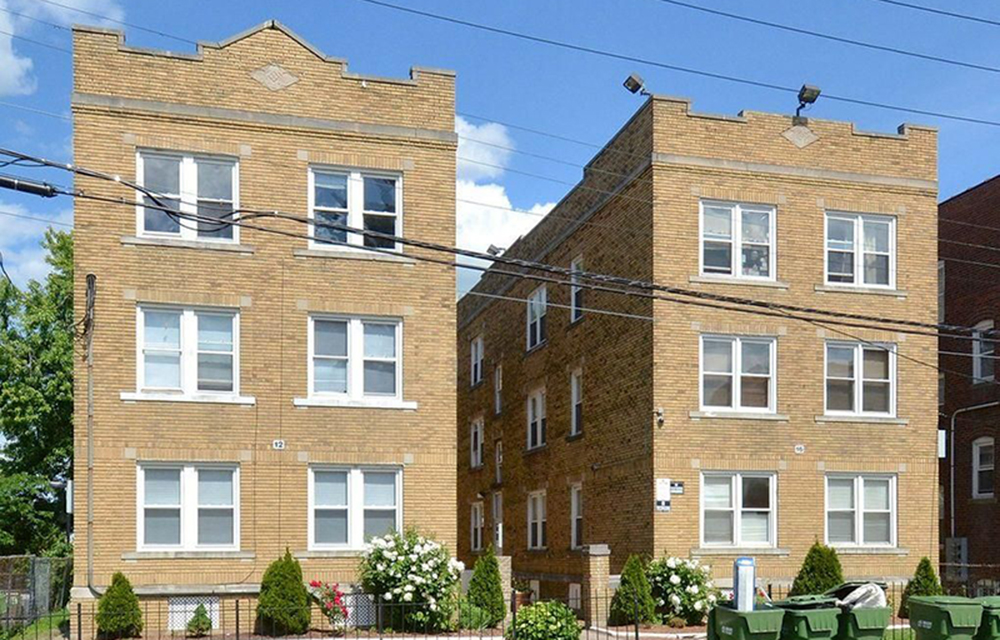
In Fairfield and New Haven counties, investment activity remains slow but local buyers are continuing to make acquisitions, capitalizing on decreased competition due to a smaller pool of investors. The median price has increased in both counties over the past year, though the gains are likely attributable to tight lending; constrained debt markets have caused buyers to focus on smaller properties, which generally trade at higher per-unit prices. In transactions made in Fairfield County during the last year, the average deal size was nine units, compared with 38 units in the preceding 12 months, while the median price surged 36%. In the two major on-market transactions involving assets with eight or more units conducted during that time, the median price was $96,070 per unit, 7% below the previous year's median. Similarly, in New Haven County, the average sold property size has plummeted 73% year over year to 40 units. The median price, meanwhile, has climbed due to smaller property sizes, more upper-tier asset sales and milder rent declines.
The U.S. and Connecticut multifamily sector is leading other commercial real estate sectors in the recovery as national vacancies declined 20 basis points during the second quarter to 7.8%. Rents also appear to have turned the corner with asking rents rising 0.4% from the first quarter and effective rents gaining 0.6%, the first substantive gains since the third quarter 2008. The positive momentum will carry through the remainder of the year, pressing vacancies down to 7.4% by year-end. As fundamentals continue to improve, multifamily assets will be an even more appealing investment vehicle for local investors, as well as institutions and foreign buyers.
Steven Witten is a first vice president and senior director of the National Multi Housing Group in the New Haven office of Marcus & Millichap Real Estate Investment Services.
Tags:
Connecticut
MORE FROM Connecticut
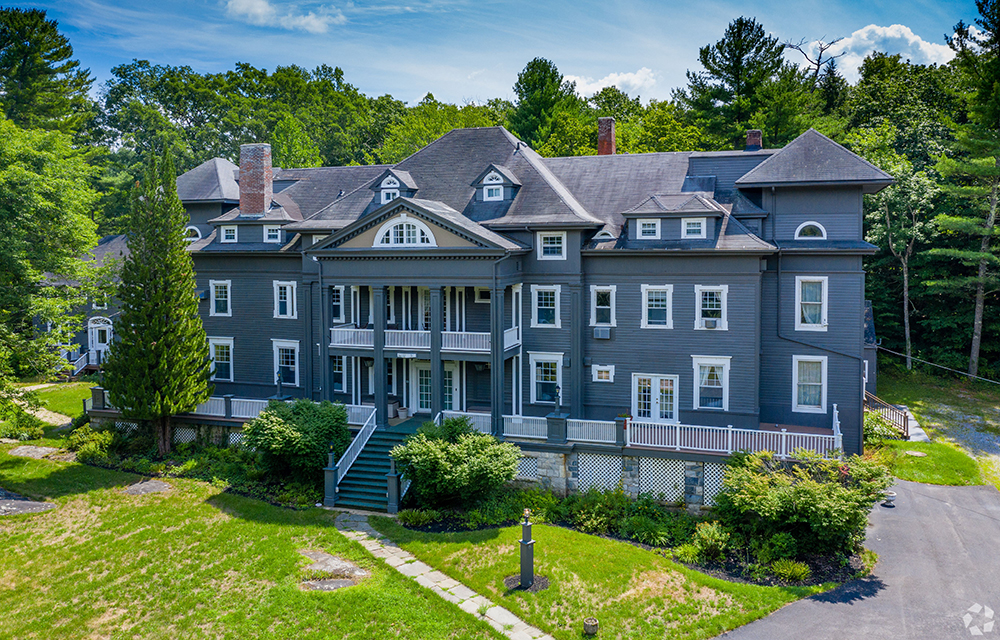
Galton of Houlihan Lawrence sells 15,800 s/f Wake Robin Inn for $3.5m
Lakeville, CT Houlihan Lawrence Commercial, a division of Houlihan Lawrence, a real estate firm serving Connecticut and New York City’s northern suburbs, has brokered the sale for $3.5 million of the Wake Robin Inn, a 15,800 s/f historic inn located on 11.52 acres at 106 Sharon Rd.