News:
Connecticut
Posted: August 19, 2010
U.S. Pavement Services: Summer is best for all your pavement projects
The astronomical start of summer has just passed, and the warm days of July, and August are unquestionably the best time of year to schedule and complete all outstanding pavement projects. Not insignificantly, this avoids the late season rush and ensures that asphalt repairs and maintenance is completed before winter, even if the fall weather turns inclement or cold weather stages an early arrival.
Summer temperatures are ideal for all types of asphalt maintenance work. Warm weather speeds drying and curing times for line striping paint and sealcoat. This means that parking areas can be returned to service quickly, with less chance of tire tracking marks. Even hot mixed asphalt cures best when the mix temperature is maintained as long as possible.
Sealing Cracks is a
Top Priority
The most critical element in maintaining any pavement surface is the regular sealing of cracks to prevent water from penetrating to the base soil. The best protection against water penetration is sealing all cracks with a hot-applied rubberized joint sealant that meets federal specifications. The superior flexibility and durability of this product, even at very low temperatures, allow it to block water seepage through cracks even under the harshest winter conditions.
The Importance of
Periodic Sealcoating
The second most critical element in any asphalt maintenance plan is Sealcoating on a three-year cycle. Sealcoat may either be an asphalt emulsion or a latex-based coal tar pitch emulsion fortified with additives and sand. It provides a durable barrier to both the elements and fuel/oil leaks. The primary benefit of sealcoat is that it greatly slows the whole asphalt degradation process. The natural destruction of paved surfaces begins with solar ultraviolet oxidation of the asphalt binder, leading to shrinkage and cracking. Sealcoat is an effective sun block for your pavement.
Repair the Spider
Web Cracks Potholes
Areas of spider-web cracks and broken pavement most often occur where simple linear cracks have been neglected and not properly sealed. Water penetration and winter freeze-thaw cycles widen the cracks, and the damage progresses at an accelerating pace. Eventually the pavement breaks through completely and potholes form.
The traditional repair for areas that have spider webbed cracks or potholes is the cut and patch paving method. Damaged pavement is cut square, ripped out, regraded, and then repaved with 1.5" of bituminous binder, followed by 1.5" of bituminous topcoat asphalt. Edges are emulsified to bond the new pavement to the old.
A new innovation in asphalt repair, now offered by U.S. Pavement Services, is infrared asphalt repair. An infrared heater is used to heat and soften the asphalt to a distance of about a foot around any broken pavement. Deteriorated asphalt is removed and the repair area is filled to grade with new asphalt and compacted with a vibratory roller. The compaction process creates a thermal bond between the old asphalt and new. The repair is literally "seamless" and not subject to joint failure. Infrared pavement repairs are frequently up to 23% less expensive than the cut and patch method, and the finished product has the same or better life expectancy as the surrounding asphalt. Additionally, infrared repairs are environmentally "green." As an in-place reclamation process, less old asphalt has to be hauled away for disposal and less new asphalt brought to the site, resulting in less energy consumed by transportation of materials and production of virgin asphalt, as well as less impact on the property.
Complete Pavement
Projects before Late Fall
My advice then to property owners and managers considering pavement maintenance or repair projects is to schedule the work now while the conditions are ideal. Avoid the fall rush for last minute work. For the longest possible pavement life, asphalt surfaces should be sealcoated at least every three years. Simple linear cracks should be sealed with a hot-applied rubberized joint sealant. If extensively cracked or broken pavement exists, the deteriorated asphalt should be removed, regraded, and repaved with basecoat binder and bituminous asphalt topcoat.
Your pavement contractor can be your best resource in attaining the longest life from your pavement investment. At U.S. Pavement Services, we provide our customers with free pavement inspection and consultation services, and regularly provide cost effective solutions to a variety of pavement problems.
Michael Musto, president, U.S Pavement Services, Inc., Woburn, Mass. and Hartford, Conn.
Tags:
Connecticut
MORE FROM Connecticut
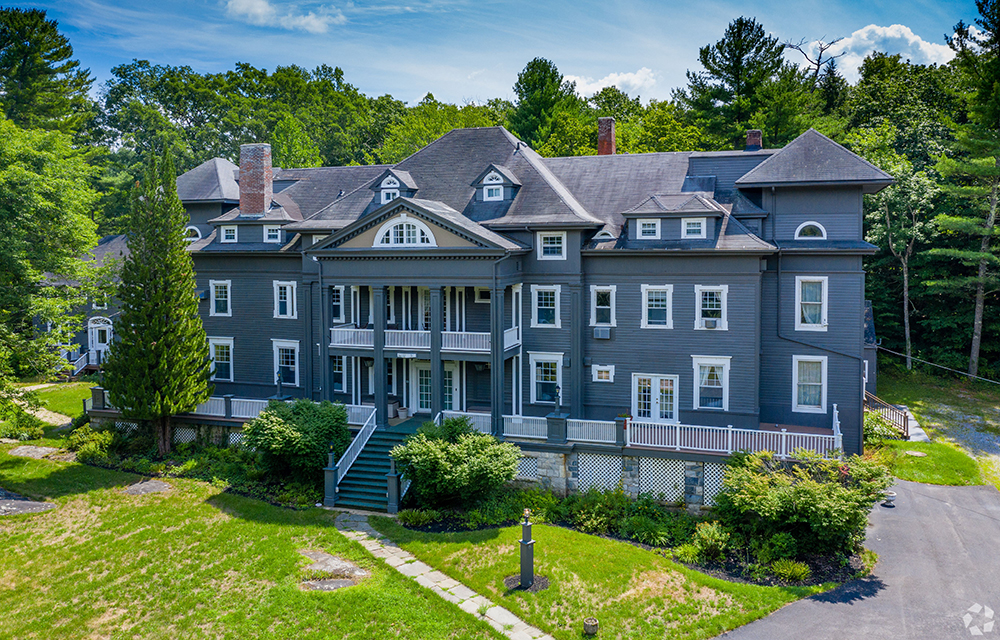
Galton of Houlihan Lawrence sells 15,800 s/f Wake Robin Inn for $3.5m
Lakeville, CT Houlihan Lawrence Commercial, a division of Houlihan Lawrence, a real estate firm serving Connecticut and New York City’s northern suburbs, has brokered the sale for $3.5 million of the Wake Robin Inn, a 15,800 s/f historic inn located on 11.52 acres at 106 Sharon Rd.




Quick Hits