


 (1).png)
News:
Owners Developers & Managers
Posted: February 2, 2012
Meet Congresses Consumer Financial Protection Bureau: Enforcing consumer protection laws
In 2010, Congress created the Consumer Financial Protection Bureau (CFPB) to serve as the nation's "cop on the beat" to protect consumers from harmful financial products. Officially opened for business on July 22, 2011, the CFPB is now responsible for enforcing most federal financial consumer protection laws.
CAI's members have a keen interest in the development of CFPB's rules and regulations that could affect community associations. As a new federal agency, the CFPB is still working to define its approach to protecting consumers from abusive financial products and helping to ensure consumers have the right information to choose the financial products and services that will best meet their needs. While the CFPB's authority extends from checking accounts to credit cards to payday loans, it also has significant authority over federal housing policy, mortgage lending standards and the home buying process.
CAI is following CFPB's actions on: the definition of qualified mortgage, the regulation of transfer fees, association assessments, the definition of real estate settlement fees, foreclosure prevention and mortgage servicing standards. As such, the CFPB has the potential to impact community associations and the companies that serve them.
Special Authorities
As noted, the CFPB has special authority over mortgage lending standards and real estate closings. The Dodd Frank Act gave the CFPB the responsibility of enforcing the federal Truth in Lending Act (TILA), a powerful consumer protection law. As the federal enforcer of TILA, the CFPB will establish and enforce mortgage lending standards that all lenders and housing market participants must follow.
Congress also transferred rulemaking and enforcement authority under the Real Estate Settlement Procedures Act from the Department of Housing and Urban Development to the CFPB. The bureau is in the process of updating real estate closing disclosures and real estate closing forms.
This combination of authorities means the CFPB sets the standards that govern almost every aspect of the mortgage lending and closing process.
CFPB is unique in that Congress granted the bureau the authority to expand firms under its supervision by regulation. Given the role of community associations in our nation's housing markets and the authority of associations to foreclose as a remedy to perfect a lien, it is reasonable to expect the CFPB to examine community associations at some point in its review of the housing market.
CFPB Initiatives
The CFPB has three ongoing initiatives that can affect how community associations function.
Ability-to-Repay
The first initiative is the CFPB's work on how association assessments factor into a borrower's mortgage payment. Under the Dodd Frank Act, all lenders must verify a borrower can afford all payments associated with a mortgage loan, including association assessments. It is the CFPB's job to write the rules to govern this process, which could include requiring associations to forecast assessment increases and the likelihood of future special assessments.
Transfer Fees
The second initiative CAI is monitoring is the CFPB's review of transfer fees in community associations. While the bureau has not signaled that it intends to restrict mortgages in associations with a transfer fee, it is studying the use of transfer fees.
Mortgage Complaint Portal
An important new consumer protection developed by the CFPB is an easy-to-use website for homeowners to report mortgage fraud, abusive lending practices and housing discrimination. This will significantly improve consumer protection for homeowners and allow the CFPB to keep track of new mortgage products or any new market abuses. The website will also be a means for disgruntled residents to air complaints against associations. As the CFPB has announced its future rulemakings will be influenced by the nature of complaints it receives through this system, associations should be prepared to respond to CFPB inquiries and work cooperatively with the bureau in resolving legitimate consumer and homeowner complaints.
Because of its potential impact on community associations, CAI has added the CFPB to our Mortgage Matters program. CAI is working to protect homeowners in community associations and to ensure access to fair and affordable mortgage products for all current and potential community association residents. You can follow our work and share your thoughts at www.caimortgagematters.org.
MORE FROM Owners Developers & Managers

Windsor approves redevelopment of 500 Day Hill Rd. for mixed-use residential community
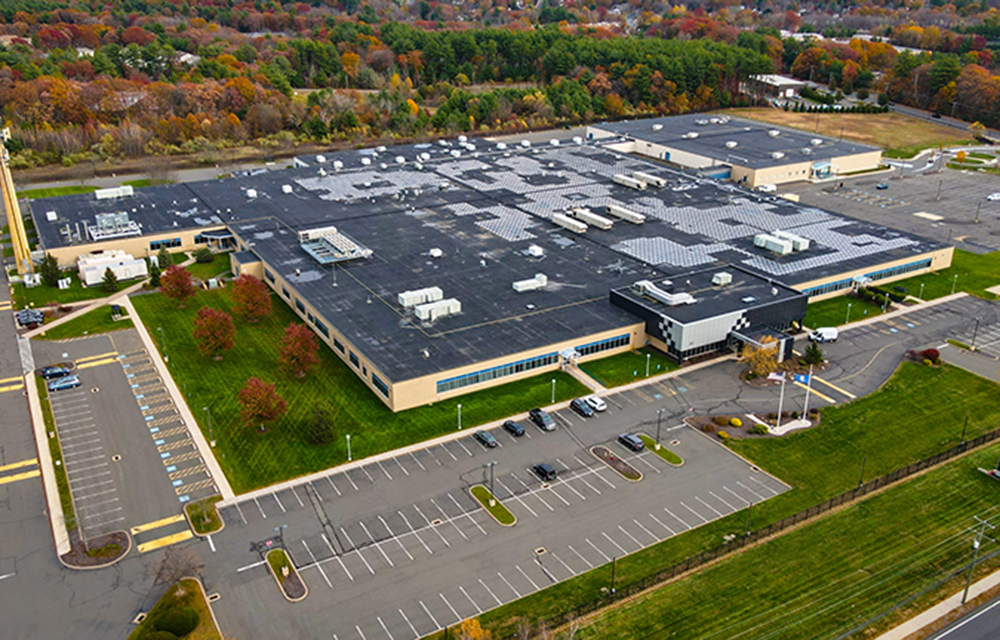
Windsor, CT The town has granted approvals for the redevelopment of 500 Day Hill Rd., clearing the way for a mixed-use residential community that will convert a former office campus into a housing development totaling approximately 300 residential units


.png)




Columns and Thought Leadership

Retail infill strategy to activate Pawtucket’s Conant Thread District - by Gaetan Kashala
Until recently, the Conant Thread District consisted of approximately 150 acres of underutilized industrial land spanning Pawtucket and Central Falls. Today, the area is one of the most significant

IREM president’s message: Our new reality - Staying ahead of supply chain delays - by Yoany Vargas
Supply chain delays are slowing construction, ratcheting up operating costs, and extending turnover timelines across Greater Boston, directly reducing revenue and increasing the workload for multifamily and

Florida ruling raises bar for condo terminations and buyouts - by Michael Karsch
On October 14, 2025, in a landmark decision with significant implications for the Florida real estate market, the Supreme Court of Florida formally denied Two Roads Development’s (TRD Biscayne LLC) petition for review in its long-running case against unit owners of Biscayne 21,

Revitalized Town Centers: Retail??? - by Carol Todreas
It is now widely accepted that customers want to shop in person at physical stores. Brands know that they do better business in a physical store than just on line so they want to open stores. Demand for retail space by digital merchants, local entrepreneurs, and newly developed national chains