(1).gif)
News:
Finance
Posted: February 9, 2010
Appraisers are over regulated and underpaid
Perhaps I'm just getting cynical, but it seems to me that appraisers are getting the short end of the stick. Someone commented to me the other day, "So, you are an appraiser? That must be tough. Nobody likes you." After overcoming the initial shock of that statement, I thought, "Gosh. That person is right. Appraisers don't even like themselves!" These days, we definitely seem to be between the proverbial rock and a hard place. We have had a hard row to hoe, so to speak, these last several years.
Even during the good old days of the boom times (remember them?), appraisers were under undue pressure to develop the right "number" or else the deal wouldn't work. Unfortunately, there were members of our profession who succumbed to the pressure and came up with the requested value despite very shaky market evidence to support that value. Appraisers were pressured into changing their reports to ignore obvious defects in the property such as roof leaks or a furnace that didn't work in order that the mortgage could be sold on the secondary market. An added incentive to encourage the appraiser to change the report was the threat to not pay the appraiser for his or her work already completed as well as the threat not to send any more work in the direction of that appraiser.
Obviously, not all appraisal clients applied such pressure, and not all appraisers succumbed. However, a number of very good appraisers who refused to participate in the scam did not survive. These appraisers have since gotten out of the field and went on to other occupations. This is a definite loss to the profession.
Once the powers that be became aware of the high incidence of appraisal pressure and the resulting damage to the economic well being of the nation, laws were passed; regulations were instituted to prevent the situation. The Home Valuation Code of Conduct is one such set of regulations. Other measures included TARP (Toxic Asset Relief Program), Regulation Z, and the SAFE Act among others.
Even the Appraisal Foundation got in the act by increasing the requirements for the certification of an appraiser effective January 1, 2008. Now to be a certified appraiser, a person must have a college degree, take upwards of 300 hours of appraisal education, as well as pertinent experience. In addition, the Uniform Standards of Professional Appraisal Practice (USPAP) is updated every two years such that the appraiser must take a course to become aware of the updates. These requirements are in addition to the continuing education requirements that an appraiser must meet in order to renew the certification.
This increase in education is good news for the industry on one hand. On the other hand, the increase has necessitated a greater expense both in terms of time and money to become an appraiser and to maintain certification as an appraiser. At the same time, appraisal fees are stagnant to declining to the point whereby it is becoming increasingly difficult to make a living in the profession.
The next few years will be the make or break time frame for the profession as the economic fallout settles down. I still maintain that appraisers are a vital segment of the real estate formula. We remain the only truly independent party in the real estate transaction. If we conduct ourselves as the unbiased voice, we provide an invaluable service to the economy.
Patricia Amidon, MAI, is president of Amidon Appraisal Co., Portland, ME.
MORE FROM Finance
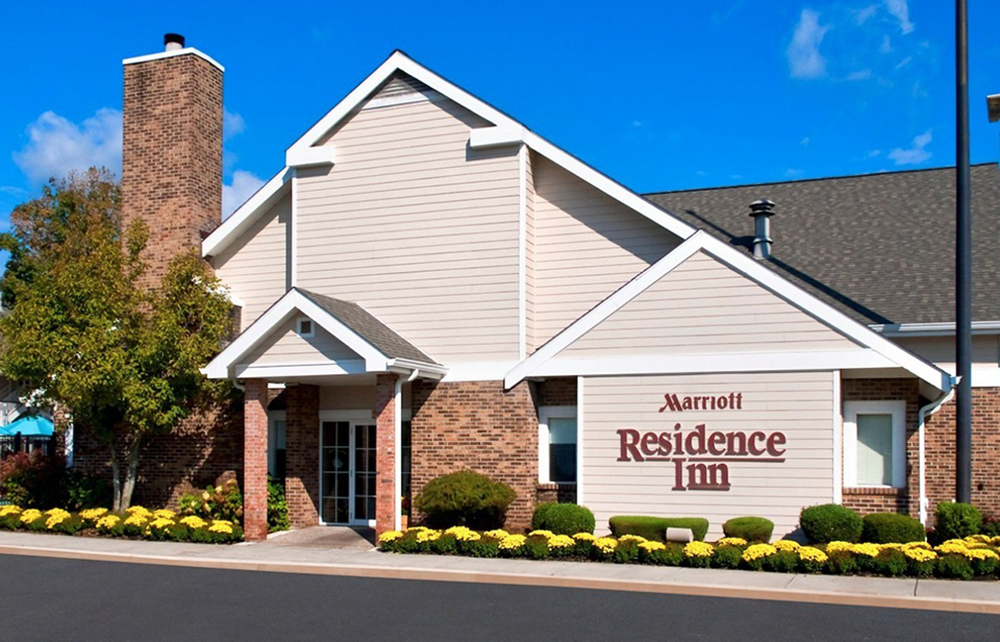
JLL arranges $13.5m sale and financing of 96-room Residence Inn
Danvers, MA JLL Capital Markets arranged the $13.5 million sale and financing of the 96-room Residence Inn Boston North Shore/Danvers, an extended-stay hotel with approved conversion rights to an 88-unit multifamily residential community. The property is located at 51 Newbury St., 20 miles north of Boston.



 (1).gif)


Quick Hits

Columns and Thought Leadership

The focus on price per s/f compared to the comparable sales used in the appraisal report - by Dennis Chanski
Over the past several weeks, I have completed appraisal assignments for private clients. Interestingly, after submitting these appraisals, I received several phone calls – not to question the value, content, or any incorrect information, but rather to discuss the price per s/f compared to the comparable sales used in the report.

Are appraisers on the same page as the assessor? - by Richard Seman
The purpose of this article is to address problematic or confusing issues which may help assessors and appraisers to better understand how to value real estate for tax assessment purposes.

Reverse exchanges and the challenges of a competitive real estate market - by Michele Fitzpatrick
Our current, highly competitive real estate market poses specific challenges for investors who are considering taking advantage of a tax-deferred 1031 exchange. In this market, investors will have no problem selling their current property if priced properly, but they may find it difficult to find a suitable replacement property

Massachusetts real estate transfers over $1 million face new tax rules as of November 1st - by Daniel Meyer
Attention to owners of real estate in the Commonwealth (and the title companies and other professionals who advise them), the Massachusetts Department of Revenue (the “DOR”) recently adopted a new “millionaire’s tax” via 830 CMR 62B.2.4

September Promotion