



News:
Construction Design & Engineering
Posted: December 20, 2012
2012 was a good year for Boston's construction market
Given the level of commercial real estate construction taking place in comparison with the rest of the country, you could say that 2012 was Boston's year. Looking ahead, it seems pretty certain that 2013 will be Boston's year, too.
Boston has benefitted from its "Med-Ed" base of healthcare and higher education, which are two areas where building is brisk. It's also an attractive market for international investment.
Low interest rates are also a key factor. With U.S. Treasury rates at 1% or lower, and likely to stay near that level at least through 2014, there is plenty of equity capital looking to invest in real estate.
Even as the good fortune that benefited Boston in 2012 will continue through 2013 and beyond, most of the country is likely to see only modest growth. Other areas that will continue to see above average growth are Texas and North Dakota, which have low unemployment, and, to a lesser degree, Los Angeles, San Francisco and Washington, D.C.
Nationally, there has also been a boom in multifamily housing, due to foreclosures and generational changes. With their housing foreclosed, many former homeowners had no choice but to become renters again.
In addition, a growing number of young people see ownership of a single-family home as an anchor, rather than an investment opportunity. They recognize that their employment is likely to take them to other parts of the country and, given the fluidity of employment, they don't want to be locked into a specific area because of housing.
Home builders have started building again, although demand for new home construction may not warrant it. The improvement in new construction may be the result of repositioning. Foreclosures are likely to continue, which will add to existing inventory and overall will suppress housing prices. The federal government has no solution to that problem, which will continue to hold back economic growth.
Another factor dampening growth is a lack of business spending. U.S. consumers are beginning to spend again, but corporate America has not followed suit. According to a Wall Street Journal survey, half of the country's 40 largest publicly traded companies have announced plans to reduce capital expenditures either this year or in 2013.
Businesses have held back on spending largely because of the uncertainties of the next year, as the White House and Congress struggle to deal with the fiscal cliff. Some companies are also concerned that, as Obamacare takes effect, it will add to the cost of doing business.
The Fiscal Cliff And More
Whether economic growth will accelerate depends on whether the White House and Congress are able to reach an agreement and avoid the fiscal cliff. All parties are expressing an interest in reaching an agreement and, given the consequences of failing to agree, we can be fairly confident that an agreement will be reached.
However, whatever compromise is reached will likely be a stop-gap measure that will not fully address the country's growing deficit. In addition, negotiation will begin anew at the end of the year, when Congress again has to consider increasing the debt ceiling. Although the debt is already bumping up against the $16.4 trillion ceiling, the government can continue operating into next year even if the issue is not addressed, but it can't hold off indefinitely.
Republicans are hoping to use the debt ceiling as leverage to make a deal that includes less reliance on tax increases and a greater reliance on spending cuts. Previous failure to reach an agreement resulted in a drop in the U.S. credit rating and that could happen again.
Even if a deal is reached that includes higher taxes on businesses, it would likely be better than the fiscal limbo we've been in. Uncertainty has a dampening effect on business investment; businesses have been holding off, waiting to see what will happen. Even with higher taxes, once businesses know what to expect, they should start investing again.
Hopefully, that will lead to increasing economic growth throughout the country. Boston, though, is likely to enjoy another banner year, regardless of what happens in Washington.
Donald Greenhalgh, CPA, is a partner in the real estate practice group at DiCicco, Gulman & Co., a CPA, Woburn, Mass.
MORE FROM Construction Design & Engineering
Nordblom partners with Erland Construction for new residential development in Dedham
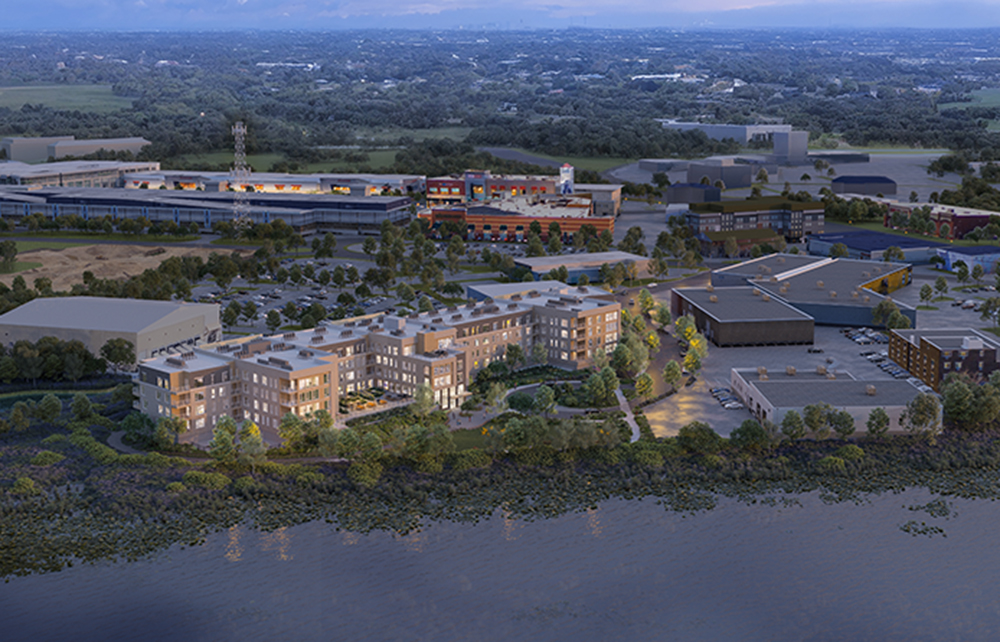
Dedham, MA Erland Construction has once again partnered with long-time client Nordblom Company to bring a new multifamily residential community, Vantage, to life. Working in collaboration with Stantec, Erland will construct a 218,000 s/f, four-story wood- and steel-frame building that will introduce 155 apartment homes to this rapidly growing neighborhood.




Quick Hits


Columns and Thought Leadership

Greenwood Credit Union City Hall Plaza nears completion - by Frank Picozzi
After several years of planning, construction, and anticipation, the community is eagerly awaiting the opening of the Greenwood Credit Union City Hall Plaza and outdoor skating rink later this month.

Navigating tariffs and material uncertainty in today’s construction market - by Karl Ginand and Tiffany Gallo
As headlines around tariffs seem to dominate the news daily, many considering construction projects have anticipated major cost escalations and widespread supply issues. While tariffs haven’t driven pricing spikes to the extent once feared, the lasting impact has been a new layer of uncertainty, affecting more than just budgets.

It’s time to lead: Confronting mental health in construction - by David Watts
As we close Mental Health Awareness Month, we must be clear: May isn’t just about ribbons, hashtags, or lunchtime mindfulness apps. It’s about responsibility to confront hard truths that linger in silence, and to challenge ourselves, as leaders in our industry, to do more.

ABC-Mass. chairman’s message: Rent control isn’t the answer to our housing crisis - by Luiza Mills
As you may know, Massachusetts voters will be weighing in on a number of ballot initiatives in November. Among them is a proposal to impose the nation’s strictest statewide rent control policy. I’d like to tell you why the ABC MA Board
