



News:
Spotlight Content
Posted: September 25, 2020
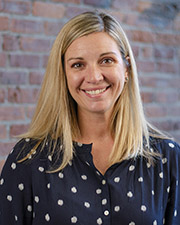
2020 Women in Real Estate: Tamar Warburg, Director of Sustainability at Sasaki

Sasaki
Who inspired you to join the CRE Industry? I had been torn between two passions, architecture and sustainability. Ed Mazria’s manifesto in 2003 was a revelation: if buildings produce half of global greenhouse gas emissions, why not combine the two into a sustainable architecture practice? We can design and build for climate change, with energy-conserving – and producing– architecture that contributes to a more resilient environment.
What recent projects are you most proud of? Sasaki is an incredibly creative and ambitious design firm, and I’m proud to be part of teams designing carbon-neutral and energy-positive buildings for Princeton Athletics, Mass Bay Community College Health Sciences Center, and the Southern CT State University Business School. All feature high-performing building envelopes and systems with renewable energy generation including solar PV and geothermal.
What is the best advice you have received, and who was it from? A colleague said that yes, COVID is tough; but as women, we know how to adapt. We have the resilience to refocus our planning work in light of the virus, we understand how to redesign offices to reduce transmission, and we have a renewed appreciation for the design of public open spaces. Most of all, we are developing new methods for creative collaboration and client engagement even while working remotely. Resilience is the key.
Tags:
Spotlight Content
MORE FROM Spotlight Content

New England Real Estate Journal's 2026 Women in Commercial Real Estate Spotlight
NEREJ's Women in CRE Spotlight celebrates the women making an impact across commercial real estate and the companies that recognize, support and champion them.






Columns and Thought Leadership

How do we manage our businesses in a climate of uncertainty? - by David O'Sullivan
These are uncertain times for the home building industry. We have the threat of tariffs mixed with high interest rates and lenders nervous about the market. Every professional, whether builder, broker, or architect, asks themselves, how do we manage our business in today’s climate? We all strive not just to succeed, but

Shallow-bay wins on 495/128: A renewal-driven market with a thin pipeline - by Nate Nickerson
The Boston industrial market entered mid-2025 in a bifurcated state. Large-block vacancy remains elevated, while shallow-bay along the 495/128 corridor continues to prove resilient. Fieldstone’s focus on this geography positions us squarely in the middle of a renewal-driven, supply-constrained

As legacy names recalibrate, new entrants are moving in with fresh capital, new technologies, and business models tailored to today’s supply-chain needs - by Michael Harrington
Southern New Hampshire’s industrial market has always punched above its weight. For decades, the region has attracted a mix of advanced manufacturing, beverage and food producers, logistics operators, and specialty
Limited supply fuels landlord‑friendly conditions in Rhode Island’s industrial market - by Julie Freshman and George Paskalis
As we enter the spring of 2026, the Rhode Island industrial real estate market stands on stable footing, following several years of resilience fueled by constrained supply, steady demand, and dynamic economic conditions.
