



News:
Spotlight Content
Posted: September 30, 2022
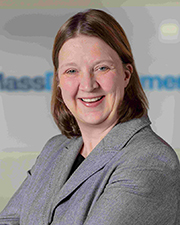
2022 Women in Commercial Real Estate: Natasha Marcuard, Northstar Project & Real Estate Services

Associate Vice President | Shareholder
Northstar Project & Real Estate Services
What advice would you offer to women getting into the CRE industry?
Speak up, ask questions, take the time to understand the responses and don’t be afraid to make mistakes. As women in a male-dominated industry, we can often second guess ourselves and in turn hold our comments or questions. Do not undermine the validity of your input as it will inadvertently reflect in the way you carry yourself and the way others treat you. When you speak up, own it. When you make a mistake, own it. Your voices matter and are needed at the table.
Who is a woman leader you find to be inspiring and why?
I draw inspiration from many different women for various reasons, however in the context of this response, I’d like to highlight Brené Brown. In her book Dare to Lead, she delves into the art of delegating, navigates the difference between vulnerability and over-sharing and takes you through an exercise of identifying your core values to help guide the decisions you will make in your career and personal life. I would encourage everyone to read this book if you haven’t already. My core values are accountability and authenticity.
In the past year, what project, transaction or accomplishment are you most proud of?
I successfully completed my first triathlon in 2021. For so long I’d thought about participating in a triathlon but was afraid I couldn’t complete all three consecutive legs of the race. When I finally reached a point where I was able acknowledge that fear was holding me back from taking the risk, I was then able to let it go. It doesn’t mean I wasn’t nervous about the race, but I had reached a mental milestone that I was personally proud of. If you never open the door to new risks, you will never realize the growth opportunities.
What has been your biggest challenge and how have you faced it?
Delegating work. Most project managers are Type A and I’m no different therefore I had to first acknowledge that to become a successful leader, I had to start delegating. From there, it’s been a path of trial and error trying to navigate the right balance of confidence in others while making sure we are appropriately supporting our clients. In addition to that, I’ve leaned on my network of peers and mentors for their advice and guidance. It is still a learning process, one which I will continue to build on over the course of my professional career.
What trends will dominate your industry in the coming months?
Many companies are still navigating discussions around what does the workplace look like in a post-pandemic environment where hybrid working, or full remote working has become the norm. As a result, we may see more companies opting for less office footprint and subleasing existing space to reduce their operating expenses, combined with reconfiguring their remaining office space to support hybrid working in a way that feels cohesive to the company. In addition to re-thinking real estate footprint, I think the life science sector will continue to remain a dominate player in the Greater Boston real estate.
Are you part of any CRE organizations? How have they helped your professional development?
I have been involved in many organizations and have gravitated towards events I find meaningful rather than focus on one CRE organization. While the Boston area is a large hub, I continue to see many of the same people at events and therefore can build a meaningful network despite attending a diverse range of events. Recently I have been focused on the Professional Women in Construction Boston chapter, specifically with their DEI group. Regardless of which organization I’m involved in, I make it a point to stay connected with the genuine people I meet along the way.
Tags:
Spotlight Content
MORE FROM Spotlight Content

New England Real Estate Journal's 2026 Women in Commercial Real Estate Spotlight
NEREJ's Women in CRE Spotlight celebrates the women making an impact across commercial real estate and the companies that recognize, support and champion them.







.png)
Columns and Thought Leadership

Shallow-bay wins on 495/128: A renewal-driven market with a thin pipeline - by Nate Nickerson
The Boston industrial market entered mid-2025 in a bifurcated state. Large-block vacancy remains elevated, while shallow-bay along the 495/128 corridor continues to prove resilient. Fieldstone’s focus on this geography positions us squarely in the middle of a renewal-driven, supply-constrained
Limited supply fuels landlord‑friendly conditions in Rhode Island’s industrial market - by Julie Freshman and George Paskalis
As we enter the spring of 2026, the Rhode Island industrial real estate market stands on stable footing, following several years of resilience fueled by constrained supply, steady demand, and dynamic economic conditions.

As legacy names recalibrate, new entrants are moving in with fresh capital, new technologies, and business models tailored to today’s supply-chain needs - by Michael Harrington
Southern New Hampshire’s industrial market has always punched above its weight. For decades, the region has attracted a mix of advanced manufacturing, beverage and food producers, logistics operators, and specialty

How do we manage our businesses in a climate of uncertainty? - by David O'Sullivan
These are uncertain times for the home building industry. We have the threat of tariffs mixed with high interest rates and lenders nervous about the market. Every professional, whether builder, broker, or architect, asks themselves, how do we manage our business in today’s climate? We all strive not just to succeed, but
