


 (1).gif)
News:
Finance
Posted: February 14, 2020
An age-old problem or rather, old age - by Laurie Mentz Nichols

Advisra Valuation Group
It’s old news for residential real estate appraisers – our numbers are dwindling. As of December 2019, the Appraisal Institute (AI) estimated that there were approximately 77,800 unique appraisers in the U.S. active appraiser population, a total approximate decline of 21% in numbers since 2010. The largest percentage of residential appraisers are aged 51 and older, with the smallest percentage aged 35 and under, meaning that within 10 years, most appraisers will age-out of the profession.
Whether it be due to economic factors, government regulation, downward trends in compensation, or retirement, fewer people are entering the valuing profession. Between the recent increase of the federal de minimus to $400,000 and the requirement by Appraisal Management Companies (AMCs) and FHA/HUD for Certified Appraisers, the appraisal profession is facing a challenge. The decline in the number of Certified Appraisers will eventually translate into a shortage without an injection of trainees into the system.
The issue at hand is that recent college graduates look toward professions with greater financial rewards. A career as a Certified Appraiser does not look especially appealing with the requirement of an additional 75 hours of specialized appraisal education, spending a minimum of two years logging in 2,500 hours of appraisal experience as a Provisional Appraiser, and the prospect of no benefits and reduced earning power compared to their contemporaries.
What steps can the appraisal profession take as a whole to encourage college graduates to become the next generation of appraisers? The Appraisal Institute established a Student Affiliate (SA) program to address the impending shortage of appraisers. The SA program is for those interested in property economics who are currently enrolled in at least 6 credit semester hours at an accredited college or university, and who do not provide service(s) as defined by the AI Code of Professional Ethics. The program allows students to jump-start their career by having the opportunity to network with appraisal experts and become knowledgeable about the work they perform. Student Affiliates also have access to the benefits offered by the AI, including discounts on education and publications.
The Connecticut Chapter of the AI is actively working with local colleges and universities to encourage their students to participate in the SA program. The CT Chapter is holding their first prospective Student Affiliate event in conjunction with a 2-hour continuing education class on March 5th, at UCONN’s Alumni Great Hall, 2384 Alumni Dr., Storrs, Conn. The “2020 Economic Outlook” will be presented by John Glascock, professor of finance and the director of the CT Center for Real Estate and Urban Studies at UCONN. Immediately following the class is a networking reception for appraisers and prospective Student Affiliates. Discounted tickets for the UCONN men’s basketball game are also offered for that evening. Class is scheduled 3:00 – 5:00 p.m., reception 5:00 – 6:30 p.m., and the men’s basketball game at 7:00 p.m. The cost for the class and networking reception is $50 and the men’s basketball tickets are $10/each. Registration for the class and networking reception can be found on the CT Chapter’s website, under the Education tab at www.ai-ct.org/. Tickets for the men’s basketball game are sold separately and may be purchased online at https://bit.ly/3bhvknBe. Please contact Jackie Beauchaine at 860-482-9992 or connecticut_chapte@sbcglobal.net with any questions.
The Student Affiliate fee is $50 per year and is prorated for those joining between January 1st and October 31st. Those joining after November are charged the full fee rate for the upcoming year. An application for the Student Affiliate program may be found at https://appraisalinstitute.org/student/.
One of my primary goals as the president of the CT Chapter of the Appraisal Institute is to promote the benefits of the appraisal profession and to remind us that as individuals, it is important to take the time to encourage young professionals to enter the valuing profession, and that as a group, it is our duty to inspire the next generation of appraisers, leading the way by example.
Laurie Mentz Nichols is the 2020 president of the Connecticut Chapter of the Appraisal Institute and is the owner of Enterprise Appraisals, LLC, West Haven, Conn.
MORE FROM Finance
Northwest Bank finances Luzern Associates’ $47.75m acquisition
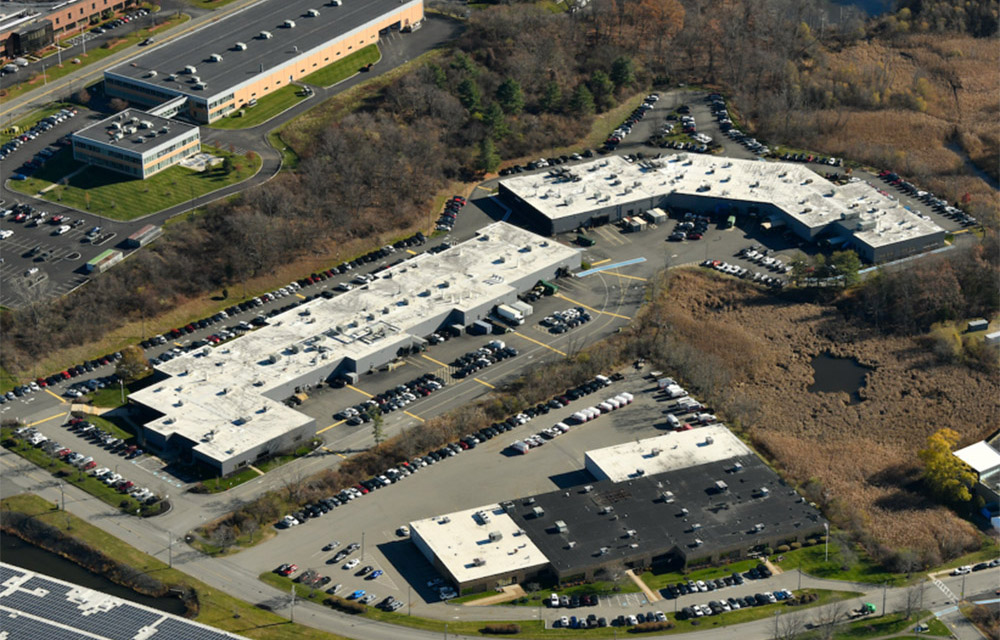
Danvers, MA Northwest Bank provided $34.5 million in financing to support Luzern Associates LLC’s $47.75 million acquisition of the Cherry Hill industrial portfolio, a three-building campus totaling 200,000 s/f.



 (1).gif)



.png)
Columns and Thought Leadership

Reverse exchanges and the challenges of a competitive real estate market - by Michele Fitzpatrick
Our current, highly competitive real estate market poses specific challenges for investors who are considering taking advantage of a tax-deferred 1031 exchange. In this market, investors will have no problem selling their current property if priced properly, but they may find it difficult to find a suitable replacement property

Are appraisers on the same page as the assessor? - by Richard Seman
The purpose of this article is to address problematic or confusing issues which may help assessors and appraisers to better understand how to value real estate for tax assessment purposes.

The focus on price per s/f compared to the comparable sales used in the appraisal report - by Dennis Chanski
Over the past several weeks, I have completed appraisal assignments for private clients. Interestingly, after submitting these appraisals, I received several phone calls – not to question the value, content, or any incorrect information, but rather to discuss the price per s/f compared to the comparable sales used in the report.

Massachusetts real estate transfers over $1 million face new tax rules as of November 1st - by Daniel Meyer
Attention to owners of real estate in the Commonwealth (and the title companies and other professionals who advise them), the Massachusetts Department of Revenue (the “DOR”) recently adopted a new “millionaire’s tax” via 830 CMR 62B.2.4
