


 (1).gif)
News:
Finance
Posted: January 15, 2021
Analyzing R.E. futures: More than demand/supply study - by Daniel Calano

Prospectus, LLC
While it may seem obvious, this past year has taught us real estate pundits that our work is fraught with uncertainty. No matter how good our demand supply analysis is, stuff happens that we were not expecting. Enter COVID, with unforeseen impacts on our health, culture, economy, tastes, work, lifestyle…. the list goes on. Already, we have tirelessly tried to predict our post-COVID lives, with visions of retail losses, office reductions, changing house preferences, population shifts. Are we good enough to get it right?
Recently, in my increasingly spare time, I have been following and studying the stock market. You correctly wonder where I am going with this non-sequitur. Oddly, I have concluded that the stock market, which often looks 6 to 12 months ahead for its clues, can give us better insights than traditional real estate study. If not better, it should be at least considered.
First, the main connection between equities and real estate is the availability and cost of money. Fed Chairman Powell has steadfastly said that rates will be low at least into 2022. As a direct result, money has never been cheaper, or more available, to both build buildings and/or invest in companies. While the economy itself is suffering through COVID with entire industries disappearing, the stock market is reaching historic highs. But, the stocks that had been propelled have been “stay-at-home” stocks. They have reflected the closing of gyms (think Peloton), the retreat from downtown office (think Zoom). You get the point.
Now, the pendulum swings again. As I said, the market continuously looks ahead by 6 to 12 months, predicting, or more accurately, placing bets on the future. It now knows that the vaccine will soon improve or conquer the COVID factor. Most recently, and somewhat abruptly, the market is taking money out of tech, and putting it into so-called “reopening”, more traditional stocks. The market is both reflecting the change brought on by COVID, and now the reversal to a new hybrid norm. We should take note. How this all plays out will be reflected in how and when we return to the office, how we get to the office, go shopping, eat out, or take out. Some of the knowns and/or possibilities should help guide us in real estate decisions.
No one can predict the length or amounts of change in any direction. Nonetheless, we will need to do more than calculate demand and supply independently. Moving so quickly, culture, demographics, science, health, tastes, preferences, all need to be considered. At least to my mind, this COVID year, for all of the fear, uncertainty, and pain created, has also shown how quickly and unpredictably things can change. Real estate, by definition, takes time to build and lasts for a long time. It is hard to reconcile the durability of real estate with the fleetingness of its use. We need to continuously look around corners, for unexpected factors, in order to get it right.
Daniel Calano, CRE, is the managing partner and principal of Prospectus, LLC, Cambridge, Mass.
MORE FROM Finance
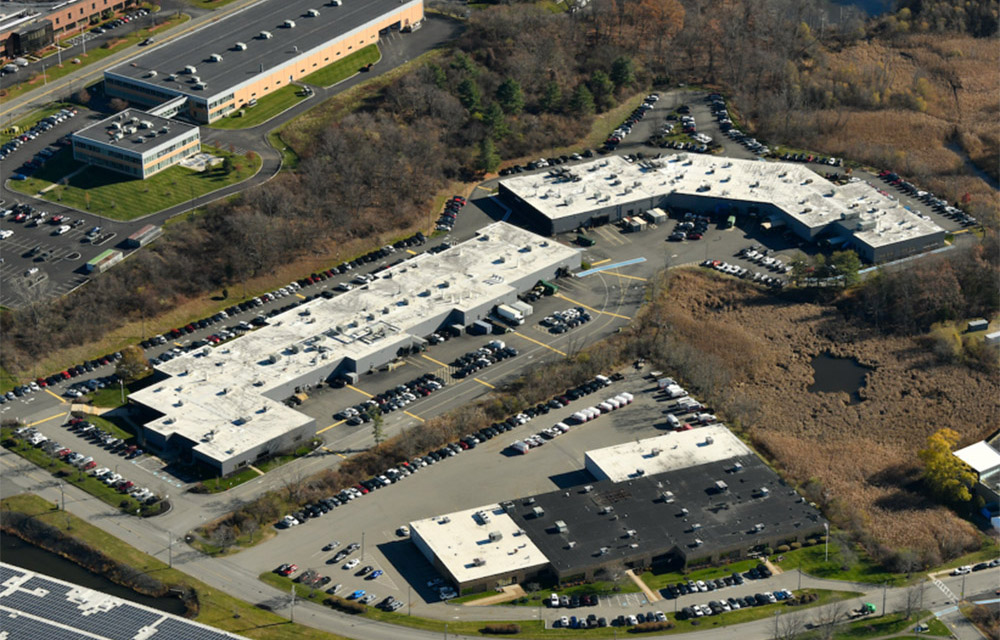
Northwest Bank finances Luzern Associates’ $47.75m acquisition
Danvers, MA Northwest Bank provided $34.5 million in financing to support Luzern Associates LLC’s $47.75 million acquisition of the Cherry Hill industrial portfolio, a three-building campus totaling 200,000 s/f.




 (1).gif)


Columns and Thought Leadership

The focus on price per s/f compared to the comparable sales used in the appraisal report - by Dennis Chanski
Over the past several weeks, I have completed appraisal assignments for private clients. Interestingly, after submitting these appraisals, I received several phone calls – not to question the value, content, or any incorrect information, but rather to discuss the price per s/f compared to the comparable sales used in the report.

Are appraisers on the same page as the assessor? - by Richard Seman
The purpose of this article is to address problematic or confusing issues which may help assessors and appraisers to better understand how to value real estate for tax assessment purposes.

Reverse exchanges and the challenges of a competitive real estate market - by Michele Fitzpatrick
Our current, highly competitive real estate market poses specific challenges for investors who are considering taking advantage of a tax-deferred 1031 exchange. In this market, investors will have no problem selling their current property if priced properly, but they may find it difficult to find a suitable replacement property

Massachusetts real estate transfers over $1 million face new tax rules as of November 1st - by Daniel Meyer
Attention to owners of real estate in the Commonwealth (and the title companies and other professionals who advise them), the Massachusetts Department of Revenue (the “DOR”) recently adopted a new “millionaire’s tax” via 830 CMR 62B.2.4
