


 (1).gif)
News:
Finance
Posted: March 13, 2014
Are weathermen the new economists?
Baby, it's cold outside. There has been a lot of talk about the weather lately and its relationship to the economy and the health of real estate. It's not just griping around the coffee machine, but, real experts trying to measure the real impact the weather has had on the overall economy. I guess such conjecture has always been the case, or there wouldn't be so many metaphors comparing weather to the economy: economic barometer, temperature of the market, real estate is hot or not, and whirlwind of buying, etc.
So it is natural for an extremely cold winter to be the basis for commentary on real estate activity slowing down. But really, do they have to say that it is actually the cause? Even our new chairman of the Federal Reserve, JanetYellen, hinted at this during her recent Fed meeting.
Housing construction has slowed somewhat, as it typically would during a winter in Minnesota, but it does not explain the slowdown in Southern California. So, attributing everything to the weather is searching for a scapegoat. There are actually other issues at work. How about the following problems or questions that have not gone away:
The beginning of tapering, i.e. slowing of bond buying by the Fed, has plenty of people nervous about how this will impact interest rate rise in the overall economy. When Yellen hinted that they could stop the tapering or slow it down if the economy stalled, the stock market was happy, but the economic recovery really would have slowed
Emerging market economies have slowed and, in some cases, have been coupled with extreme political unrest. Now there's a real potential problem.
There has also been plenty of talk about the schism between low-paying and high-paying jobs, and the creation of two economies in the U.S. Wealthier people are driving significant parts of the economy while moderate-income people are not seeing improvements in inflation-adjusted income. You have to have both improving to be optimistic.
Those are a few of the real issues to contend with beyond the easy metaphor of cold weather. On the other hand, most think the economy is improving for 2014 into 2015. There has been modestly better GDP growth, and inflation is low (1.1%), but slightly up and more aligned with the target established by the Fed. Interest rates remain relatively low, and when there is a slight increase, its effect on markets has only been short-lived. In Washington, D.C., there is fewer political agendas, the most recent example of which being almost unanimous agreement on expanding the debt ceiling. Finally unemployment seems be holding at 6.8% and, although we may not see improvements because of the low end of the wage schedule, it is once again not far from the federal target rate.
My final take-away: the economy is improving slowly; real estate markets are responding accordingly, with a few outliers being extremely hot; jobs are being created although in modest increments sometimes offset by efficiencies (i.e. lay-offs) created during the recession.
All in all, it seems relatively comfortable but, when people blame weather for a pullback, it demonstrates to me that there isn't enough confidence in our growth. I'd rather see pundits focusing on more serious problems, such as trouble in the Ukraine instead of highlighting plane cancellations due to snow.
Daniel Calano, CRE, is the managing partner and principal of Prospectus, LLC, Cambridge, Mass.
MORE FROM Finance
Northwest Bank finances Luzern Associates’ $47.75m acquisition
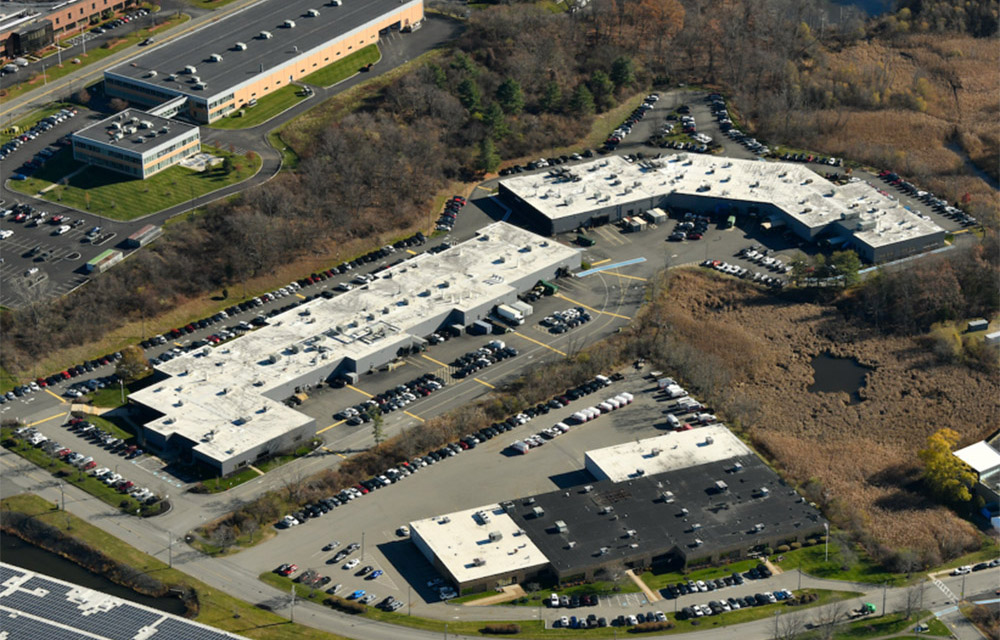
Danvers, MA Northwest Bank provided $34.5 million in financing to support Luzern Associates LLC’s $47.75 million acquisition of the Cherry Hill industrial portfolio, a three-building campus totaling 200,000 s/f.




 (1).gif)


Columns and Thought Leadership

Reverse exchanges and the challenges of a competitive real estate market - by Michele Fitzpatrick
Our current, highly competitive real estate market poses specific challenges for investors who are considering taking advantage of a tax-deferred 1031 exchange. In this market, investors will have no problem selling their current property if priced properly, but they may find it difficult to find a suitable replacement property

Massachusetts real estate transfers over $1 million face new tax rules as of November 1st - by Daniel Meyer
Attention to owners of real estate in the Commonwealth (and the title companies and other professionals who advise them), the Massachusetts Department of Revenue (the “DOR”) recently adopted a new “millionaire’s tax” via 830 CMR 62B.2.4

The focus on price per s/f compared to the comparable sales used in the appraisal report - by Dennis Chanski
Over the past several weeks, I have completed appraisal assignments for private clients. Interestingly, after submitting these appraisals, I received several phone calls – not to question the value, content, or any incorrect information, but rather to discuss the price per s/f compared to the comparable sales used in the report.

Are appraisers on the same page as the assessor? - by Richard Seman
The purpose of this article is to address problematic or confusing issues which may help assessors and appraisers to better understand how to value real estate for tax assessment purposes.
