



News:
Brokerage
Posted: September 26, 2007
August chain-store sales increase by 2.9% on year over year comparison
According to ICSC, August sales grew by 2.9% on a year-over-year comparison for the same month of 2006 on a comparable store basis for U.S. chain stores.
Thanks to back-to-school shopping driving sales, apparel-specialty-comp store sales grew 1.9%, its strongest performance since March, and discount store sales rose by 3.4% making August's performance stronger than July's which was at 2.6%.
"In August, sales picked-up a tad, but clearly the economic environment remains challenging for retailers," said Michael Niemira, ICSC's chief economist and director of research. "With continuing housing market problems, consumer spending trends will likely remain subdued in the foreseeable future," Niemira said.
ICSC Chain Store Sales Trends is a monthly report on the U.S. retail industry's sales performance based on an ICSC preliminary compilation of publicly-available sales for 47 chain stores during the month of August. Industry sales aggregates are compiled for "comparable-store" or "same-store" sales and for total store sales. Those data are presented as an index with a 1977=100 base.
Comparable-store sales are also compiled for specialized-industry groupings, which include aggregates for apparel chain stores, department stores, discount stores, drug stores, footwear stores, furniture chain stores and wholesale clubs.
Founded in 1957, ICSC is the premier global trade association of the shopping center industry. Its more than 70,000 members in 92 countries include shopping center owners, developers, managers, marketing specialists, investors, retailers and brokers, as well as academics and public officials.
MORE FROM Brokerage
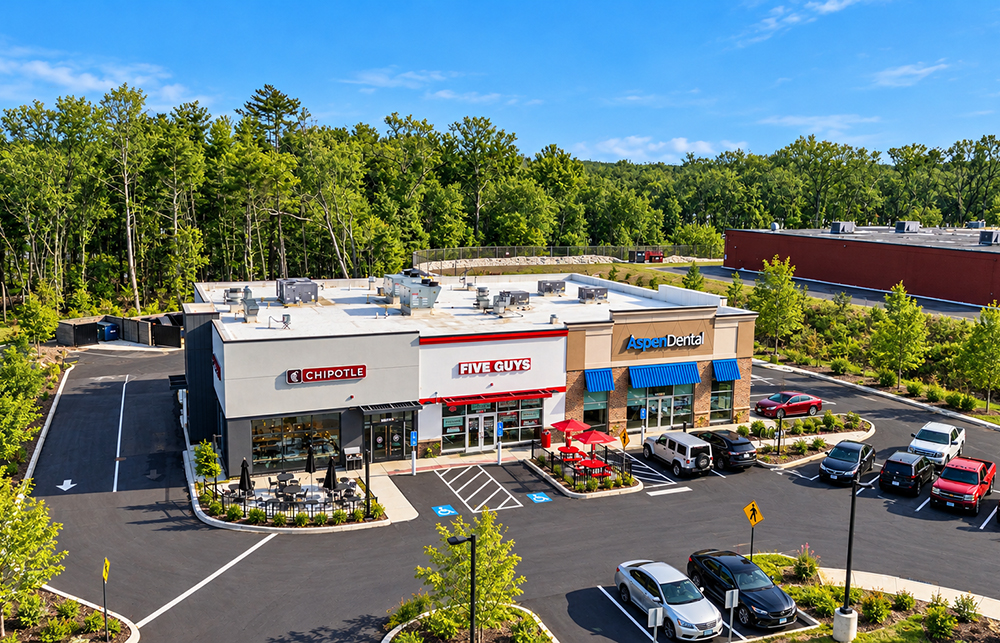
Horvath & Tremblay sells Chipotle, Five Guys and Aspen Dental in Mansfield, CT for $5.827 million
Mansfield, CT Bob Horvath, Todd Tremblay and Matt Nadler of Horvath & Tremblay have completed the sale of a three-tenant retail center. Horvath & Tremblay exclusively represented the seller and brought the buyer to complete the transaction at a sale price of $5.827 million.




Quick Hits

.png)
Columns and Thought Leadership

The rise of AI in CRE - And what it means for every skilled profession - A broker & appraiser weighs in - by Bryan Plourde
This may seem self-serving, and I’ll be the first to admit it. But unlike some of the artificial intelligence tools now reshaping our industry, I am fully aware of my own bias. So, hear me out. The rise of AI in commercial real estate is not a distant threat or a speculative headline.

End of the year retail thoughts - by Carol Todreas
Now what? As the year comes to a close, the state of retail is always in the news. The answers vary greatly depending on who in the various related industries you ask, each offering a unique lens on the challenges and opportunities ahead.
