


 (1).png)
News:
Owners Developers & Managers
Posted: March 13, 2026
Build America, Buy America (BABA) explained: What affordable housing developers should know - by Dustin Corbett

Affordable housing projects are inherently complex. Layered funding, tight margins, and strict timelines leave little room for error. When federal funding triggers Build America, Buy America (BABA) requirements, complexity increases – but that doesn’t have to stop a project.
BABA focuses on boosting domestic manufacturing. For affordable housing developers, it adds new challenges in procurement, documentation, and scheduling. With the right design and construction expertise involved early, developers can move forward confidently, knowing that federal requirements are being managed with the same care and discipline as cost, schedule, and quality.
Understanding BABA in the Context of Affordable Housing
BABA applies to projects receiving federal financial assistance and now includes many affordable housing developments that leverage funding sources like HUD. Unlike traditional “Buy American” provisions, BABA requirements extend beyond iron and steel to include manufactured products and construction materials, each with its own rules. For affordable housing projects, where funding is often layered, BABA may apply to specific scopes of work, infrastructure, or site components tied to federal funds, and/or select building systems or materials.
This nuance is critical. Misunderstanding where and how BABA applies can create downstream risks that affect cost, schedule, and funding compliance. Material selections, system specifications, and equipment decisions all influence compliance long before procurement begins. Designing projects with BABA requirements in mind from the outset, whenever possible, is just as important. At Windover, we approach BABA as a project controls issue, integrating it into our established processes rather than treating it as an add-on. Without a proactive construction strategy, projects risk discovering compliance gaps when solutions are limited and costly.

The Three BABA Categories Owners Should Know
From a construction standpoint, BABA compliance centers on three material categories:
• Iron and steel;
• Manufactured products; and
• Construction materials.
Windover embeds these requirements into our approach from day one. This includes identifying which funding sources trigger BABA, mapping compliance requirements to specific scopes during preconstruction, strategically sequencing long-lead items, flagging potential waiver needs early, integrating BABA tracking into submittal workflows, and protecting owners from avoidable compliance gaps. When managed correctly, BABA becomes just another controlled variable.
Aligning Compliance with the Mission of Affordable Housing
BABA is now a reality for many affordable housing projects. When compliance is approached early and collaboratively, it becomes a manageable part of the delivery process rather than a barrier. A construction partner experienced in federally funded work helps owners stay focused on what matters most: delivering high-quality, efficiently built housing to the communities they serve.
A global leader in construction management and innovation, Windover creates state-of-the-art commercial and institutional spaces, vibrant senior living and multi-family communities, and sophisticated custom homes. As a 100% employee-owned firm, Windover is dedicated to the core purpose of building great things with great people, and its team of skilled professionals possesses a deep understanding of the construction process. Windover collaborates with clients and partners to provide a positive experience from inception to completion and has been recognized for its exceptional work with numerous industry awards.
Dustin Corbett is a general superintendent at Windover Construction, Beverly, Mas.
MORE FROM Owners Developers & Managers
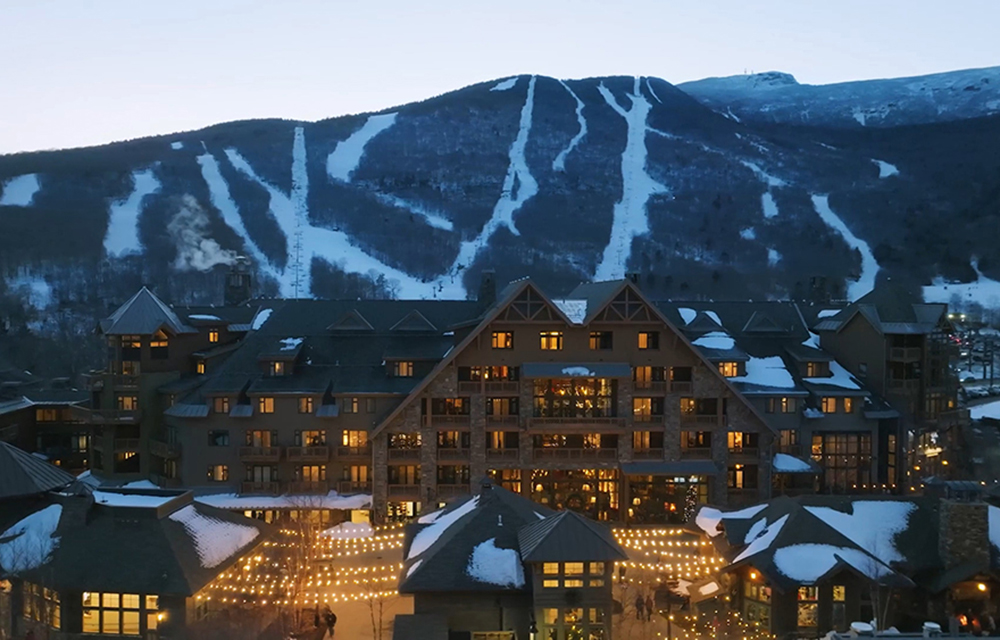
The Lodge at Spruce Peak recognized with Condé Nast Traveler’s 2026 Readers’ Choice Award - #3 in New England
Stowe, VT Condé Nast Traveler revealed the results of its annual Readers’ Choice Awards, with The Lodge at Spruce Peak recognized as the #3 U.S. Resort in New England.





 (1).png)

Columns and Thought Leadership

IREM president’s message: Our new reality - Staying ahead of supply chain delays - by Yoany Vargas
Supply chain delays are slowing construction, ratcheting up operating costs, and extending turnover timelines across Greater Boston, directly reducing revenue and increasing the workload for multifamily and

The legislature has spoken: New Hampshire doubles down on housing in commercial zones - by John Sokul
Last year, the New Hampshire Legislature enacted HB 631, a landmark housing measure requiring municipalities to permit multifamily housing in commercially zoned districts. The law generated

Retail infill strategy to activate Pawtucket’s Conant Thread District - by Gaetan Kashala
Until recently, the Conant Thread District consisted of approximately 150 acres of underutilized industrial land spanning Pawtucket and Central Falls. Today, the area is one of the most significant

Revitalized Town Centers: Retail??? - by Carol Todreas
It is now widely accepted that customers want to shop in person at physical stores. Brands know that they do better business in a physical store than just on line so they want to open stores. Demand for retail space by digital merchants, local entrepreneurs, and newly developed national chains