


 (1).gif)
News:
Finance
Posted: January 14, 2022
Berkshire Bank provides $2.95m historic tax credit for the United Theatre
Westerly, RI Berkshire Bank completed a Historic Tax Credit (HTC) investment to support the revitalization of The United Theatre. The project also supports Berkshire’s previously announced BEST Community Comeback in which it is lending and investing in activities that revitalize local economies.
Berkshire provided a projected $2.95 million historic tax credit investment to support the revitalization of The United Theater which is being renovated to become a community center for live performance, cinema, performing and visual arts, and arts education.
During the project, The United Theatre’s revitalization effort on Canal St. helped create a number of construction jobs and now complete, the project provides new permanent full-time and part-time jobs and increased foot traffic downtown.
The Historic Tax Credit is the most extensive federal program explicitly supporting historic preservation, leveraging over $102 billion in private investment to rehabilitate historic properties. The HTC program encourages the rehabilitation of certified historic buildings by allocating tax credits equal to 20% of qualified rehabilitation expenditures. Building owners must complete the 3-part application process for historic preservation certification. Ultimately, the Tax credit benefit resulting from the investment can be utilized beginning in the year the property is placed in service.
“Our investment in The United Theatre is just one example of the projects we are supporting in communities across our markets through our BEST Community Comeback. It contributes to ongoing revitalization efforts, helps create jobs and is an attractive investment for the Bank,” said Subhadeep Basu, Chief Financial Officer of Berkshire Bank. “Historic Tax Credits support the Bank’s investment, which enables the redevelopment project and provides an appropriate return to the Bank. Developers looking to restore eligible historic properties often finance the restoration in part by selling HTCs awarded to the building.
Tags:
Finance
MORE FROM Finance
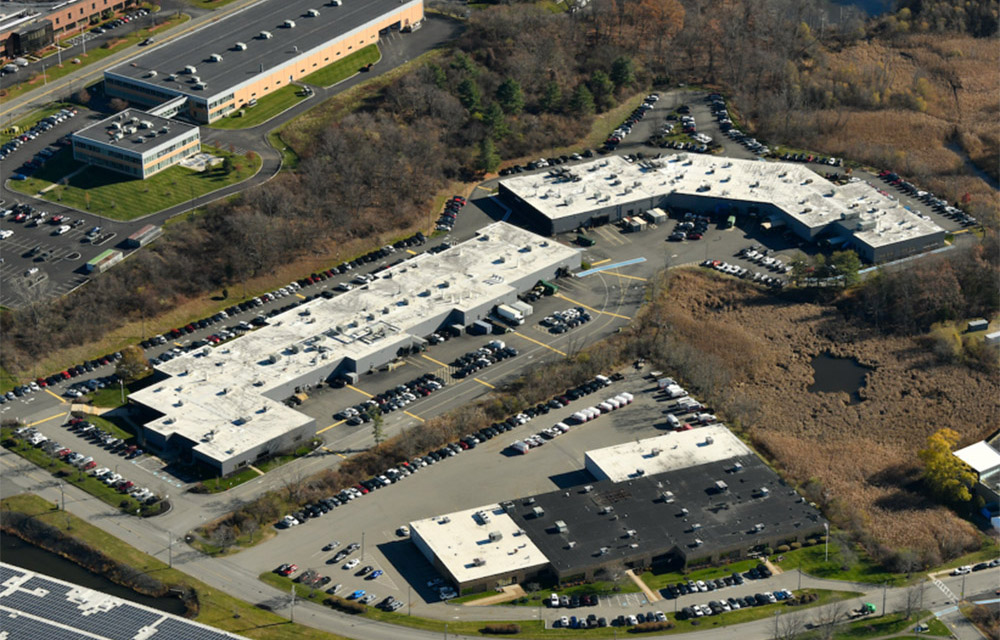
Northwest Bank finances Luzern Associates’ $47.75m acquisition
Danvers, MA Northwest Bank provided $34.5 million in financing to support Luzern Associates LLC’s $47.75 million acquisition of the Cherry Hill industrial portfolio, a three-building campus totaling 200,000 s/f.
 (1).gif)


Columns and Thought Leadership

Massachusetts real estate transfers over $1 million face new tax rules as of November 1st - by Daniel Meyer
Attention to owners of real estate in the Commonwealth (and the title companies and other professionals who advise them), the Massachusetts Department of Revenue (the “DOR”) recently adopted a new “millionaire’s tax” via 830 CMR 62B.2.4

The focus on price per s/f compared to the comparable sales used in the appraisal report - by Dennis Chanski
Over the past several weeks, I have completed appraisal assignments for private clients. Interestingly, after submitting these appraisals, I received several phone calls – not to question the value, content, or any incorrect information, but rather to discuss the price per s/f compared to the comparable sales used in the report.

Reverse exchanges and the challenges of a competitive real estate market - by Michele Fitzpatrick
Our current, highly competitive real estate market poses specific challenges for investors who are considering taking advantage of a tax-deferred 1031 exchange. In this market, investors will have no problem selling their current property if priced properly, but they may find it difficult to find a suitable replacement property

Are appraisers on the same page as the assessor? - by Richard Seman
The purpose of this article is to address problematic or confusing issues which may help assessors and appraisers to better understand how to value real estate for tax assessment purposes.
