


 (1).png)
News:
Owners Developers & Managers
Posted: August 14, 2026
Boston’s FIFA World Cup 26: A different kind of win for the lodging market - by Sebastian Colella

When Boston was selected as a host city for FIFA World Cup 26, expectations for the region’s lodging market were enormous. Hotels prepared for what many believed would be one of the largest demand events in the city’s history. Group business was displaced, corporate travelers adjusted travel schedules, and revenue managers pushed rates well in advance, anticipating weeks of sustained occupancy compression. In many cases, operators intentionally limited lower-rated base business, expecting the tournament to replace that demand with higher-rated transient travelers.
The tournament delivered, but not in the way many expected.
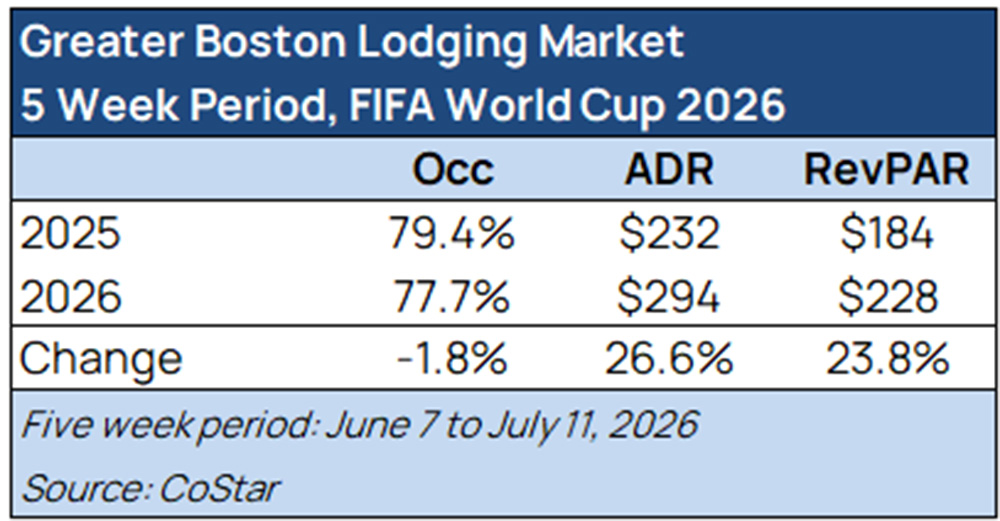
During the five-week period surrounding Boston’s seven matches (June 7 through July 11), hotel occupancy declined by 1.8 percentage points compared to the same period in 2025, according to CoStar. In fact, 24 of the 35 days experienced year-over-year occupancy declines. Yet operators who maintained pricing discipline captured extraordinary ADR premiums, driving RevPAR growth of nearly 24% while generating meaningful economic benefits throughout the region. Restaurants, attractions, transportation providers, and hotels all benefited from the influx of visitors and the global attention surrounding the event. (See Graphic 1)
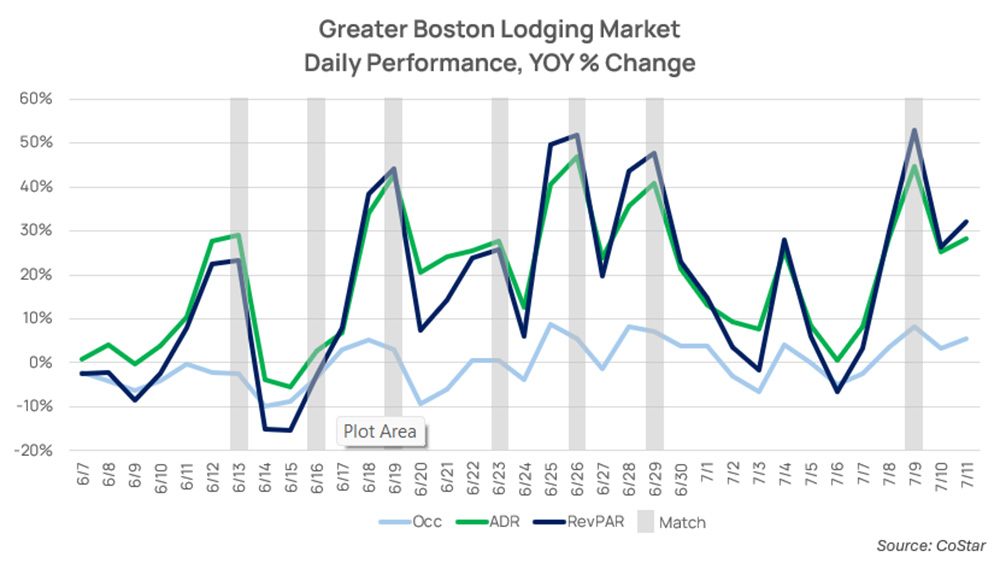
The daily performance tells an even more compelling story. Rather than creating one sustained surge in demand, FIFA World Cup 26 produced a series of shorter, highly profitable booking windows. ADR consistently accelerated two to three days before each match, often peaking on or immediately surrounding the match day, before quickly returning to more typical levels. Hotels weren’t selling significantly more rooms, they were selling those rooms at significantly higher rates. (See Graphic 2)
Unlike a convention or traditional citywide event, demand related to FIFA World Cup 26 arrived from multiple countries, through multiple booking channels, and across remarkably short booking windows. As travel plans evolved throughout the tournament, operators who remained disciplined with pricing captured exceptional premiums without relying on the occupancy gains many had anticipated. (See Graphic 3)
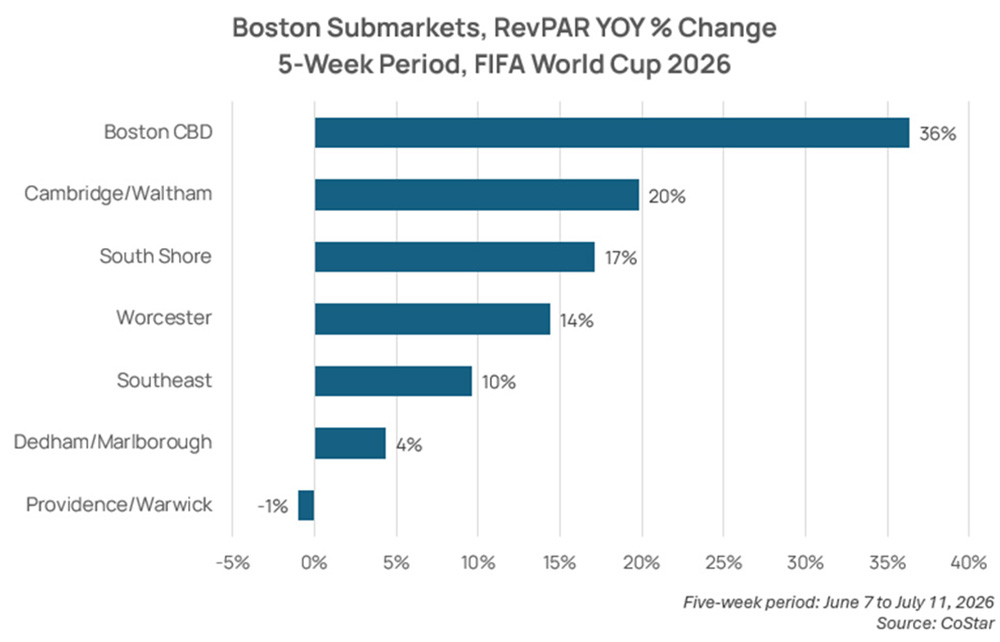
The World Cup’s impact extended well beyond downtown Boston, although not equally. Markets with the strongest pricing power captured the largest gains, led by Boston’s Central Business District with a 36% increase in RevPAR during the five-week period. Cambridge/Waltham and the South Shore also posted meaningful improvements, while several outer submarkets experienced more modest gains. Providence/Warwick was the only market to record a slight decline. The results demonstrate that while the tournament benefited much of the region, location and market positioning played an important role in determining who captured the greatest value.
FIFA World Cup 26 not only placed Boston on center stage before a global audience, generating lasting economic exposure and reinforcing the city’s appeal to future visitors, but it also challenged long-held assumptions about how mega-events impact hotel performance. For Boston’s lodging market, the tournament ultimately became a story of pricing power rather than occupancy compression, demonstrating an important lesson for owners, operators, and investors:
Extraordinary hotel performance doesn’t always require extraordinary occupancy. Sometimes, it simply requires recognizing extraordinary pricing opportunities.
Since 1991, Pinnacle Advisory Group has provided independent consulting and asset management services to the hospitality industry, serving owners, developers, investors, lenders, and institutions throughout the United States and the Caribbean.
To learn more about Pinnacle Advisory Group or access additional hospitality research and market insights, please visit www.pinnacle-advisory.com
Sebastian Colella is the managing principal of Pinnacle Advisory Group, a Boston-based hospitality consulting firm with more than three decades of industry experience. With over 25 years in hospitality, including more than a decade at Pinnacle, Colella’s background spans hotel operations, acquisitions, development, and asset management across major U.S. markets and resort destinations. He has held roles with leading hospitality brands, including The Ritz-Carlton, ClubCorp (now Invited), and Rosewood Hotels & Resorts. Colella currently serves on the Board of the Massachusetts Lodging Association. He attended Cornell University’s School of Hotel Administration.
MORE FROM Owners Developers & Managers
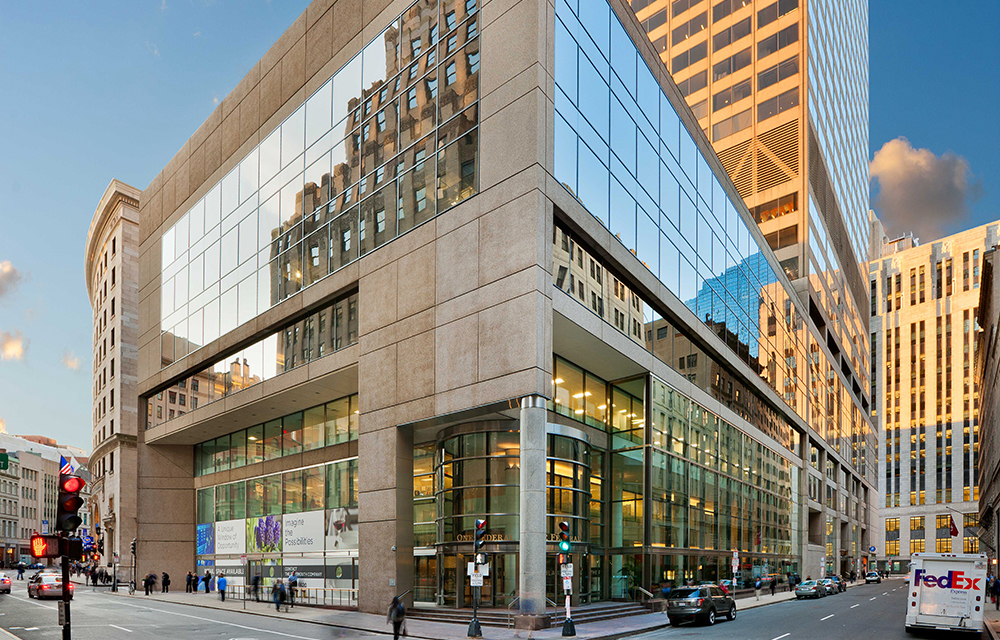
Rubin Rudman to establish headquarters at Tishman Speyer’s One Federal St.
Boston, MA Tishman Speyer has secured a new headquarters lease with Rubin Rudman at One Federal St., its 38-story, 1.1 million s/f tower in the Financial District. Under a 15-year lease, Rubin Rudman’s new headquarters will span 57,844 s/f across One Federal’s entire 23rd and 24th floors and a portion of the 25th floor.





 (1).png)

Columns and Thought Leadership

Retail infill strategy to activate Pawtucket’s Conant Thread District - by Gaetan Kashala
Until recently, the Conant Thread District consisted of approximately 150 acres of underutilized industrial land spanning Pawtucket and Central Falls. Today, the area is one of the most significant

The legislature has spoken: New Hampshire doubles down on housing in commercial zones - by John Sokul
Last year, the New Hampshire Legislature enacted HB 631, a landmark housing measure requiring municipalities to permit multifamily housing in commercially zoned districts. The law generated

IREM president’s message: Our new reality - Staying ahead of supply chain delays - by Yoany Vargas
Supply chain delays are slowing construction, ratcheting up operating costs, and extending turnover timelines across Greater Boston, directly reducing revenue and increasing the workload for multifamily and

Revitalized Town Centers: Retail??? - by Carol Todreas
It is now widely accepted that customers want to shop in person at physical stores. Brands know that they do better business in a physical store than just on line so they want to open stores. Demand for retail space by digital merchants, local entrepreneurs, and newly developed national chains