(1).png)
News:
Owners Developers & Managers
Posted: December 23, 2016
Can do cannabis? - by Jeffrey Turk of Turk & Quijano, LLP
 Jeffrey Turk Esq., Turk and Quijano LLP
Change is truly in the air. Actually, it’s not change in the air. It’s the pungent odor of marijuana! As a result of the approval of a statewide ballot question on November 8th, Massachusetts will now permit individuals to use and possess marijuana for recreational purposes. Interestingly enough, while Massachusetts and other states are legalizing the smoking of marijuana, commercial and residential landlords have been transitioning to smoke-free housing and work places. In fact, HUD recently issued a directive requiring ALL properties owned by housing authorities to become smoke-free. Prompting the transition to smoke-free housing are the dangers of second-hand smoke and the risk of fires associated with smoking. Of course, these same concerns exist in relation to smoking marijuana. In fact, since the approval of medical marijuana, resident complaints regarding the infiltration of marijuana smoke in their apartments have increased exponentially. The question on everyone’s mind, therefore, is what can we do about cannabis? Can a landlord prohibit residents from using and possessing marijuana in their apartments? The short answer is, sure!
As an initial matter, it is important to note that possession of marijuana is still illegal under federal law. In fact, the federal Controlled Substances Act still lists marijuana as a Class I drug, meaning that it is illegal for all purposes other than specific scientific research. Therefore, to the extent this state law conflicts with the federal law, federal law would prevail (remember the “Hierarchy of laws” from 5th grade?). As such, it would appear that the use or possession of marijuana would still constitute illegal drug related criminal activity (which is a lease violation) as well as a violation of General Laws C. 139 s. 19 (the fast-track eviction statute). The key word in the foregoing sentence is “appears”, as we are still waiting for a Massachusetts’ Court to issue a definitive answer on the issue. In fact, when the Massachusetts Supreme Judicial Court was recently presented with this issue, they elected to avoid the question thereby leaving the issue in limbo. (For more information, go to www.tqlawfirm.com and read our prior article “The Pitfalls of Pot”).
While we may need to wait for the Courts to consider the “legality” of marijuana, residential and commercial landlords can avoid this issue by simply addressing the issues in their leases. In fact, landlords prohibit otherwise legal actions on their properties all the time. For example, many leases prohibit dogs or waterbeds on the property. Other leases prohibit smoking cigarettes. Some even prohibit the possession of firearms or alcohol. All of these acts are completely legal under state law and yet residents, as part of their lease, contract away these rights in exchange for the opportunity to lease an apartment. Marijuana is no different. Even if the possession of the product is now legal, residents can be required to waive their right to possess marijuana as part of their agreement to lease a property. Such a lease provision is no different than lease provisions prohibiting the smoking of cigarettes in an apartment. In fact, it could be considered a logical and necessary part of any non-smoking policy.
Based on the foregoing, residential and commercial property owners should consider whether they desire to prohibit the use and possession of marijuana on their properties. While it is obviously not required, those that elect to do so should immediately review their leases to determine whether possession of marijuana is already prohibited therein. Since this truly is a new issue, many leases do not specifically reference marijuana. Also, for the reasons noted above, it could be problematic to simply rely on a general lease provision prohibiting “illegal” activity. Rather, for those properties which are already “Smoke-free”, make sure that the smoking of marijuana is included within the terms of the addendum. Many smoke-free housing addenda refer exclusively to cigarettes and cigars, but did not take into account marijuana. In addition, we are recommending that property owners incorporate a “Marijuana Addendum” which specifically addresses this issue. Such an addendum insures that residents are aware of this prohibition and that property owners maintain the ability to enforce such a policy. Again, by making this a contractual issue, rather than relying on state law, landlords should be able to effectively eliminate the use of marijuana on their properties.
To be “blunt”, commercial and residential property owners “weed to know” how to deal with the legalization of marijuana in Massachusetts. Many residents already have “high” expectations when it comes to indoor air quality and safety. Property owners should therefore carefully consider these issues in order to avoid taking a potential “hit” in court.
Jeffrey Turk, Esq., is the managing partner of Turk & Quijano, LLP, Braintree, Mass.
MORE FROM Owners Developers & Managers
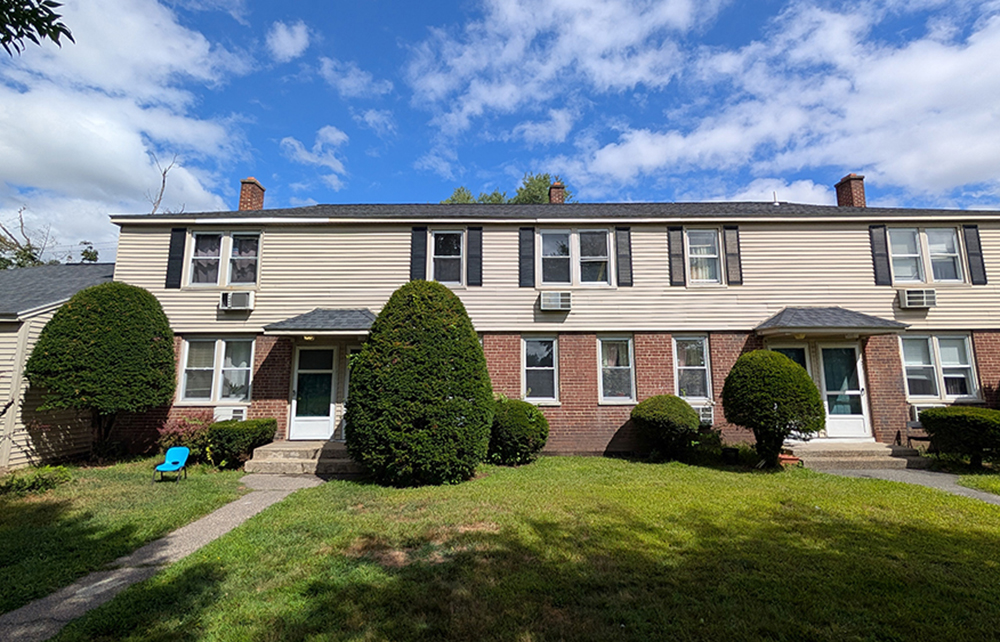
WinnCompanies acquires 290-unit housing property - begins $41.5 million rehabilitation
Chicopee, MA WinnCompanies has acquired a 290-unit affordable housing property in western Massachusetts in a deal that renews the community’s expiring affordability protections and kicks off a $41.5 million rehabilitation to address significant deferred maintenance.




Quick Hits
 (1).png)

Columns and Thought Leadership

IREM president’s message: Our new reality - Staying ahead of supply chain delays - by Yoany Vargas
Supply chain delays are slowing construction, ratcheting up operating costs, and extending turnover timelines across Greater Boston, directly reducing revenue and increasing the workload for multifamily and

The legislature has spoken: New Hampshire doubles down on housing in commercial zones - by John Sokul
Last year, the New Hampshire Legislature enacted HB 631, a landmark housing measure requiring municipalities to permit multifamily housing in commercially zoned districts. The law generated

Retail infill strategy to activate Pawtucket’s Conant Thread District - by Gaetan Kashala
Until recently, the Conant Thread District consisted of approximately 150 acres of underutilized industrial land spanning Pawtucket and Central Falls. Today, the area is one of the most significant

Revitalized Town Centers: Retail??? - by Carol Todreas
It is now widely accepted that customers want to shop in person at physical stores. Brands know that they do better business in a physical store than just on line so they want to open stores. Demand for retail space by digital merchants, local entrepreneurs, and newly developed national chains
September Promotion