


 (1).png)
News:
Owners Developers & Managers
Posted: December 4, 2014
Castle Square Apartments receives Energy Star certification from EPA
According to WinnDevelopment, the real estate development arm of WinnCompanies, in partnership with Castle Square Tenants Organization, Inc. (CSTO), a non-profit owned by the residents of Castle Sq. Apartments,the apartment property has been recognized by the U.S. Environmental Protection Agency (EPA) as one of the first multifamily housing properties in the country to earn Energy Star certification for superior energy performance.
The distinction signifies that Castle Sq. is more energy efficient than 75% of similar properties nationwide. To earn Energy Star certification through EPA's Portfolio Manager, buildings must achieve an Energy Star score of 75 or higher on a scale of 1 - 100. On average, these certified buildings use 35% less energy and cause 35% fewer greenhouse gas emissions than their peers.
"Through a state-of-the-art Deep Energy Retrofit, Castle Sq. Apartments dramatically improved its energy efficiency, redefining the savings we can expect from renovating an existing multifamily property," said Darien Crimmin, vice president of energy and sustainability at WinnDevelopment. "Before the 2012 retrofit, Castle Sq. was the worst energy performer in Winn's portfolio, but today it is a national example of green affordable housing. It is a tremendous honor and achievement to be part of the inaugural group of multifamily properties to receive Energy Star certification. We're very excited to see this community continue to receive recognition for its commitment to sustainability."
Located on Tremont St. in the city's South End neighborhood, and constructed in the 1960s, Castle Sq. is a 540,000 s/f mixed-use property comprised of 500 affordable apartment units and 20,000 s/f of retail space.
The property consists of four mid-rise buildings and 19 town house buildings containing one, two, three and four-bedroom apartments.
According to Energy Star, approximately one third of Americans live in the country's 500,000 multifamily buildings, and they collectively spend $22 billion on energy every year. Over the past decade, energy costs for renters have risen by 20%. By operating more efficiently, Energy Star certified properties will remain more affordable, which is especially important to renters at affordable and mixed-income housing communities like Castle Sq.
Along with Castle Sq. Apartments, 16 other multifamily buildings were among the inaugural collection to earn this distinction. This includes only three affordable housing communities, Castle Sq. being one of them, and two properties that have received LEED Platinum certification by the USGBC. Castle Sq. was named LEED Platinum in 2012 by the USGBC upon completion of a two-year Deep Energy Retrofit.
The new 1-100 Energy Star score and certification ability for existing multifamily properties comes a day after the US and China announced joint efforts to cut carbon pollution. The score is based on national survey data provided by Fannie Mae and will be integrated into other green building certification programs, including the USGBC's LEED rating system. This is the first time existing multifamily properties have been certified as Energy Star. Before now, this only applied to new construction that met prescriptive design requirements for high performance.
"The properties on this list demonstrate that it's possible to overcome the many traditional barriers to energy efficiency in the multifamily housing market and reap significant energy and cost savings," said Jean Lupinacci, chief of the Energy Star program for Commercial and Industrial Buildings. "These pioneers are leading the way when it comes to making properties more affordable for renters, while cutting greenhouse gas emissions and protecting human health."
Over the past decade, WinnCompanies has become a national leader in its commitment to sustainability, employing both high and low-tech strategies to increase energy efficiency and reduce the environmental footprints of their communities.
WinnCompanies is a Better Buildings Partner committed to reducing its energy consumption by 20% over 10 years. In addition to energy efficiency, Open Market ESCO, the energy services arm of WinnCompanies, plans to develop four megawatts (MW) of renewable energy capacity to benefit federally assisted housing by 2020. That goal is one of the largest commitments of any company participating in President Obama's Climate Action Plan and will generate significant annual electricity cost savings.
MORE FROM Owners Developers & Managers
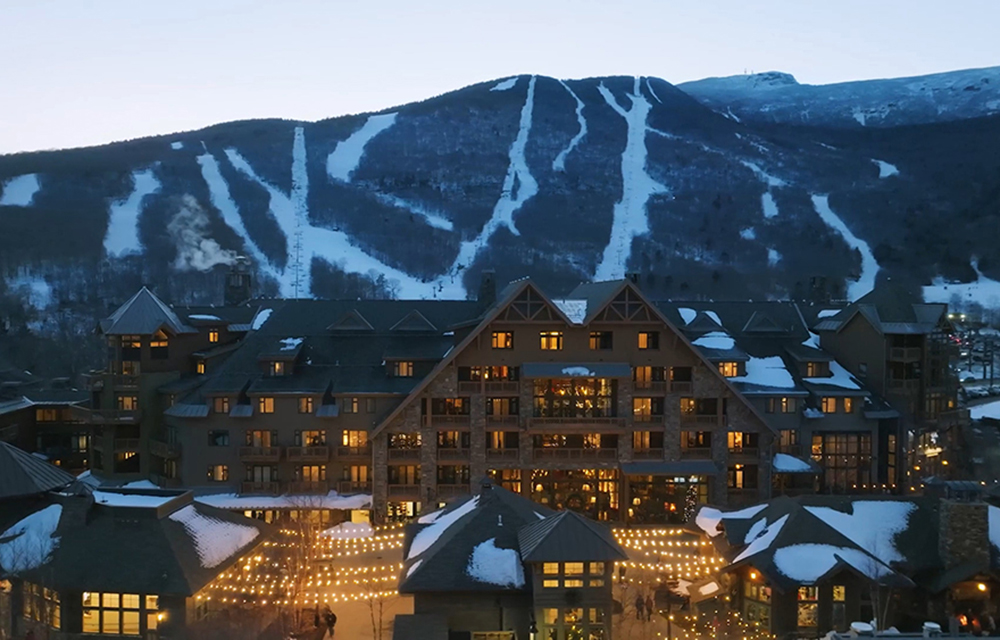
The Lodge at Spruce Peak recognized with Condé Nast Traveler’s 2026 Readers’ Choice Award - #3 in New England
Stowe, VT Condé Nast Traveler revealed the results of its annual Readers’ Choice Awards, with The Lodge at Spruce Peak recognized as the #3 U.S. Resort in New England.



Quick Hits


Columns and Thought Leadership

IREM president’s message: Our new reality - Staying ahead of supply chain delays - by Yoany Vargas
Supply chain delays are slowing construction, ratcheting up operating costs, and extending turnover timelines across Greater Boston, directly reducing revenue and increasing the workload for multifamily and

The legislature has spoken: New Hampshire doubles down on housing in commercial zones - by John Sokul
Last year, the New Hampshire Legislature enacted HB 631, a landmark housing measure requiring municipalities to permit multifamily housing in commercially zoned districts. The law generated

Revitalized Town Centers: Retail??? - by Carol Todreas
It is now widely accepted that customers want to shop in person at physical stores. Brands know that they do better business in a physical store than just on line so they want to open stores. Demand for retail space by digital merchants, local entrepreneurs, and newly developed national chains

Retail infill strategy to activate Pawtucket’s Conant Thread District - by Gaetan Kashala
Until recently, the Conant Thread District consisted of approximately 150 acres of underutilized industrial land spanning Pawtucket and Central Falls. Today, the area is one of the most significant