


 (1).gif)
News:
Finance
Posted: May 12, 2010
Change is happening fast: Maybe at the point of upheaval
One of the first principles an appraiser trainee learns is that of change. In the textbook The Appraisal of Real Estate published by the Appraisal Institute change, as applied to the appraisal profession, is defined as "the result of the relationship between cause and effect that affects real property value." In these times, change is happening so fast that we may be at the point of upheaval. Whether this is a good thing or disastrous depends on our reaction to the situation.
At the moment, the national economy appears to have hit bottom with the anticipation of a drawn out recovery accentuated by slow job growth. Without a doubt, the "Great Recession," as our current time has been dubbed, has precipitated radical changes in property value. Almost all areas of our country have witnessed declining real estate values, increasing numbers of foreclosed properties, and decreasing numbers of actual real estate transactions.
From recent statistics, the single-family residential sector exhibits signs of improvement. If economic conditions deteriorate further resulting in a continuation of relatively high vacancy rates and declining rents in the commercial and industrial sectors of the market, these sectors could take significantly more time to recover.
On the federal level, members of Congress are grappling with Wall Street reform and consumer protection in the form of HR4173. In summary, this proposed legislation includes an expansive amendment modernizing Title XI of FIRREA including grants to state appraisal boards for enforcement, AMC registration requirements, and separate disclosure of appraisal and appraisal administration charges.
The challenge for appraisers is to keep our fingers on the pulse of these changes. Not only do we need to have accurate data on our subject property and comparable sales, we also need to be very aware of the relevant trends in the marketplace. It is no longer adequate to know if values are stable, increasing or decreasing. We need to be aware of a much larger pool of data such as demographic trends, income trends, environmental and regulatory issues, and level of business activity, among others.
Although the value we provide is as of a specific date, we do our clients a disservice if we do not make them aware of market forces that impact value. A perfect example of such a market force would be declining population easily demonstrated by analyzing U.S. Census data. Such a trend would indicate that the demand for property, particularly residential property, is most likely going to decrease which may negatively impact values. If unemployment rates are creeping upward, the affordability of property may very well be headed in a downward direction, again with the potential to negatively impact values.
To maximize our usefulness to our clients, we need to keep abreast of not only changes in the marketplace, but also changes in our field. Innovations are occurring every day whether it involves a new technology, new USPAP requirements, or new methodologies. One of the ways of achieving this is a professional association such as the Appraisal Institute.
Patricia Amidon, MAI, is president of Amidon Appraisal Co., Portland, ME.
MORE FROM Finance
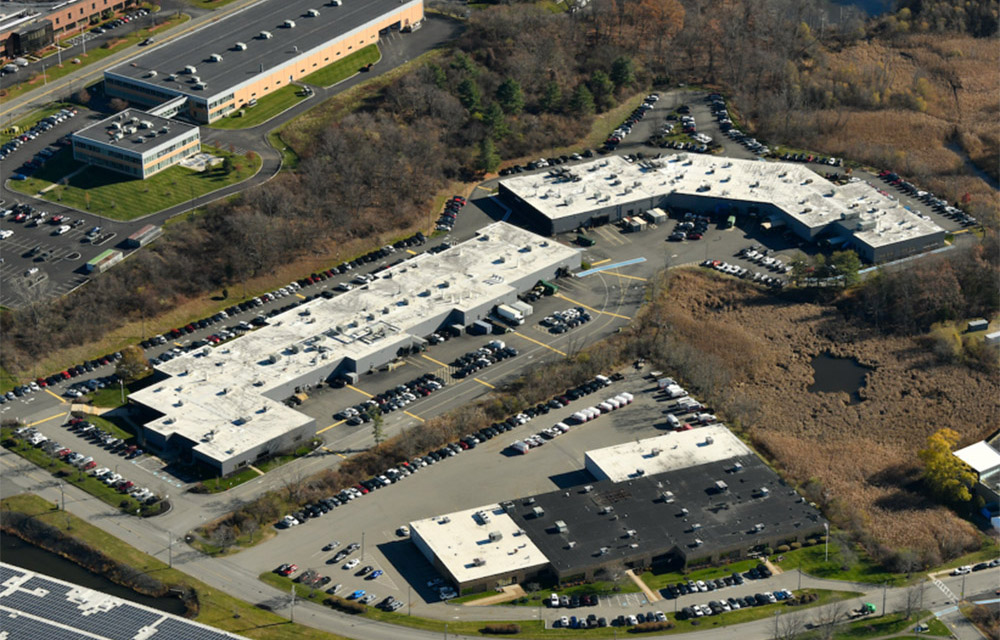
Northwest Bank finances Luzern Associates’ $47.75m acquisition
Danvers, MA Northwest Bank provided $34.5 million in financing to support Luzern Associates LLC’s $47.75 million acquisition of the Cherry Hill industrial portfolio, a three-building campus totaling 200,000 s/f.




 (1).gif)


Quick Hits


Columns and Thought Leadership

Massachusetts real estate transfers over $1 million face new tax rules as of November 1st - by Daniel Meyer
Attention to owners of real estate in the Commonwealth (and the title companies and other professionals who advise them), the Massachusetts Department of Revenue (the “DOR”) recently adopted a new “millionaire’s tax” via 830 CMR 62B.2.4

Reverse exchanges and the challenges of a competitive real estate market - by Michele Fitzpatrick
Our current, highly competitive real estate market poses specific challenges for investors who are considering taking advantage of a tax-deferred 1031 exchange. In this market, investors will have no problem selling their current property if priced properly, but they may find it difficult to find a suitable replacement property

Are appraisers on the same page as the assessor? - by Richard Seman
The purpose of this article is to address problematic or confusing issues which may help assessors and appraisers to better understand how to value real estate for tax assessment purposes.

The focus on price per s/f compared to the comparable sales used in the appraisal report - by Dennis Chanski
Over the past several weeks, I have completed appraisal assignments for private clients. Interestingly, after submitting these appraisals, I received several phone calls – not to question the value, content, or any incorrect information, but rather to discuss the price per s/f compared to the comparable sales used in the report.
