


 (1).png)
News:
Owners Developers & Managers
Posted: February 26, 2009
Code upgrade: Essential property insurance by adding "ordinance or law" coverage
Property insurance policies invariably exclude damage due to the enforcement of building codes or ordinances. This gap can be closed by adding "ordinance or law" coverage by two endorsements to a commercial property policy - coverage to upgrade the building as required by laws or ordinances and coverage for the loss of income during the increased time it takes to bring the building into compliance with applicable codes. Also, businessowners policies can be endorsed to add both of these coverages. Typically, most Mass. homeowners policies contain a minimum of 10 % of the building coverage as additional ordinance or law insurance.
A variety of laws could come into play when a damaged building is repaired or rebuilt which may include local, state and federal regulations. There also may be restrictions imposed by historical societies on buildings designated as significant and/or historical. Many jurisdictions require that a building with "major damage" be demolished, even if part of the building is salvageable. You need to know what "code" requirements could apply as these may differ by jurisdiction.
Fortunately, the insurance industry has created policy endorsements that a property owner can purchase for an additional premium that provide protection for this exposure. Ordinance or law coverage is triggered when:
(1) a covered peril
(2) causes damage to a building
(3) and damages result in the enforcement of an ordinance or law in force at the time of the loss ( but which was not required to comply with before the loss).
These typically regulate demolition, construction, or repair of buildings or establishing land use requirements. All three elements must be present.
There are three distinct coverages:
A: Loss to undamaged portion of the building;
B: Demolition cost; and
C: Increased cost of construction and they each have their own premium charge.
Coverage A pays for the value of the loss of the undamaged portion of the building when enforcement of the building code requires demolition of the undamaged portion. Coverage B pays for the cost of demolition, and coverage C pays any increased costs of construction due to the enforcement of the building codes.
There is also an endorsement which pays for the business income loss during the necessary increased period of suspension of operations due to any additional construction time required to meet building codes.
Property owners need to do some research into local demolition and construction costs. They need to know at what point the authorities would require that undamaged parts of the building be demolished. Also, they need to study the codes to determine which would apply to the subject building. In this case, it would be easier to hire a "code compliance" consultant and/or a licensed insurance advisor and have a survey done of the building. Since the increased costs necessary to rebuild in compliance with existing codes may be substantial, you are best to be educated. As a real estate professional, you should be prepared for a catastrophe by purchasing adequate ordinance or law coverage to supplement your replacement cost policy.
Jonathan Berman, J.D. is vice president of Berman Adjusters, Inc., Newton, Mass.
MORE FROM Owners Developers & Managers
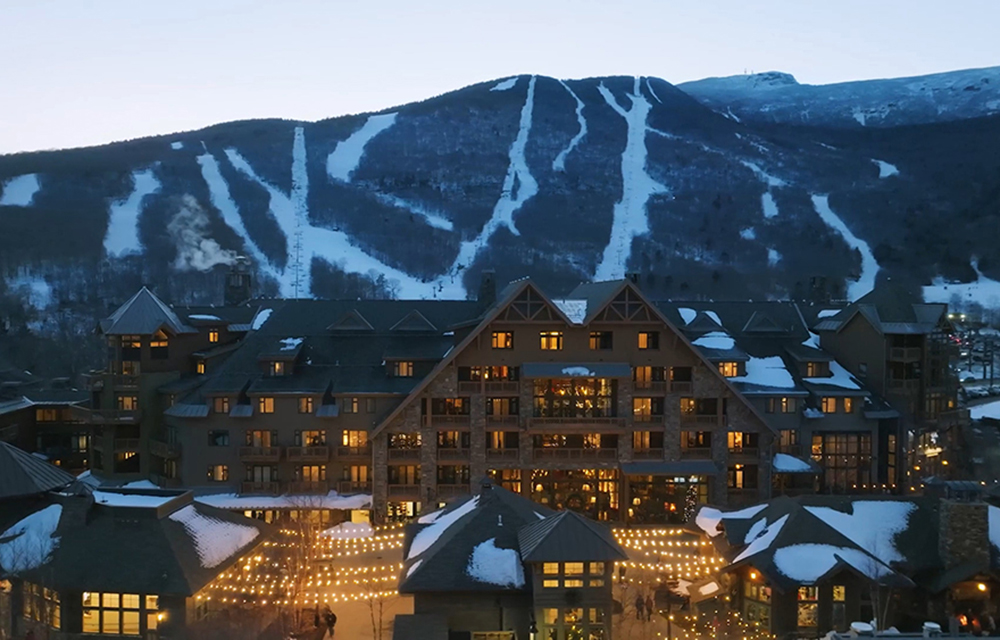
The Lodge at Spruce Peak recognized with Condé Nast Traveler’s 2026 Readers’ Choice Award - #3 in New England
Stowe, VT Condé Nast Traveler revealed the results of its annual Readers’ Choice Awards, with The Lodge at Spruce Peak recognized as the #3 U.S. Resort in New England.




Quick Hits
 (1).png)

Columns and Thought Leadership

The legislature has spoken: New Hampshire doubles down on housing in commercial zones - by John Sokul
Last year, the New Hampshire Legislature enacted HB 631, a landmark housing measure requiring municipalities to permit multifamily housing in commercially zoned districts. The law generated

Retail infill strategy to activate Pawtucket’s Conant Thread District - by Gaetan Kashala
Until recently, the Conant Thread District consisted of approximately 150 acres of underutilized industrial land spanning Pawtucket and Central Falls. Today, the area is one of the most significant

IREM president’s message: Our new reality - Staying ahead of supply chain delays - by Yoany Vargas
Supply chain delays are slowing construction, ratcheting up operating costs, and extending turnover timelines across Greater Boston, directly reducing revenue and increasing the workload for multifamily and

Revitalized Town Centers: Retail??? - by Carol Todreas
It is now widely accepted that customers want to shop in person at physical stores. Brands know that they do better business in a physical store than just on line so they want to open stores. Demand for retail space by digital merchants, local entrepreneurs, and newly developed national chains