


 (1).png)
News:
Owners Developers & Managers
Posted: May 1, 2014
Commercial property owners poised to benefit from latest MA Solar Incentive program
Solar in Massachusetts just got stronger! On April 25, the MA Department of Energy Resources (DOER) officially presented its newest solar energy program, commonly referred to as SREC II (pronounced "S" "REC" "TWO"). The state has quadrupled its initial goal of having 400 Megawatts (MW) of solar systems installed to now 1,600 MW. The much awaited program will continue to incent businesses and organizations to install solar and reap its many environmental and financial benefits.
The SREC II program provides financial incentives to owners of solar photovoltaic (PV) systems based on the amount of electricity the system produces. For every 1,000 kWh (kilowatt hours) of solar electricity produced, the owner of the system will receive a certain number of Solar Renewable Energy Certificates (SREC). Theses SRECs can then be ultimately sold to the utility companies (and others) in the state to help them reach their state mandated goals. The SREC II program brings some changes and three areas worth noting are:
1) Market Sectors - All solar projects are not considered equal in the program! The state has identified four (4) market sectors and provided different incentives accordingly. Three of the sectors are specifically defined and the fourth is a "catch all" for any system that does not fit into the first three. The state's goal is to better manage and incent where solar is being installed.
2) SREC Factors - Each market sector has a different "factor" that is used to calculate the number of SRECs a system owner will receive. The factors range from .7 to 1.0 - i.e. a system with an SREC factor of 1 will receive 1 SREC for every 1,000 kWh's of production each quarter. Qualifying for a certain SREC factor will be a key decision for a project owner due to the financial impact.
3) 10 Year Term - All systems that qualify under the program will receive a 10 year term in which they can participate in the annual SREC auction. The auction price will decrease per a set schedule over the term. The fixed term and published schedules will help project owners and lenders to model and evaluate financial performance.
These three areas are major influences on the types and number of solar energy systems that will be installed in Massachusetts over the coming years. In addition to the state sponsored SREC II program, the federal government still offers a 30% Investment Tax Credit (ITC) and accelerated depreciation for solar. Talking with an experienced solar developer can help you understand the programs and incentives in more detail and determine if solar might be a fit for your business.
James Dumas is principal of Solect Energy Development LLC of Hopkinton, Mass.
MORE FROM Owners Developers & Managers
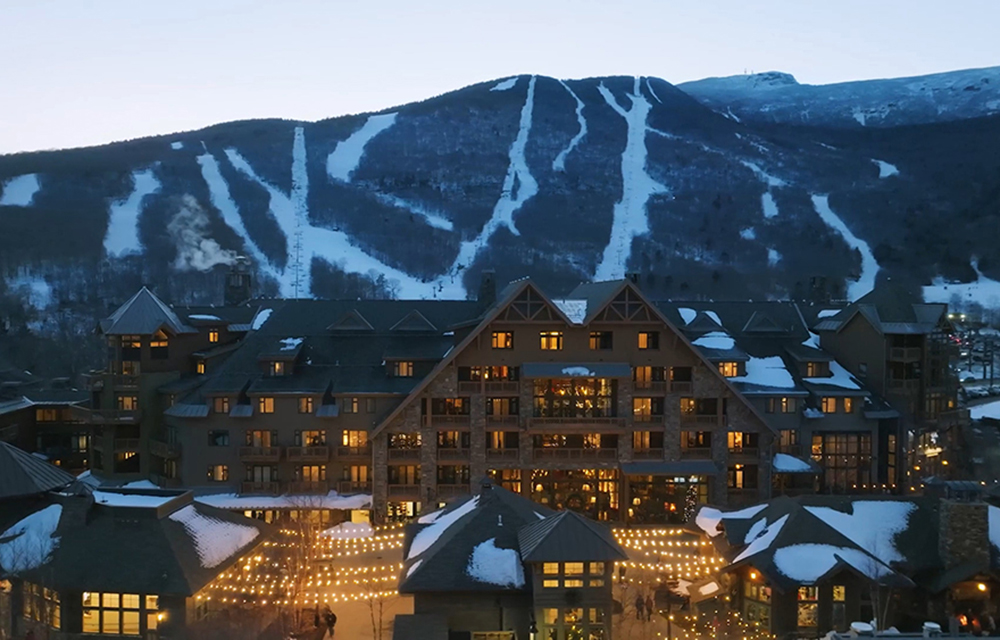
The Lodge at Spruce Peak recognized with Condé Nast Traveler’s 2026 Readers’ Choice Award - #3 in New England
Stowe, VT Condé Nast Traveler revealed the results of its annual Readers’ Choice Awards, with The Lodge at Spruce Peak recognized as the #3 U.S. Resort in New England.




 (1).png)

Columns and Thought Leadership

Revitalized Town Centers: Retail??? - by Carol Todreas
It is now widely accepted that customers want to shop in person at physical stores. Brands know that they do better business in a physical store than just on line so they want to open stores. Demand for retail space by digital merchants, local entrepreneurs, and newly developed national chains

IREM president’s message: Our new reality - Staying ahead of supply chain delays - by Yoany Vargas
Supply chain delays are slowing construction, ratcheting up operating costs, and extending turnover timelines across Greater Boston, directly reducing revenue and increasing the workload for multifamily and

The legislature has spoken: New Hampshire doubles down on housing in commercial zones - by John Sokul
Last year, the New Hampshire Legislature enacted HB 631, a landmark housing measure requiring municipalities to permit multifamily housing in commercially zoned districts. The law generated

Retail infill strategy to activate Pawtucket’s Conant Thread District - by Gaetan Kashala
Until recently, the Conant Thread District consisted of approximately 150 acres of underutilized industrial land spanning Pawtucket and Central Falls. Today, the area is one of the most significant