


 (1).gif)
News:
Finance
Posted: September 13, 2019
Common sense in 2019 - by Bill Pastuszek

Shepherd Associates
This article was originally written in 2015. Seems like a long time ago. Interestingly how everything changes there are some fundamental concepts that don’t.
A lot of economic behavior takes place based on a lack of knowledge and judgment and over-reliance on habit, benchmarks, or other factors founded in laziness or incompetence. Real estate behavior is no exception.
Technology and human nature makes for a potent combination in producing illogical and incorrect results. Feed enough data into a program and something is bound to result to make sense to somebody.
Somewhat like walking around outdoors but using the iPhone to tell what the weather is. Real estate markets are dynamic and changes are subtle, slow to change, and changes often are not immediately apparent. The foundation of more than one real estate bust has been built on accepting input from machines and ignoring obvious signs on the street.
Investment real estate markets are long term. Assets lack the immediate liquidity that is available in the stock and bond markets. While that may be a good thing, it also means that investments should not be entered lightly; getting in is easier than getting out, most of the time.
Given relatively long horizons of real estate, it’s easy to interpret short term signals as definitively and definitely indicative of the future. And beware of the insidious effects of seemingly small compounding resulting in large future outcomes over long investment analysis holding periods. The future doesn’t always work out as modeled: a rosy today doesn’t guarantee blues skies forever.
The best investors seem to be those who understand the asset, its quality, and location and who are willing to pay a fair price. Once the decision is made, the crowds of analyst can punch up the appropriate scenarios.
It’s the less sound investments that require great motivation to buy and to justify prices being paid. Currently, investors decry the lack of quality investment alternatives and then use this shortage to justify paying first class prices for second rate assets.
In this low return era, commercial real estate represents the opportunity to make outsized profits. But, having made decisions to invest, there are a lot of moving pieces, plenty of places for things to go awry. Good investors turn down far more deals than they accept.
Low rates – whether cap rates or interest rates or discount rates - have been with us for a long time. There still are some fantastically wide swings between the highest quality markets and those of lesser quality. Investors are focused more than ever in trying to find the fine line between prudent, acceptable risk and imprudent, unacceptable risk. At one end, something like sustainable value and returns results; at the other end, value become volatile and results become uncertain. What seemed like a good idea won’t look so good in retrospect further on down the road. The good times won’t last forever.
Much optimism abounds in real estate and the economy. We are well into an unprecedented real estate expansion cycle and everyone worries, “Is it over yet?” There are plenty of arguments in terms of the health and direction of the overall economy to predict recession or further expansion. There is plenty of blame to be spread around for those who don’t act correctly and those who don’t act at all.
Think about the current rate environment. What do zero or negative rates mean for the economies and real estate. Projections that are not firmly grounded in the thought processes of today’s investors may ultimately cause damage further down the road.
Common sense should rule. Caution is necessary in these volatile and not entirely rational times. Investors and markets don’t like uncertainly and will act accordingly in its face.
Beware mountains of data and the siren songs of pundits. Go outside. See for yourself what the weather looks like. Do some research. Go back outside and think about it some more. Then look at the iPhone. Then act.
Bill Pastuszek, MAI, ASA, MRA, heads Shepherd Associates, Newton, Mass.
MORE FROM Finance
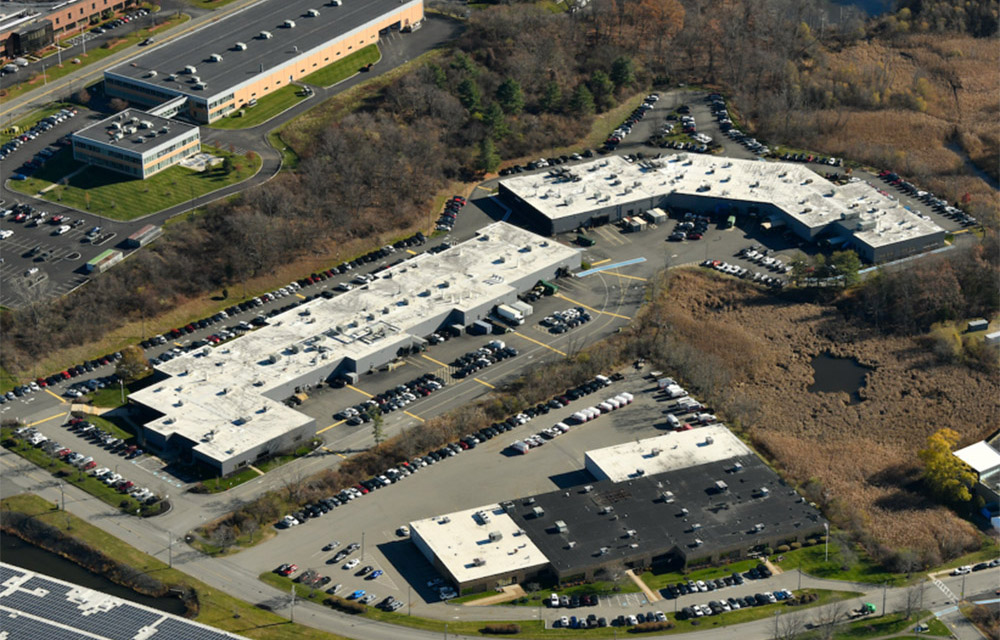
Northwest Bank finances Luzern Associates’ $47.75m acquisition
Danvers, MA Northwest Bank provided $34.5 million in financing to support Luzern Associates LLC’s $47.75 million acquisition of the Cherry Hill industrial portfolio, a three-building campus totaling 200,000 s/f.


 (1).gif)


Quick Hits


Columns and Thought Leadership

Are appraisers on the same page as the assessor? - by Richard Seman
The purpose of this article is to address problematic or confusing issues which may help assessors and appraisers to better understand how to value real estate for tax assessment purposes.

Reverse exchanges and the challenges of a competitive real estate market - by Michele Fitzpatrick
Our current, highly competitive real estate market poses specific challenges for investors who are considering taking advantage of a tax-deferred 1031 exchange. In this market, investors will have no problem selling their current property if priced properly, but they may find it difficult to find a suitable replacement property

The focus on price per s/f compared to the comparable sales used in the appraisal report - by Dennis Chanski
Over the past several weeks, I have completed appraisal assignments for private clients. Interestingly, after submitting these appraisals, I received several phone calls – not to question the value, content, or any incorrect information, but rather to discuss the price per s/f compared to the comparable sales used in the report.

Massachusetts real estate transfers over $1 million face new tax rules as of November 1st - by Daniel Meyer
Attention to owners of real estate in the Commonwealth (and the title companies and other professionals who advise them), the Massachusetts Department of Revenue (the “DOR”) recently adopted a new “millionaire’s tax” via 830 CMR 62B.2.4
