


 (1).gif)
News:
Finance
Posted: May 8, 2020
COVID-19: Millions of questions we will have to ask - by Shaun Fitzgerald

Fitzgerald Appraisals
Covid-19! What else could this article be about? What other title would be appropriate. It’s all we hear about and all we read about. You’re reading about this in a real estate journal, so the topic really has to be about the effect of Covid-19 on real estate. And I’m a real estate appraiser, so it’s got to be about the effect of Covid-19 on real estate values. And boy is there a lot to say. Or, more accurately, aren’t there a million questions we will have to ask. We can’t predict the future, but we are going to need to have the questions ready, and we are going to need to watch the trends and statistics as they unfold.
Real estate value depends on supply and demand. So here are some of the questions.
Does a business really need these “non-essential” workers? If the business does need them, does the “non-essential” employee really need office space? And if they don’t need office space, can the business downsize its space requirements? If it can’t, can it get a rent reduction because others are successfully reducing their office space footprint? If the demand for space ebbs, will office space rents and values decrease, will new construction slow or stop? Will the lack of new construction reduce land values?
And if “essential” workers are the ones who take public transportation and are consequently more likely to contract Covid-19, what is the effect on MBTA ridership? What is the effect on the lower rent communities in which they live? Does the rent go lower? Will less people take “essential” jobs – and cause rents to go even lower? Will more and more of these people flee to the less crowed suburbs? If “essential” workers live in the city, will they move to the suburbs where less density might mean less exposure to Covid-19? When they get there, will people be practicing “social distancing” (of one kind or another)?
If “non-essential” workers don’t need to drive to their jobs and “essential” workers avoid public transportation, will there be less demand for cars, for parking lots, for gas stations, for drive-thru coffee shops? Will people buy clothing if they are only on the phone, on video conference calls or working at a computer? If they are not commuting to work, will they go out for coffee and a muffin – or a quick lunch – or dinner? And if they do go out for dinner, will they feel the need to dress up (in recently purchased clothing)? If they can only go to appropriately social-distanced restaurants, will they be able to afford a meal when they are taking up twice the floor area of what they used to settle for? If the restaurant can’t provide enough “socially-distanced” space per diner, can they somehow serve enough meals to pay the rent? Will people want to go to the local pub when they can’t make or build acquaintances with the person on the next barstool or the next table? Or might they just get take-out?
On the brighter side, will people want larger apartments or houses so that they can entertain at home? Will they prefer to have larger yards so their guests can have a place to park when they visit? Will outdoor entertaining become more prevalent? Will front porches come back into style so that otherwise homebound folks can watch and enjoy the neighborhood from a safe distance? If people are watching from the front porch, will neighbors be more likely to watch out for each other? Will street crime diminish?
With less travel, will traffic fatalities decrease? Will air pollution decrease? Will energy costs decrease? Will it be safer to walk, to jog, to cycle, to roller-blade? With a better quality of life, will real estate values increase? With historically low interest rates and the consequent increased affordability, will people choose to live differently? When our choices are more of a “life or death” decision such as we are now experiencing, what will our values be? And of course, what will be the associated real estate values?
Shaun Fitzgerald is the owner of Fitzgerald Appraisals, Easton, Mass.
MORE FROM Finance
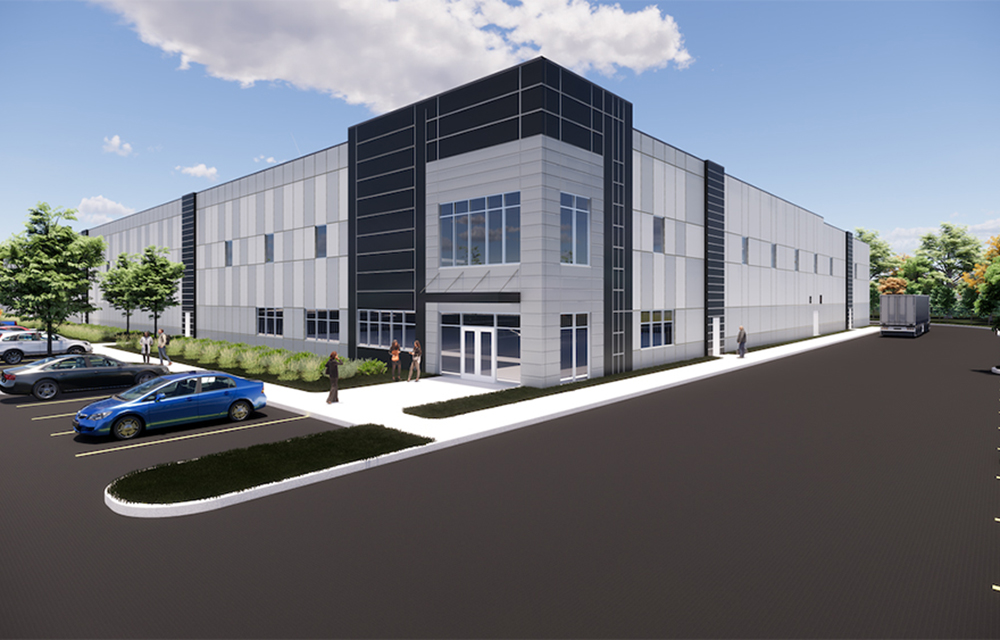
Berkeley Garbe secures $35.4 million debt financing with MetLife Investment Management
Billerica, MA Berkeley Garbe has secured a $35.4 million financing package for 161 Concord Rd., a new advanced manufacturing and innovation hub that is 30% complete following the start of construction in June. The project is on track to be completed in April 2027.

 (1).gif)



Columns and Thought Leadership

Are appraisers on the same page as the assessor? - by Richard Seman
The purpose of this article is to address problematic or confusing issues which may help assessors and appraisers to better understand how to value real estate for tax assessment purposes.

The focus on price per s/f compared to the comparable sales used in the appraisal report - by Dennis Chanski
Over the past several weeks, I have completed appraisal assignments for private clients. Interestingly, after submitting these appraisals, I received several phone calls – not to question the value, content, or any incorrect information, but rather to discuss the price per s/f compared to the comparable sales used in the report.

Massachusetts real estate transfers over $1 million face new tax rules as of November 1st - by Daniel Meyer
Attention to owners of real estate in the Commonwealth (and the title companies and other professionals who advise them), the Massachusetts Department of Revenue (the “DOR”) recently adopted a new “millionaire’s tax” via 830 CMR 62B.2.4

Reverse exchanges and the challenges of a competitive real estate market - by Michele Fitzpatrick
Our current, highly competitive real estate market poses specific challenges for investors who are considering taking advantage of a tax-deferred 1031 exchange. In this market, investors will have no problem selling their current property if priced properly, but they may find it difficult to find a suitable replacement property
