


 (1).png)
News:
Owners Developers & Managers
Posted: March 22, 2019
DLA Piper’s Global Real Estate’s Annual State of the Market Survey

Boston, MA According to DLA Piper’s Global Real Estate’s Annual State of the Market Survey, a significant shift in cross-border investment in U.S. commercial real estate is taking place, with a new country predicted to become the major source of non-U.S. capital for U.S. commercial real estate. In a dramatic change in the prediction of the likely source of foreign investment in U.S. commercial real estate, Canada was cited by 56% of survey respondents as the most likely source of foreign capital in the U.S. commercial real estate market.
In the previous two DLA Piper surveys, China had topped the list of expected foreign investors; respondents to this survey dropped China to eighth place. The U.S.-China relationship has faced real and potential political pressures from both sides, with Beijing tightening capital outflows and overseas acquisitions and Washington, D.C., mulling China-specific trade protection measures.
More generally, a majority of respondents moved towards a bearish position on the U.S. commercial real estate market, while 40% maintained a bullish posture. The availability of capital was cited as a positive sign for the commercial real estate market. Signs of dynamism were present, with respondents expressing keen insights into how technological change will both disrupt and open new opportunities within the U.S. commercial real estate market.
“There has been sustained strength in the U.S. commercial real estate market,” said John Sullivan, chair of DLA Piper’s U.S. Real Estate practice and co-chair of its Global Real Estate practice. “Although there will no doubt be continued disruption and change, the U.S. economy continues to perform well and the U.S. remains a safe haven for investment capital, particularly in hard assets such as commercial real estate.”
Another significant finding in the DLA Piper survey is the increasing importance of blockchain: Approximately 40% of respondents indicated they plan to use the distributed ledger technology in the near or long term. Such quick adoption of a technology that many did not know existed only 24 months earlier is remarkable. If 40% of the market actually adopts blockchain, the manner in which we conduct CRE transactions will be radically transformed.
Other highlights of DLA Piper’s Global Real Estate’s Annual State of the Market Survey include:
Fifty percent of respondents identified co-working spaces as the most likely catalysts of disruption within commercial real estate in 2019. With prominent co-working companies expanding and evolving, respondents may watch for related business opportunities. Continuing a trend from the last DLA Piper survey, almost as many respondents cited e-commerce as a key disruptor. Other highly cited disruptors included the continued evolution of logistics and warehousing, cited by 40%, and the sharing economy, cited by 30%.
Despite continued concerns with regards to Brexit, London was identified as the international city most attractive for investment during the next 12 months. Berlin, Frankfurt, Hong Kong and Sydney were also highly ranked. This is similar to the last DLA Piper survey, with four of the top five cities holding steady and Hong Kong displacing Paris.
Over half of respondents plan to invest in opportunity zones that were created by the recent federal government’s Tax Cuts and Jobs Act which contain attractive tax-incentives established for distressed areas.
MORE FROM Owners Developers & Managers
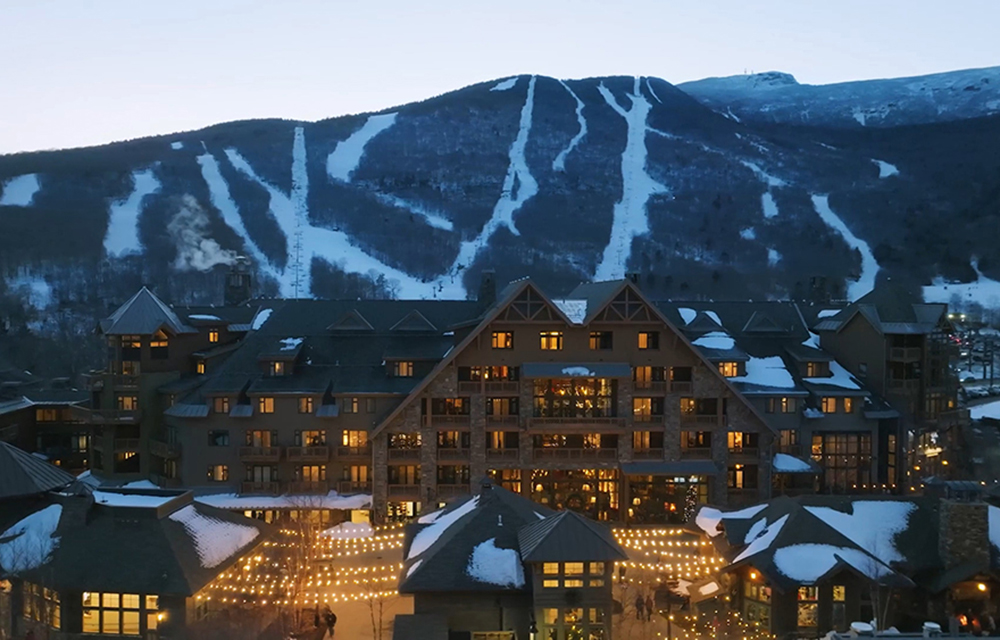
The Lodge at Spruce Peak recognized with Condé Nast Traveler’s 2026 Readers’ Choice Award - #3 in New England
Stowe, VT Condé Nast Traveler revealed the results of its annual Readers’ Choice Awards, with The Lodge at Spruce Peak recognized as the #3 U.S. Resort in New England.




 (1).png)

Columns and Thought Leadership

Retail infill strategy to activate Pawtucket’s Conant Thread District - by Gaetan Kashala
Until recently, the Conant Thread District consisted of approximately 150 acres of underutilized industrial land spanning Pawtucket and Central Falls. Today, the area is one of the most significant

Revitalized Town Centers: Retail??? - by Carol Todreas
It is now widely accepted that customers want to shop in person at physical stores. Brands know that they do better business in a physical store than just on line so they want to open stores. Demand for retail space by digital merchants, local entrepreneurs, and newly developed national chains

IREM president’s message: Our new reality - Staying ahead of supply chain delays - by Yoany Vargas
Supply chain delays are slowing construction, ratcheting up operating costs, and extending turnover timelines across Greater Boston, directly reducing revenue and increasing the workload for multifamily and

The legislature has spoken: New Hampshire doubles down on housing in commercial zones - by John Sokul
Last year, the New Hampshire Legislature enacted HB 631, a landmark housing measure requiring municipalities to permit multifamily housing in commercially zoned districts. The law generated