



News:
Construction Design & Engineering
Posted: January 16, 2008
"Failing to plan is planning to fail" in reference to land development, brownfield and other projects
The adage "failing to plan is planning to fail" is known to anyone involved with land development, brownfields environmental remediation or any activity involving more than two people. Developers, project managers, site engineers and all the stakeholders in a project will spend a lot of time planning. But one aspect of the planning process that is often overlooked, and that can directly impinge on schedules and cost, is early communication with regulatory agencies involved. These agencies can range from local planning boards to state and federal agencies. The project often can be enhanced if the regulators are aware that a subdivision, Brownfield application or storm water management permit is forthcoming. Meeting with regulators at the beginning of the project to introduce the project and to solicit their advice can smooth the approval process. A project start up meeting can identify regulator's concerns; identify fatal flaws in the project's concept, from the regulator's point of view; provide the project manager with relevant information i.e., environmental or land use data available to the regulators and indicate where there is some leeway in addressing ordinances or regulatory requirements. An early meeting with regulators will ensure a common understanding of the project; establish lines of communication; and hopefully avoid the development of an adversarial relationship that can delay the project approval process.
Some suburban or rural municipalities have subdivision and land development ordinances requiring hydrogeological investigations, where public water supply is not available, for subdivisions with more than a certain number of lots and/or with projected water demand above a certain number of gallons per day. While the language of the ordinances may differ, the intent is the same.
The ordinances intend to; one, show that the proposed subdivision has the groundwater resources to supply the projected peak daily demand; two, show that the groundwater quality meets drinking water standards; and three, show that extracting the groundwater for the subdivision will not interfere with existing users.
As an example, a suburban township has an ordinance that requires a hydrogeological investigation for subdivisions of three or more lots or where the on-site water supply will pump one thousand gallons or more per day. The ordinance requires that the hydrogeological investigation consist of: notifying residents within one-half mile of the proposed subdivision that an investigation will be conducted, conduct a residential well survey to identify the locations of water supply wells in the vicinity of the subdivision, drill a test well capable of providing the peak daily water demand for the entire subdivision, drill one observation well for every ten acres of the subdivision, conduct a 48-hour continuous rate pumping test in the test well and monitor water levels in the observation wells and surrounding residential wells.
A 30-acre farm was proposed for subdivision so that two residences could be built in addition to the existing farm house. Because the subdivision would be three lots, it had to address the requirements of the township ordinance which would be onerous for the land owner. Early discussions with the township's hydrogeologist resulted in variances that met the intent of the ordinance with out strict adherence to the requirements. For instance, the existing farm well and the water supply wells for the proposed lots were used as the test well and observation wells. A variance was granted to a reduce the pumping test time from 48 hours to 12 hours in recognition that individual residential wells do not pump continuously for long periods as do community public water supply wells for which the ordinance was intended.
So, to avoid "planning to fail," establish early contact with the regulator to discuss the project and ensure a timely and cost effective outcome.
Joseph Tomalavage, P.G., is project manager with Malarkey Consulting, Inc., Pottstown, Penn.
MORE FROM Construction Design & Engineering
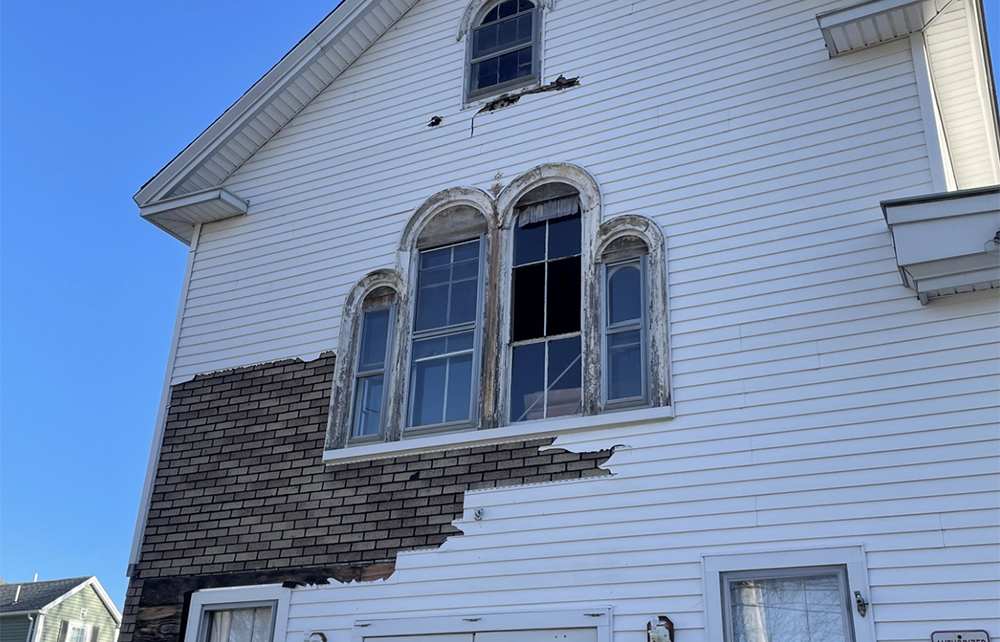
Horsley Witten Group releases redevelopment assessment for Merrimac, Mass. affordable housing project
Merrimac, MA Horsley Witten Group, an environmental consulting firm specializing in sustainable and resilient design solutions, worked with the town, and with MassDevelopment to lead a redevelopment assessment of two vacant, town-owned







Columns and Thought Leadership

It’s time to lead: Confronting mental health in construction - by David Watts
As we close Mental Health Awareness Month, we must be clear: May isn’t just about ribbons, hashtags, or lunchtime mindfulness apps. It’s about responsibility to confront hard truths that linger in silence, and to challenge ourselves, as leaders in our industry, to do more.

Greenwood Credit Union City Hall Plaza nears completion - by Frank Picozzi
After several years of planning, construction, and anticipation, the community is eagerly awaiting the opening of the Greenwood Credit Union City Hall Plaza and outdoor skating rink later this month.

ABC-Mass. chairman’s message: Rent control isn’t the answer to our housing crisis - by Luiza Mills
As you may know, Massachusetts voters will be weighing in on a number of ballot initiatives in November. Among them is a proposal to impose the nation’s strictest statewide rent control policy. I’d like to tell you why the ABC MA Board

Navigating tariffs and material uncertainty in today’s construction market - by Karl Ginand and Tiffany Gallo
As headlines around tariffs seem to dominate the news daily, many considering construction projects have anticipated major cost escalations and widespread supply issues. While tariffs haven’t driven pricing spikes to the extent once feared, the lasting impact has been a new layer of uncertainty, affecting more than just budgets.
