


 (1).gif)
News:
Finance
Posted: September 11, 2020
Fallout, layoffs and outlook - by David Kirk

Kirk&Company
Dipstick not covering as quickly as anticipated or hoped. Supports expiring and allowances depleted, running on fumes. Sputtering, choking, chugging. And yet markets and supply chains are full and functioning. Still, contagion and suffering must be contained. And the economic collapse is hardly over, and the impact will be everlasting.
U.S. stocks wrapped up their best month since April, continuing an extraordinary rally fueled by stimulus from Washington, signs of economic revival and progress toward a coronavirus vaccine (WSJ Sept 1, 2020). Housing is hot. Office is in a pause. Hotels for dormitories and affordable housing. Malls and big box for logistics. Performance and athletic palaces for later. Healthcare for an ongoing reboot. Every day is day one, Jeff Bezos in his Amazon leadership is pushing all options to remain predictable and expand services and products. And Amazon is not alone.
The Fed has declared higher inflation target and a long low interest rate environment. (As long as leveraging for yield does not destabilize the market or blow bubbles so big to pop.) And letting the national economy run hotter longer before the Fed takes any tightening action. Noticing the longer uncertainty in economic outlook, the Fed has broadcast the impact of the pandemic and all derivatives. Hard to find any good news on the Fed dashboard so one must look elsewhere. The Fed should revise the dashboard and recognize the sectoral changes that have been trending, many before the pandemic become broadly apparent in the now recovering economy. Fed will refine its guidance at next meeting about plans to keep rates lower for longer. Fed will also consider next steps. Current Fed balance expansion has been growing.
Commercial real estate investors and operators are puzzling (making pieces fit, not just wondering how) the next few quarters while the Fed is talking the next few years. Diligence. Primary research. Surveys. And then the forces that impacted the inflection - sector changes, cyclical changes, pandemic risk, climate and environmental changes, weather risks. Property operations are a contact sport. And so is commercial real estate investment and development.
Amazon’s drones on the horizon. Zoom Video again raised its full-year 2020 outlook after quarterly sales more than quadrupled. Shares of Tesla and Apple keep rising to peaks after stock splits. Changing patterns in working, living and playing. Americans are reducing footprints and reducing footsteps. And much of the new behaviors will linger.
David Kirk is founder and chief executive officer of Kirk&Company, Real Estate Counselors of Boston.
MORE FROM Finance
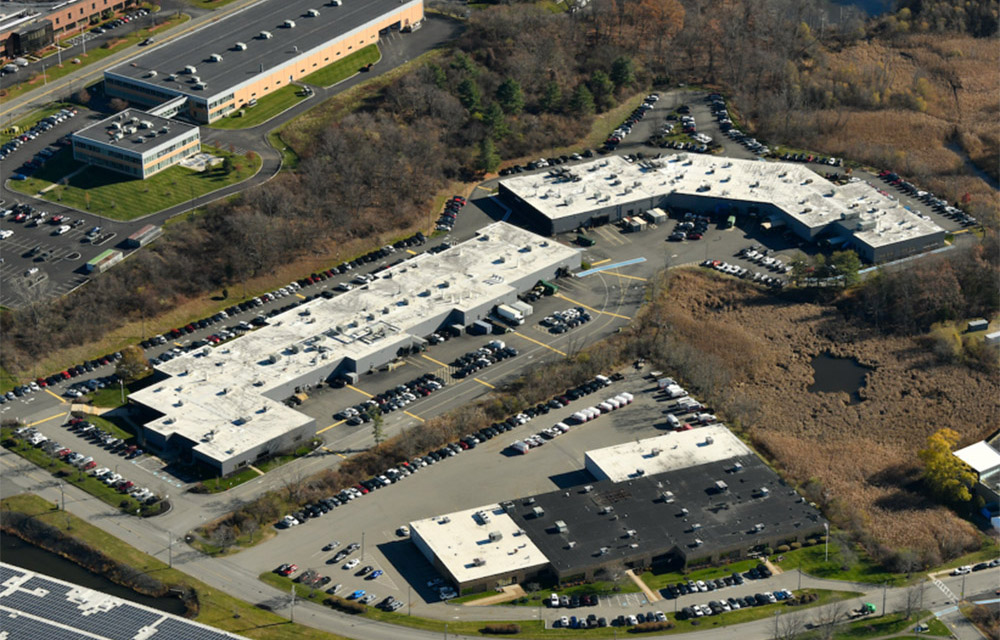
Northwest Bank finances Luzern Associates’ $47.75m acquisition
Danvers, MA Northwest Bank provided $34.5 million in financing to support Luzern Associates LLC’s $47.75 million acquisition of the Cherry Hill industrial portfolio, a three-building campus totaling 200,000 s/f.




 (1).gif)


.png)
Columns and Thought Leadership

Reverse exchanges and the challenges of a competitive real estate market - by Michele Fitzpatrick
Our current, highly competitive real estate market poses specific challenges for investors who are considering taking advantage of a tax-deferred 1031 exchange. In this market, investors will have no problem selling their current property if priced properly, but they may find it difficult to find a suitable replacement property

Are appraisers on the same page as the assessor? - by Richard Seman
The purpose of this article is to address problematic or confusing issues which may help assessors and appraisers to better understand how to value real estate for tax assessment purposes.

The focus on price per s/f compared to the comparable sales used in the appraisal report - by Dennis Chanski
Over the past several weeks, I have completed appraisal assignments for private clients. Interestingly, after submitting these appraisals, I received several phone calls – not to question the value, content, or any incorrect information, but rather to discuss the price per s/f compared to the comparable sales used in the report.

Massachusetts real estate transfers over $1 million face new tax rules as of November 1st - by Daniel Meyer
Attention to owners of real estate in the Commonwealth (and the title companies and other professionals who advise them), the Massachusetts Department of Revenue (the “DOR”) recently adopted a new “millionaire’s tax” via 830 CMR 62B.2.4
