


 (1).png)
News:
Owners Developers & Managers
Posted: December 11, 2015
Five reasons for the multifamily boom in 2015 - by Carl Christie
 Carl Christie, NAI Hunneman
With only a few weeks left in 2015, to say the multifamily market has exploded this year would be an understatement. At NAI Hunneman, our multifamily team which includes myself, executive vice president of the capital markets group, is closing in on total sales of $100 million in multifamily deals this year.
Why was there a boom in sales this year? What areas in Greater Boston are heating up? And will this momentum continue?
Here’s what I have to say:
1. Owners are waking up to the fact that values are at record highs. Well advised real estate investors know that to sell into strength makes sense. The perception and reality is that interest rates will rise, therefore causing adjustments in value. Local investors in the Boston area are watching what the institutions are doing – which is selling at peak values to capture gains. Some well-located properties that were purchased 3-4 years ago have doubled in value, when values increase so rapidly, many owners will realize these substantial profits and sell.
2. Capital gains have increased. At the end of 2012 there was a capital gains increase. After that capital gain increase, we saw a drop off of sales activity specifically with the local investor, that lull lasted about 18 months (2013 through summer 2014). The last 15 months have seen a vibrant increase in activity and that’s attributed to people absorbing the capital gains hype. Any time there’s a change in tax law, it takes a good year for the market to digest it.
3. Repeal of 1031 exchange. There’s been talk about repealing 1031 exchange which is an IRS-sanctioned way to defer paying capital gains taxes on investment property. This could be another reason why activity has been so high.
4. Location where there is a lot of activity. We are seeing multiple offers, competitive bidding and recording breaking pricing within route 128 (Greater Boston); especially in Cambridge, Somerville and Brookline. Apartment rental rates have risen every year (although softening has been reported) and investors are buying properties below replacement costs.
5. Value separation between the apartment and the condo. An anomaly that we have witnessed for several years is the value of these well located apartment properties are worth more to apartment building operators than to condo converters.
Carl Christie, executive vice president, NAI Hunneman capital markets group, Boston.
MORE FROM Owners Developers & Managers
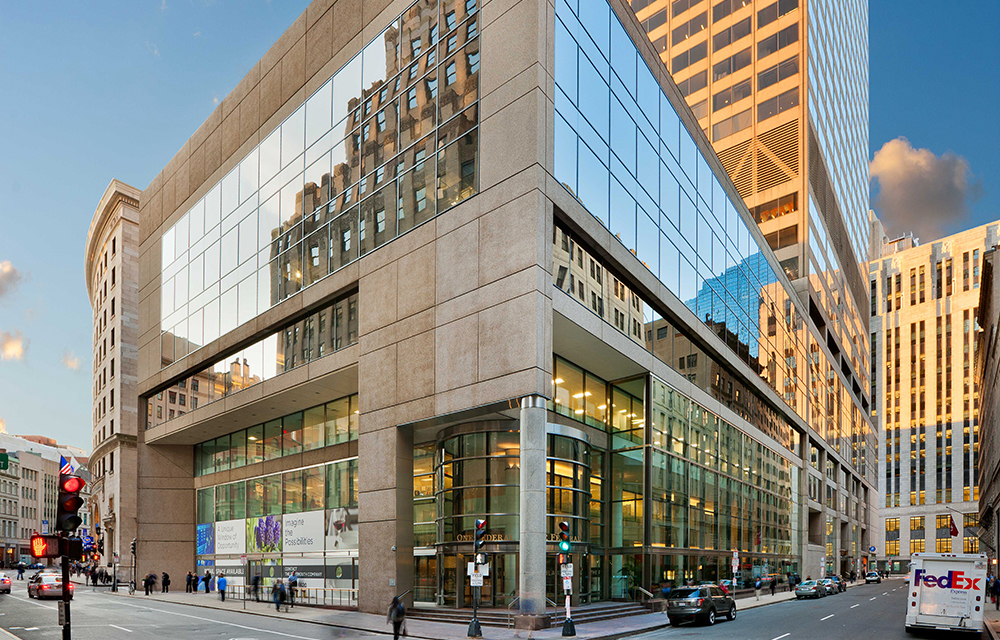
Rubin Rudman to establish headquarters at Tishman Speyer’s One Federal St.
Boston, MA Tishman Speyer has secured a new headquarters lease with Rubin Rudman at One Federal St., its 38-story, 1.1 million s/f tower in the Financial District. Under a 15-year lease, Rubin Rudman’s new headquarters will span 57,844 s/f across One Federal’s entire 23rd and 24th floors and a portion of the 25th floor.





 (1).png)

Columns and Thought Leadership

Retail infill strategy to activate Pawtucket’s Conant Thread District - by Gaetan Kashala
Until recently, the Conant Thread District consisted of approximately 150 acres of underutilized industrial land spanning Pawtucket and Central Falls. Today, the area is one of the most significant

IREM president’s message: Our new reality - Staying ahead of supply chain delays - by Yoany Vargas
Supply chain delays are slowing construction, ratcheting up operating costs, and extending turnover timelines across Greater Boston, directly reducing revenue and increasing the workload for multifamily and

The legislature has spoken: New Hampshire doubles down on housing in commercial zones - by John Sokul
Last year, the New Hampshire Legislature enacted HB 631, a landmark housing measure requiring municipalities to permit multifamily housing in commercially zoned districts. The law generated

Revitalized Town Centers: Retail??? - by Carol Todreas
It is now widely accepted that customers want to shop in person at physical stores. Brands know that they do better business in a physical store than just on line so they want to open stores. Demand for retail space by digital merchants, local entrepreneurs, and newly developed national chains