



News:
Construction Design & Engineering
Posted: January 19, 2018
Fletcher Tilton building blocks: In the marijuana zone - by Chris Yates of Fletcher Tilton
 Massachusetts voters approved the retail sale of recreational marijuana. But that was only part of the legalization debate. The hard part now is where recreational marijuana will be sold as dispensary doors are ready to open in July, 2018. Despite the vote to legalize, some municipalities are flexing their political and community muscles to stop the opening of retail dispensaries. Accordingly, a patchwork of zoning laws and moratoriums to temporarily or permanently block dispensaries is appearing on the state’s marijuana map.
There will be obstacles for recreational marijuana merchants to overcome in the early days of the new law. There will also be challenges for municipalities where dispensaries seek to do business. Uncertainty was introduced into the recreational legalization process when lawmakers created a two-tiered system to resolve the dispute over local control of pot shops. In the cities and towns where a majority of voters supported Question 4 legalizing marijuana, a voter referendum would be required to prohibit or restrict marijuana stores from opening. In the smaller number of communities that voted against legalization, only the approval of the city council is needed to keep the retail businesses out of town until 2019.
Retailers and local governments do not have to look back too far into the marijuana history in the state to find answers to the question of how to treat these new recreational dispensaries. In 2014, after medical marijuana was legalized, certain actions were taken by local zoning boards which satisfied the law and the community. School buffer zones were created and, in many cases, dispensaries and growing facilities were located in either industrial zones or “Adult Use Overlay” zones – those parts of town where by choice or default so-called “adult” businesses were already situated. Can recreational marijuana sales be handled in the same manner as medical marijuana? Should a recreational dispensary be treated any differently than a liquor store? What is the exact level of community acceptance of legalized pot – do people want to see dispensaries in town next to the market? These are zoning questions and zoning most often means politics.
The political hot potato of admitting dispensaries into town will be tossed around in the coming weeks and months. However, if municipalities use--and do not abuse--their zoning power to regulate the location of dispensaries, both retailers and the community have a better chance at realizing a working solution to the problem of where recreational marijuana will be sold. On the other hand, attempts to ban recreational marijuana dispensaries through use of moratoriums or other local actions will most likely fail challenges in court. And the courts may be where the issue of selling recreational marijuana lands.
This is a period of great uncertainty for the recreational marijuana market. Legalization, zoning and community standards flank dispensaries on one side while the federal government takes up a position on the other. Massachusetts’ federal prosecutor has already indicated that there are no assurances for the legal marijuana business. Wherever and however dispensaries land in each community, it is likely that the courts will have a say in what the marijuana map of Massachusetts looks like as this new era becomes a retail reality. Given the magnitude of the opportunity in retail marijuana sales, it is understandable that many business people and investors are eager to stake their claims now. Depending on the nature and location of the project, proper legal counsel at the outset can help protect the investment even in this uncertain environment.
Christopher Yates, esq., is an officer of Fletcher Tilton PC, Worcester, Mass.
MORE FROM Construction Design & Engineering
Nordblom partners with Erland Construction for new residential development in Dedham
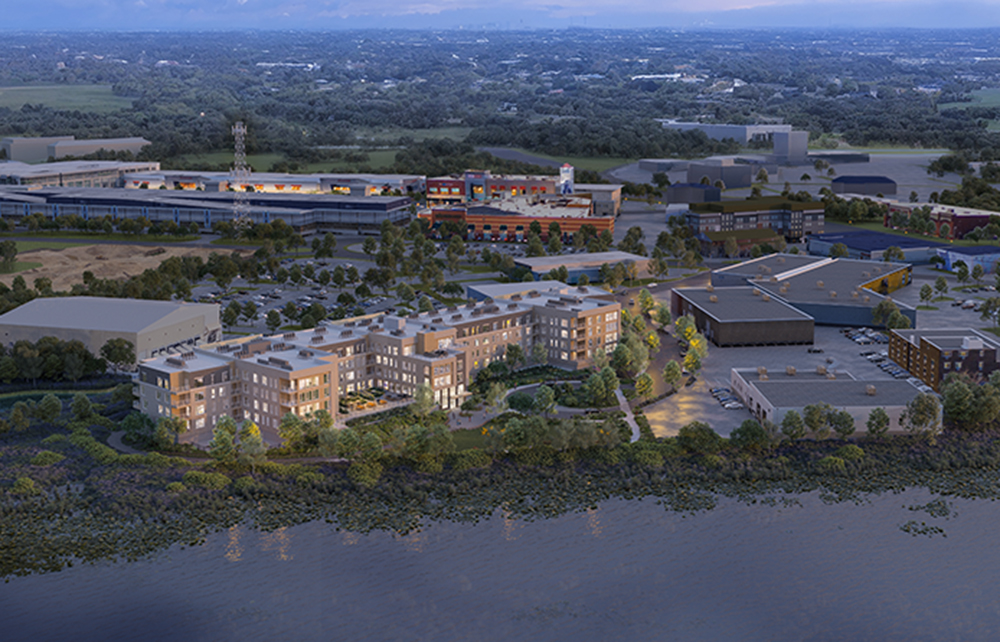
Dedham, MA Erland Construction has once again partnered with long-time client Nordblom Company to bring a new multifamily residential community, Vantage, to life. Working in collaboration with Stantec, Erland will construct a 218,000 s/f, four-story wood- and steel-frame building that will introduce 155 apartment homes to this rapidly growing neighborhood.






Columns and Thought Leadership

Navigating tariffs and material uncertainty in today’s construction market - by Karl Ginand and Tiffany Gallo
As headlines around tariffs seem to dominate the news daily, many considering construction projects have anticipated major cost escalations and widespread supply issues. While tariffs haven’t driven pricing spikes to the extent once feared, the lasting impact has been a new layer of uncertainty, affecting more than just budgets.

Greenwood Credit Union City Hall Plaza nears completion - by Frank Picozzi
After several years of planning, construction, and anticipation, the community is eagerly awaiting the opening of the Greenwood Credit Union City Hall Plaza and outdoor skating rink later this month.

ABC-Mass. chairman’s message: Rent control isn’t the answer to our housing crisis - by Luiza Mills
As you may know, Massachusetts voters will be weighing in on a number of ballot initiatives in November. Among them is a proposal to impose the nation’s strictest statewide rent control policy. I’d like to tell you why the ABC MA Board

It’s time to lead: Confronting mental health in construction - by David Watts
As we close Mental Health Awareness Month, we must be clear: May isn’t just about ribbons, hashtags, or lunchtime mindfulness apps. It’s about responsibility to confront hard truths that linger in silence, and to challenge ourselves, as leaders in our industry, to do more.
