



News:
Construction Design & Engineering
Posted: August 15, 2025
From paper to pixels: The critical role of survey archives - by Travis Yacovitch

When most people think of infrastructure, they envision roads, bridges, and utility lines, but beneath it all is a foundation which is often invisible to most eyes: survey data. Deeds, field notes, and plans all serve as the legal and historical precedence for each piece of property. Without them, nothing can be built, bought, or sold with complete confidence, yet it’s easy to ignore the significance of a line drawn on an old, wrinkled piece of paper from decades ago until it becomes the determining factor in a border dispute or the key to unlocking delayed construction. These records tell you not just where the lines are, but also how they got there. They capture the intent, actions, and situations of previous surveyors, giving essential context that modern measurements cannot always provide. After all, when someone wants to know why a property line veers off in an odd direction or whether a stone wall was intended to indicate an end or a midpoint, archival records are often the answer.
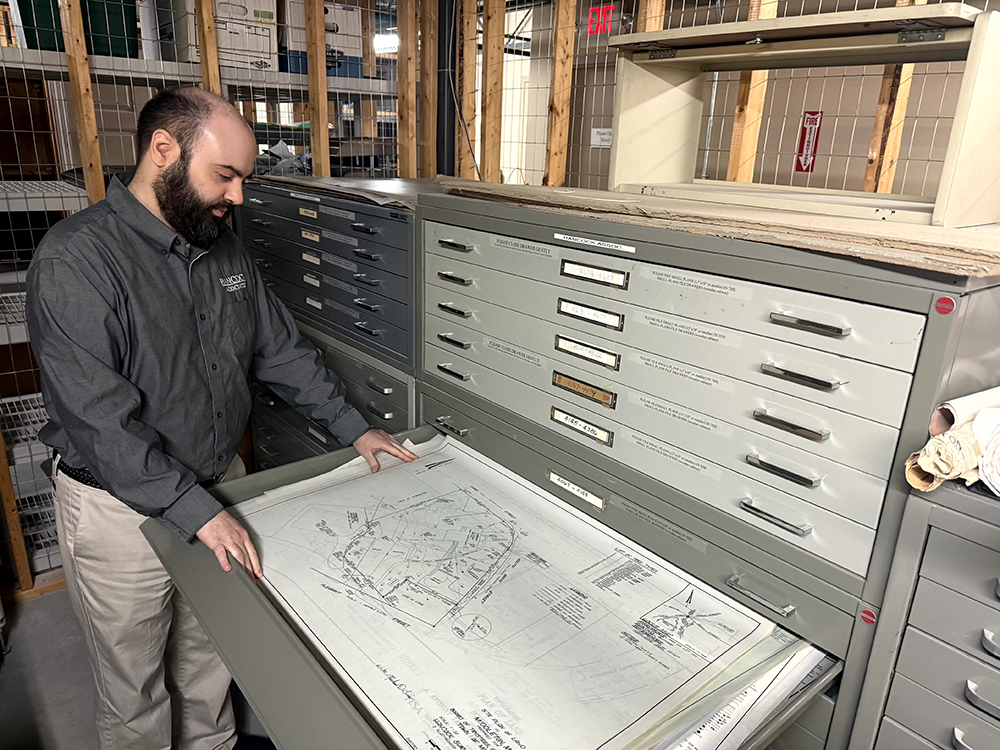
However, these materials are fragile. Paper deteriorates. Ink fades. Companies go out of business. Without digital preservation, we risk losing not only technical data, but also the collected wisdom and expertise from generations of New England surveyors. That is why the effort of digitally archiving survey data is important, not only for the surveyor’s records, but for every homeowner, developer, and attorney who relies on accurate property records from a variety of sources. This is where the act of digital preservation becomes crucial.
Yet it is not easy to digitize such records. From fragile linen, to disintegrating plan paper, to field books that have become faded, we’re working with materials that span decades, sometimes even more than a century. Each document undergoes a meticulous procedure that includes flattening if it is curled, cleaning if it can be salvaged, high-resolution scanning, and metadata cataloguing to ensure future users can locate exactly what they need. Preservation, retrievability, and peace of mind are the outcomes of this laborious and sometimes boring task, but records that were previously stored in banker boxes or rusted cabinets are now easily retrievable, safely backed up, and prepared to support the upcoming generation of surveyors, engineers, lawyers, and real estate professionals. What once took hours digging through boxes and cabinets only takes a few clicks on a computer.
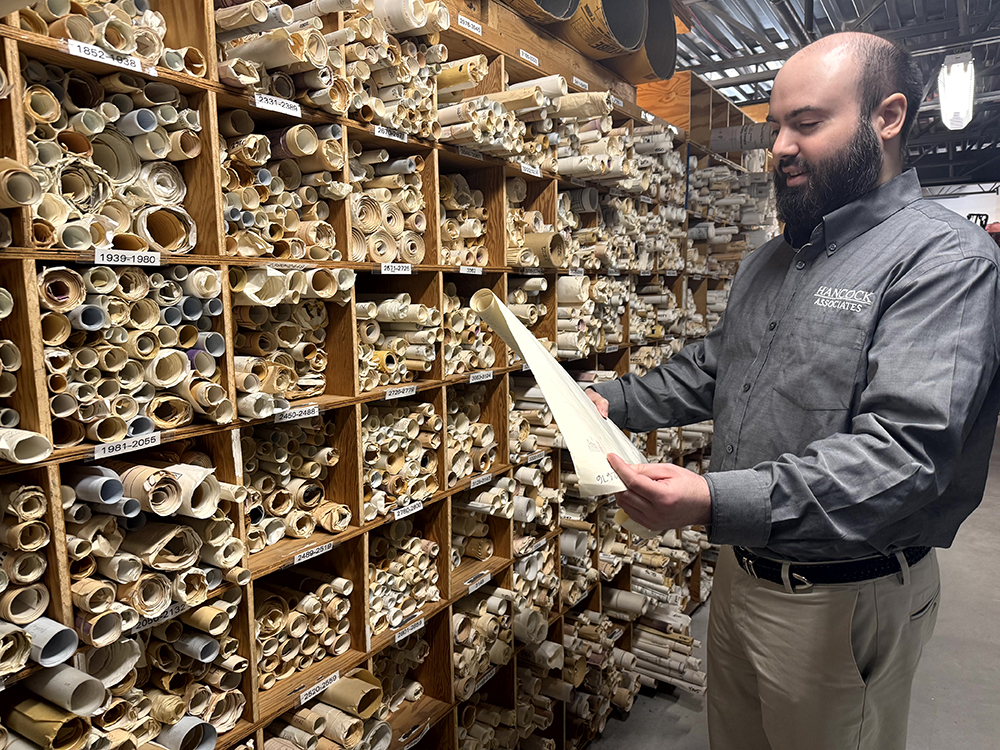
When you work towards archiving survey data, you begin to notice trends in the stories they tell along with the property lines. You see the traces of surveyors from years past who were passionate about their documentation, their overall accuracy, and of the land itself. You understand that if we don’t take action to preserve it, that legacy will just fade away.
Therefore, to help preserve the legacy of New England’s surveyors, it is critical that decisions made today and in the future are founded on well-intended and determined principles, with a solid foundation. By digitally preserving these records, we not only conserve the data, but also the hidden infrastructure of real estate, which can make all the difference in a profession where every inch counts and time is often of the essence.
Travis Yacovitch is an archivist at Hancock Associates, Danvers, Mass.
MORE FROM Construction Design & Engineering
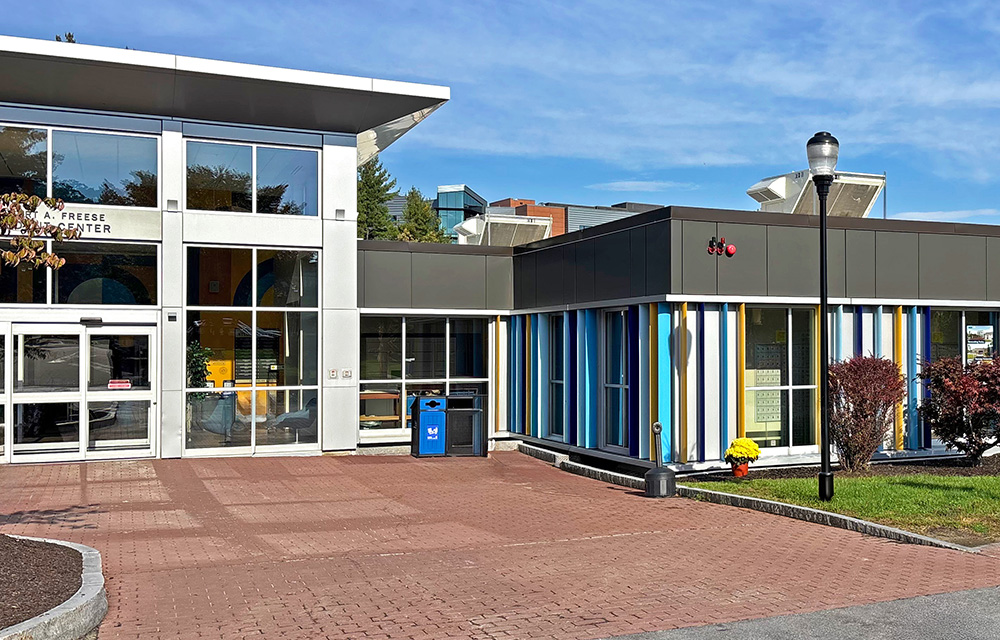
Chapman Construction/Design completes renovations to Freese Student Center at Southern N.H. University
Manchester, NH Chapman Construction/Design (Chapman) completed the second phase of renovations to Southern New Hampshire University’s (SNHU) Robert A. Freese Student Center. Chapman completed the project over two summer sessions,





Columns and Thought Leadership

ABC-Mass. chairman’s message: Rent control isn’t the answer to our housing crisis - by Luiza Mills
As you may know, Massachusetts voters will be weighing in on a number of ballot initiatives in November. Among them is a proposal to impose the nation’s strictest statewide rent control policy. I’d like to tell you why the ABC MA Board

Greenwood Credit Union City Hall Plaza nears completion - by Frank Picozzi
After several years of planning, construction, and anticipation, the community is eagerly awaiting the opening of the Greenwood Credit Union City Hall Plaza and outdoor skating rink later this month.

It’s time to lead: Confronting mental health in construction - by David Watts
As we close Mental Health Awareness Month, we must be clear: May isn’t just about ribbons, hashtags, or lunchtime mindfulness apps. It’s about responsibility to confront hard truths that linger in silence, and to challenge ourselves, as leaders in our industry, to do more.

Navigating tariffs and material uncertainty in today’s construction market - by Karl Ginand and Tiffany Gallo
As headlines around tariffs seem to dominate the news daily, many considering construction projects have anticipated major cost escalations and widespread supply issues. While tariffs haven’t driven pricing spikes to the extent once feared, the lasting impact has been a new layer of uncertainty, affecting more than just budgets.
