


 (1).gif)
News:
Finance
Posted: February 9, 2012
Full court press: Another case of shooting the messenger bearing bad news
Appraisers are officially the culprits in obstructing the housing recovery. The National Association of Realtors and the National Association of Homebuilders (NAHB) identified appraisers as such and have not been shy about providing criticism of appraisers and the appraisal process. The following summarizes their positions.
In the November 2011 edition of Nation's Building News, The Official Online Newspaper of NAHB, the following statements are made. "Deficiencies in the current system for evaluating homes have become glaringly evident in the unprecedented housing downturn of the past few years...Faced with declining home prices, rising foreclosures and plunging new-home sales, builders have had to contend with inaccurate appraisals that have further undermined the health of their businesses and the housing market...Widely reported around the country, poor appraisals have reduced home sales, taken a vicious swipe at the profitability of builders and have made it difficult for them to project whether they will be able to attain the prices they need to cover the construction costs of their new homes ... The press release goes on to quote the NAHB chairman, "Too often, due to faulty appraisal practices, the builder's house winds up getting appraised at less than the cost of construction... This is not only unfair and unreasonable, but it perpetuates the cycle of declining home values, drives more home owners underwater, negatively affects housing demand and acts as an obstacle to the recovery of the housing market."
The Appraisal Foundation responded to the December 2011 NAHB press release. Some notable excerpts follow. "A concept many builders often fail to recognize is that cost does not equal value. In 'depressed' markets, it may be common for buyers to be unwilling to pay the full cost to construct a home; in appraisal, this is known as external obsolescence, which is a loss in value due to factors outside the subject property." Another excerpt: "It is critical to understand that appraisers do not determine property values; they simply reflect the actions of buyers and sellers in the marketplace. An appraiser's role is to 'mirror the market' by analyzing the actions of buyers and sellers in the marketplace to produce a credible opinion of value."
In a November 2011 press release, from Anaheim, where Realtors gathered to address this 'pressing' issue, the following was noted. "Accurate home appraisal valuations are vital in today's market; inaccurate appraisals can slow down or even cancel a home sale...In today's market, home appraisals that fail to provide accurate valuation are causing many sales to be cancelled or postponed... In addition, many buyers are purchasing more homes through foreclosures and short sales, and these homes typically sell for approximately 20% less than traditional homes in the same area, which can also make accurate valuations more difficult."
I'm not necessarily an apologist for the appraisal industry, nor for its regulators. Both of those groups leave something to be desired. We have Uniform Standards of Professional Practice (USPAP), which, too, leaves something to be desired, but at least provides a common basis for understanding what appraisers do, which, among other things, includes the duty to be independent, impartial, and objective. I am not prepared to have Realtors and homebuilders to instruct appraisers on how appraisals are to be conducted in order to facilitate transactions and, by facilitating these transactions, pull the country out of its housing crisis.
Appraisers did not cause the crisis, markets did. Appraisers are not prolonging the crisis, markets are. This is purely another case of shooting the messenger bearing bad news. Our housing markets will recover when the fundamentals of the economy support higher prices, new housing creation, and higher sales activity. Appraisers do not make markets, they analyze them. Appraisers do not determine value, they react to the effects of markets on value.
William Pastuszek, MAI, SRA, MRA heads Shepherd Associates, Newton Mass.
MORE FROM Finance
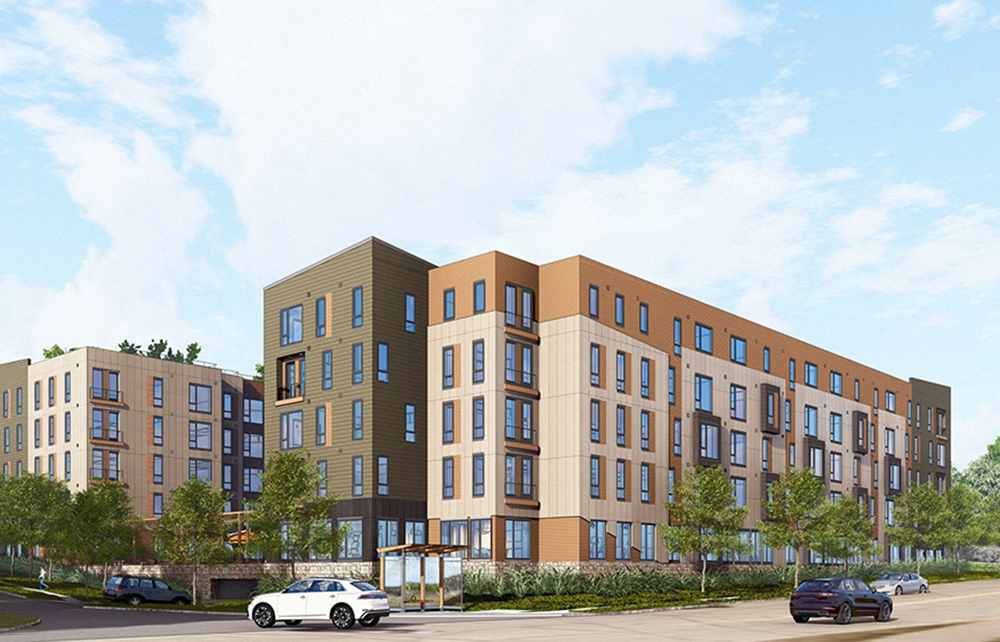
Affinius Capital and Axonic Capital provide $45.8 million construction loan for 130-unit multifamily
Lexington, MA Affinius Capital LLC (Affinius Capital), in partnership with Axonic Capital LLC (Axonic), originated a $45.8 million loan to finance the ground-up development of 7 Hartwell Ave., a to-be-built, 130-unit, Class A multifamily property with 400 s/f of retail.




 (1).gif)


Quick Hits

Columns and Thought Leadership

Reverse exchanges and the challenges of a competitive real estate market - by Michele Fitzpatrick
Our current, highly competitive real estate market poses specific challenges for investors who are considering taking advantage of a tax-deferred 1031 exchange. In this market, investors will have no problem selling their current property if priced properly, but they may find it difficult to find a suitable replacement property

Are appraisers on the same page as the assessor? - by Richard Seman
The purpose of this article is to address problematic or confusing issues which may help assessors and appraisers to better understand how to value real estate for tax assessment purposes.

Massachusetts real estate transfers over $1 million face new tax rules as of November 1st - by Daniel Meyer
Attention to owners of real estate in the Commonwealth (and the title companies and other professionals who advise them), the Massachusetts Department of Revenue (the “DOR”) recently adopted a new “millionaire’s tax” via 830 CMR 62B.2.4

The focus on price per s/f compared to the comparable sales used in the appraisal report - by Dennis Chanski
Over the past several weeks, I have completed appraisal assignments for private clients. Interestingly, after submitting these appraisals, I received several phone calls – not to question the value, content, or any incorrect information, but rather to discuss the price per s/f compared to the comparable sales used in the report.
