


 (1).gif)
News:
Finance
Posted: November 12, 2021
Get the shovels out. Let’s get moving. - by David Kirk

Kirk&Co
Climate and Pandemic Ready Infrastructure. Cultural Community Compliance and BUILD BACK BETTER. Much ado about everything. Avoid confusion. Pork and puff. Power and punch. From Wi-Fi to healthcare, and everything in between, it’s all connected and so are we.
Commercial real estate has responded to the pandemic, providing protocols, retrofits and services to protect the properties and user constituencies and prepare for resiliency from pandemic induced recession. Build Back Better coupled with $1.8 trillion infrastructure to be authorized by the federal government for long delayed infrastructure will add jobs and spending to the recovery and welfare for those in need.
The real estate industry has historically punched out to accommodate Americans with Disabilities with ADA compliance. All with lessons learned and demonstrated leadership. Now fully vulnerable to the complexity of the global economy, commercial real estate must sustain these so-called emergency efforts to enhance the built environment with substantial financial support from the public sector and community support from its constituencies. The how and the how much will depend on the local culture.
The Federal Reserve Bank has endorsed Glasgow and declared a highly probable extension of low interest rate market through late 2022 with a prompt, gradual reduction in balance sheet quantitative easing (taper the monthly $15 to zero over 12 months). The Fed will continue to monitor closely the impact on the stability of markets. Full employment is still a primary mission and continues to challenge traditional measures. Matching jobs and labor is a priority for employers as well as employees. The prevailing trends in economic expansion and employment gains are forcing systemic training and outreach activity. And rising wages.
Climate change has broadly induced natural disasters and wrenching environmental degradation. Commercial real estate must invest against the natural trends. Locational differentiation frustrates the monolithic strategy and equity of the climate change campaign, specifically funding and initiatives. Unlike the pandemic with one virus family, so-called climate change impact is a monster with many, many independent tentacles. Prioritization and allocation are complicated. Game theory. Not whack-a-mole. Not a national building code or zoning ordinance. Community culture.
Infrastructure legislation and spending are schematic. Working drawings are prepared and being refined, design-engineered. And change orders will be forthcoming. Community infrastructure is in dramatic dynamic. Build back better. Mobility, technology, communication, climate change and open space in a constant evolution, increasing tension, and need for prioritization and allocation. And mediation. Public bathrooms and benches and chargers and emergency call communications for all, particularly, elderly, disabled, families, and homeless. Much political pushback on big spending and proliferation of newly minted infrastructure vocabulary. What’s in and what’s out is still up in the air.
Let’s get it signed and get to work. Get the shovels out. Let’s get moving.
David Kirk is founder, chief executive officer of Kirk & Company, Real Estate Counselors of Boston, Mass.
MORE FROM Finance
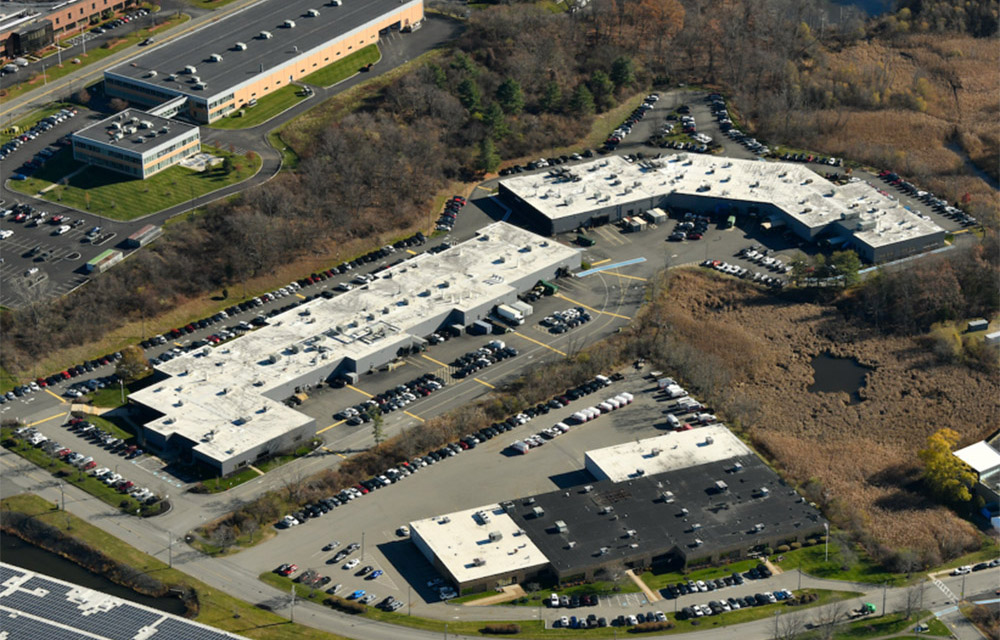
Northwest Bank finances Luzern Associates’ $47.75m acquisition
Danvers, MA Northwest Bank provided $34.5 million in financing to support Luzern Associates LLC’s $47.75 million acquisition of the Cherry Hill industrial portfolio, a three-building campus totaling 200,000 s/f.

 (1).gif)



.png)
Columns and Thought Leadership

Massachusetts real estate transfers over $1 million face new tax rules as of November 1st - by Daniel Meyer
Attention to owners of real estate in the Commonwealth (and the title companies and other professionals who advise them), the Massachusetts Department of Revenue (the “DOR”) recently adopted a new “millionaire’s tax” via 830 CMR 62B.2.4

Are appraisers on the same page as the assessor? - by Richard Seman
The purpose of this article is to address problematic or confusing issues which may help assessors and appraisers to better understand how to value real estate for tax assessment purposes.

Reverse exchanges and the challenges of a competitive real estate market - by Michele Fitzpatrick
Our current, highly competitive real estate market poses specific challenges for investors who are considering taking advantage of a tax-deferred 1031 exchange. In this market, investors will have no problem selling their current property if priced properly, but they may find it difficult to find a suitable replacement property

The focus on price per s/f compared to the comparable sales used in the appraisal report - by Dennis Chanski
Over the past several weeks, I have completed appraisal assignments for private clients. Interestingly, after submitting these appraisals, I received several phone calls – not to question the value, content, or any incorrect information, but rather to discuss the price per s/f compared to the comparable sales used in the report.
