


 (1).gif)
News:
Finance
Posted: March 7, 2013
Going, going, gone...green in the Boston market
Mayor Menino recently proposed legislation that would require commercial building owners to report annual energy and water use to the city, which would then make it available to the public. The goal of the program is to heighten awareness of energy usage and is expected to drive conservation and reduce greenhouse gas emissions. Initial reaction in cited in local newspapers and media outlets noted the proposal "is already generating opposition from building owners, who say the city wants to shame them into expensive energy upgrades that will raise rents for tenants and hurt the commercial real estate market" (The Boston Globe, February 24, 2013). The reality is that other U.S. metro areas have already "Gone Green" and the Boston proposal would be several years behind similar programs in place in other major cities such as Charlotte and San Francisco.
Boston is a highly desirable, institutional office market with a sophisticated ownership base, many of which own and manage properties in markets where this reporting is already in place. At the Spring ULI meeting last year in Charlotte, attendees heard numerous presentations on green initiatives and were able to see energy usage and reporting screens located in commercial spaces throughout the City Center. In speaking with a major San Francisco property owner and developer on that city's energy reporting requirements, I was told "Seriously, SF has had an energy reporting law for several years. Not water or emissions right now though. It's fairly easy. Periodic audits required, etc."
As noted above, the reality is that we have already "Gone Green" and initiatives similar to that as proposed by the mayor are already part of the fabric of institutional real estate. In addition to implementing oversight to encourage conservation and energy savings, tenants of all property types are already focused on occupancy costs and efficiencies that result from green initiatives. The proposed reporting and monitoring outlined by the Mayor can be thought of as another "tool in the toolbox" as the commercial real estate markets continue to evolve and link the desire and tenant demand for efficiencies and conservation to the economic incentives of property owners.
While the Boston proposal may be challenging and initially cumbersome for property owners, the reporting process and periodic reporting information can be constructively used to benefit property operations. Hopefully best practices and information sharing on energy reporting will be gleaned from other major urban areas where similar initiatives have been in place and ultimately benefit the property owners, tenants and over the long term, the entire Boston market.
Jill Hatton, CRE, is the 2012-2013 New England/Upstate N.Y. CRE chapter chair, Boston, Mass.
_____________________________
The New England Counselors wrapped up their year of activities with the Annual Holiday Reception at the Algonquin Club in Boston on December 13, 2012. The first meeting of the 2013 will feature Ray Torto, CRE, Ph.D. and Global Chief Economist in Global Research and Consulting at CBRE. Ray will provide his Commercial Real Estate Economic Outlook to the New England Counselors at a Luncheon on January 22, 2013 at his offices. Invitations have been sent to CRE members.
Following are CRE New England Chapter Officers for 2013.
2013 Chapter Officers
Jill Hatton, Real Estate Consultant, Chapter Chair
Peter Nichols, NorthStar Ally LLC, Vice-Chair
Robert E. Costello, Capital Crossing Servicing Co., LLC, Board Member
Martha O'Mara, Corporate Portfolio Analytics, Board Member
Harris Collins, CB Richard Ellis - NE Partners, Board Member
John McLaughlin, McLaughlin Investment, Inc., Board Member
John Baczewski, Real Estate Fiduciary Services, LLC, Board Member
Documents/JSH letters/cresjan2013.doc
MORE FROM Finance
Northwest Bank finances Luzern Associates’ $47.75m acquisition
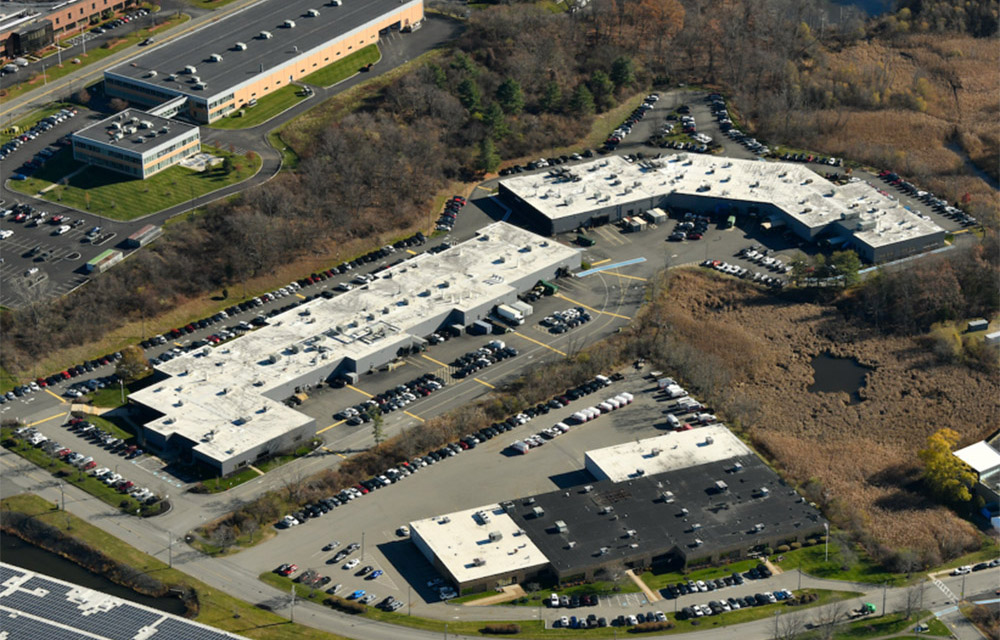
Danvers, MA Northwest Bank provided $34.5 million in financing to support Luzern Associates LLC’s $47.75 million acquisition of the Cherry Hill industrial portfolio, a three-building campus totaling 200,000 s/f.




 (1).gif)


Quick Hits

.png)
Columns and Thought Leadership

Are appraisers on the same page as the assessor? - by Richard Seman
The purpose of this article is to address problematic or confusing issues which may help assessors and appraisers to better understand how to value real estate for tax assessment purposes.

Reverse exchanges and the challenges of a competitive real estate market - by Michele Fitzpatrick
Our current, highly competitive real estate market poses specific challenges for investors who are considering taking advantage of a tax-deferred 1031 exchange. In this market, investors will have no problem selling their current property if priced properly, but they may find it difficult to find a suitable replacement property

The focus on price per s/f compared to the comparable sales used in the appraisal report - by Dennis Chanski
Over the past several weeks, I have completed appraisal assignments for private clients. Interestingly, after submitting these appraisals, I received several phone calls – not to question the value, content, or any incorrect information, but rather to discuss the price per s/f compared to the comparable sales used in the report.

Massachusetts real estate transfers over $1 million face new tax rules as of November 1st - by Daniel Meyer
Attention to owners of real estate in the Commonwealth (and the title companies and other professionals who advise them), the Massachusetts Department of Revenue (the “DOR”) recently adopted a new “millionaire’s tax” via 830 CMR 62B.2.4
