


 (1).png)
News:
Owners Developers & Managers
Posted: September 6, 2019
Going hybrid for maximum heating efficiencies - by John Miller

Weil-McLain
Two types of boilers can be better than one – especially when trying to minimize operating costs over the course of a heating season. By combining a large mass, non-condensing boiler with a high efficiency-condensing boiler – or “hybrid system,” you will ensure that your heating system is running at optimum efficiency.
Non-condensing boilers are designed to run at higher return water temperatures above 130 degrees to maximize longevity. The average efficiencies of non-condensing boilers range from 80-85% thermal efficiency. High temperature applications typically occur over the core heating season months of December through February.
Condensing boilers reach their maximum efficiency (upwards of 95%) when the return water temperature is below dew point and are more aligned with the milder heating season shoulder months of October, November, March and April. Running condensing boilers in high return temperature applications reduces their operating efficiency to marginally higher than non-condensing boiler designs.
By combining non-condensing and condensing boilers in a hybrid system boiler plant, users can reset building set points, reduce fuel consumption to lower operating costs and create comfortable, consistent building temperatures.
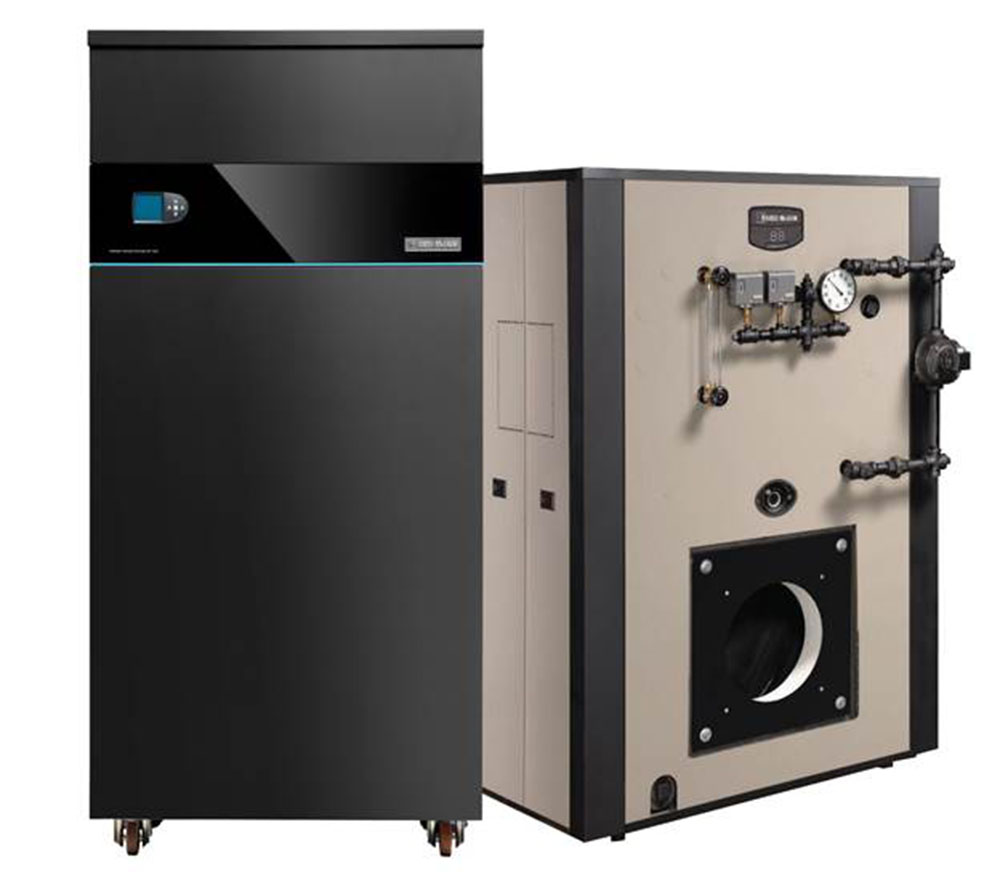
So why not just use an all high efficiency boiler plant? Consider the following benefits of a hybrid boiler system:
• Boiler Replacement Applications: Installing a hybrid system makes sense in existing, non-condensing replacement boiler applications. Most often, there are at least two high mass, non-condensing boilers in older boiler plants. Installing a high efficiency, condensing boiler in place of one of the failing high mass boilers now enables the efficiency benefits of the hybrid system. Further, this approach enables an incremental step in financing the overall boiler replacement capital outlay over time.
• New Build Applications: In short, condensing boilers cost more - upwards of 30-40% more than non-condensing boiler systems because of the non-corrosive heat exchanger materials required. Installing a hybrid system is more cost effective to purchase upfront and often achieves the greater portion of the energy savings of replacing an entire boiler plant with high-efficiency condensing boilers.
• Product Life / Longevity: Inherent to their design, non-condensing boilers have a longer product life, up to two times that of condensing boiler designs because of their thicker cast iron design and wider water pathways. Installing a hybrid system ensures a longer life of the boiler plant dedicated to the coldest heating season months.
Consider this example. A hybrid system could be utilized in an elementary school with two large cast iron boilers – one of which needs to be replaced after many years of dependable operation. The cast iron boiler is replaced with a Weil-McLain Evergreen, SlimFit or new SVF high efficiency condensing boiler to match the heating requirement. The advanced Weil-McLain Unity control allows the assignment of an alternating, lead/lag boiler plant utilizing the new condensing boiler as the primary boiler over the heating season shoulder months and the existing non-condensing boiler for colder days.
Combining a durable Weil-McLain cast iron boiler with a high efficiency Evergreen, SlimFit or SVF condensing boiler can reduce wasted energy, lower utility costs and protect the environment with a smaller carbon footprint, while extending the life of the existing heating system at a lower acquisition cost.
The use of hybrid systems is becoming more and more common with engineers and building owners evaluating the heating efficiencies and other benefits of “going hybrid” in their current and new build heating systems. More frequently, commercial buildings such as medical facilities, apartment complexes, churches, schools, colleges, nursing homes and corporate campuses are standardizing on hybrid system boiler designs.
John Miller is the commercial boiler senior product manager with Weil-McLain, Burr Ridge, IL.
MORE FROM Owners Developers & Managers

Recognizing mayor Grebien’s legacy of development and partnership - by Gaetan Kashala
As Pawtucket looks toward new leadership following Adam Greenman’s victory in the September 9 Democratic primary, The Pawtucket Foundation extends its appreciation to mayor Donald Grebien for nearly 16 years of service




Quick Hits


Columns and Thought Leadership

The legislature has spoken: New Hampshire doubles down on housing in commercial zones - by John Sokul
Last year, the New Hampshire Legislature enacted HB 631, a landmark housing measure requiring municipalities to permit multifamily housing in commercially zoned districts. The law generated

IREM president’s message: Our new reality - Staying ahead of supply chain delays - by Yoany Vargas
Supply chain delays are slowing construction, ratcheting up operating costs, and extending turnover timelines across Greater Boston, directly reducing revenue and increasing the workload for multifamily and

Revitalized Town Centers: Retail??? - by Carol Todreas
It is now widely accepted that customers want to shop in person at physical stores. Brands know that they do better business in a physical store than just on line so they want to open stores. Demand for retail space by digital merchants, local entrepreneurs, and newly developed national chains
Retail infill strategy to activate Pawtucket’s Conant Thread District - by Gaetan Kashala
Until recently, the Conant Thread District consisted of approximately 150 acres of underutilized industrial land spanning Pawtucket and Central Falls. Today, the area is one of the most significant