


 (1).gif)
News:
Finance
Posted: July 11, 2013
Green valuation and sponsorship of green real estate bill
The Appraisal Institute has announced its support for federal legislation that would improve the mortgage underwriting process by ensuring appraisers are provided relevant property information relating to green and energy-efficient features.
The Appraisal Institute expressed its backing of the recently introduced Sensible Accounting to Value Energy Act of 2013, which is sponsored by Sens. Michael Bennet, D-Colo, and Johnny Isakson, R-Ga. "We strongly support the SAVE Act because it would require the use of qualified, competent appraisers," said Appraisal Institute president Richard Borges II, MAI, SRA. "We also are pleased that it would help ensure that appraisers have access to data and information needed to analyze the effects of energy-efficient home improvements in the marketplace."
The SAVE Act would instruct federal loan agencies to assess a borrower's expected energy costs when financing a house. The U.S. Department of Housing and Urban Development would issue updated underwriting and appraisal guidelines for any loan issued, insured, purchased or securitized by the Federal Housing Administration or any other federal mortgage loan insurance agency.
The bill establishes two methods for determining expected annual energy costs: average utility costs, derived from the Department of Energy's Residential Energy Consumption Survey database and adjusted for the square footage of the home, or if available, a qualified, independent energy report of the subject property. The measure includes two primary features, both optional: an affordability test and a loan-to-value adjustment. Borges said the SAVE Act would help protect taxpayers from another foreclosure crisis; would lower utility bills for U.S. households; would remove from federal mortgage policy an impediment to home energy efficiency; would drive business and job growth in the construction and manufacturing sectors; would expand the accessibility and affordability of energy-efficient homes; and would reduce U.S. energy dependence.
"The Appraisal Institute is pleased this bill would help improve communication and the flow of information among appraisers, lender clients and those interacting with the mortgage lending process," Borges said. "The SAVE Act would require that appraisers are provided with all relevant information relating to energy-efficient features of properties. And by defining these types of appraisal assignments as 'complex,' the SAVE Act would help ensure those properties are valued by an appraiser with enhanced competency who can more thoroughly analyze and make appropriate judgments for building energy performance and who can help lenders understand their collateral risk."
In addition to the Appraisal Institute, real estate and building organizations supporting the SAVE Act include:
* American Institute of Architects
* EcoBroker
* Green Builder Coalition
* International Code Council
* Leading Builders of America
* National Association of Home Builders
* National Association of Realtors
* U.S. Green Building Council
* The Real Estate Roundtable
The Appraisal Institute has long been an industry leader on green real estate matters and has been recently recognized for its green contributions by Home Innovation Research Labs as a 2013 National Green Building Standard Green Certification Partner. AI was the only valuation entity recognized as a "Partner of Excellence." Since June 2008, AI has offered nearly 280 individual courses on green and energy-efficient valuation, with nearly 5,000 participants. On the local chapter level, there have been numerous commercial and residential green offerings, with more to come in the fall.
As always, the generosity of our sponsors assists in the support our operations. We thank our 2013 Premier Sponsors, Joseph J. Blake & Assoc., Inc. and CBRE, for their continued support, which helps in producing quality education and events.
Please join us for the upcoming Annual Meeting on July 23rd - 25th. Check it out on the Massachusetts and Rhode Island chapter of the Appraisal Institute website. We look forward to seeing you there!
Karen Hanlon, MAI, MRICS is the 2013 president of the Massachusetts and Rhode Island Chapter of the Appraisal Institute, Boston.
MORE FROM Finance
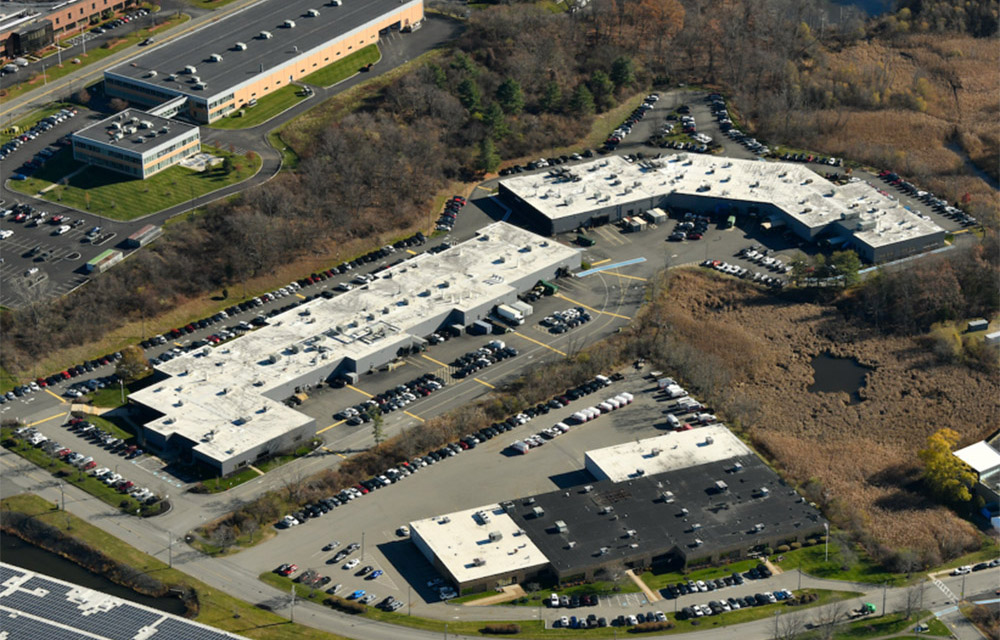
Northwest Bank finances Luzern Associates’ $47.75m acquisition
Danvers, MA Northwest Bank provided $34.5 million in financing to support Luzern Associates LLC’s $47.75 million acquisition of the Cherry Hill industrial portfolio, a three-building campus totaling 200,000 s/f.




 (1).gif)



Columns and Thought Leadership

Reverse exchanges and the challenges of a competitive real estate market - by Michele Fitzpatrick
Our current, highly competitive real estate market poses specific challenges for investors who are considering taking advantage of a tax-deferred 1031 exchange. In this market, investors will have no problem selling their current property if priced properly, but they may find it difficult to find a suitable replacement property

Are appraisers on the same page as the assessor? - by Richard Seman
The purpose of this article is to address problematic or confusing issues which may help assessors and appraisers to better understand how to value real estate for tax assessment purposes.

The focus on price per s/f compared to the comparable sales used in the appraisal report - by Dennis Chanski
Over the past several weeks, I have completed appraisal assignments for private clients. Interestingly, after submitting these appraisals, I received several phone calls – not to question the value, content, or any incorrect information, but rather to discuss the price per s/f compared to the comparable sales used in the report.

Massachusetts real estate transfers over $1 million face new tax rules as of November 1st - by Daniel Meyer
Attention to owners of real estate in the Commonwealth (and the title companies and other professionals who advise them), the Massachusetts Department of Revenue (the “DOR”) recently adopted a new “millionaire’s tax” via 830 CMR 62B.2.4
