


 (1).gif)
News:
Finance
Posted: August 7, 2014
HFF secures $25 million financing for Synergy Investments
HFF has secured $25 million in first mortgage financing for 100 Hancock St., a 204,750 s/f, class A office building.
Working on behalf of Synergy Investments, HFF placed the long-term, fixed-rate loan with Peoples United Bank. Loan proceeds are being used to refinance an existing mortgage that HFF placed with Peoples United in 2011.
100 Hancock St. is located along Rte. 3A, one mile from I-93 and five miles south of Boston's Seaport District. Extensively renovated in 2008, the 10-story office building is certified LEED Silver and features a full-service cafeteria, fitness center, shared conference facility and three-level, 329-space parking garage. Tenants at the 95% leased facility include several State of Massachusetts agencies including the Executive Office of Health and Human Services, the Department of Transitional Assistance and the Massachusetts Developmental Disabilities Council.
The HFF team representing the borrower was led by managing director Greg LaBine and real estate analyst Patrick McAneny.
"Lenders were attracted to the accessibility of the asset from both public transportation and highways, the quality of the physical asset, the high credit caliber of the tenancy and the strength of the sponsorship," said LaBine. "Peoples United provided Synergy with the best combination of long-term interest rate risk mitigation and prepayment flexibility."
Tags:
Finance
MORE FROM Finance
Northwest Bank finances Luzern Associates’ $47.75m acquisition
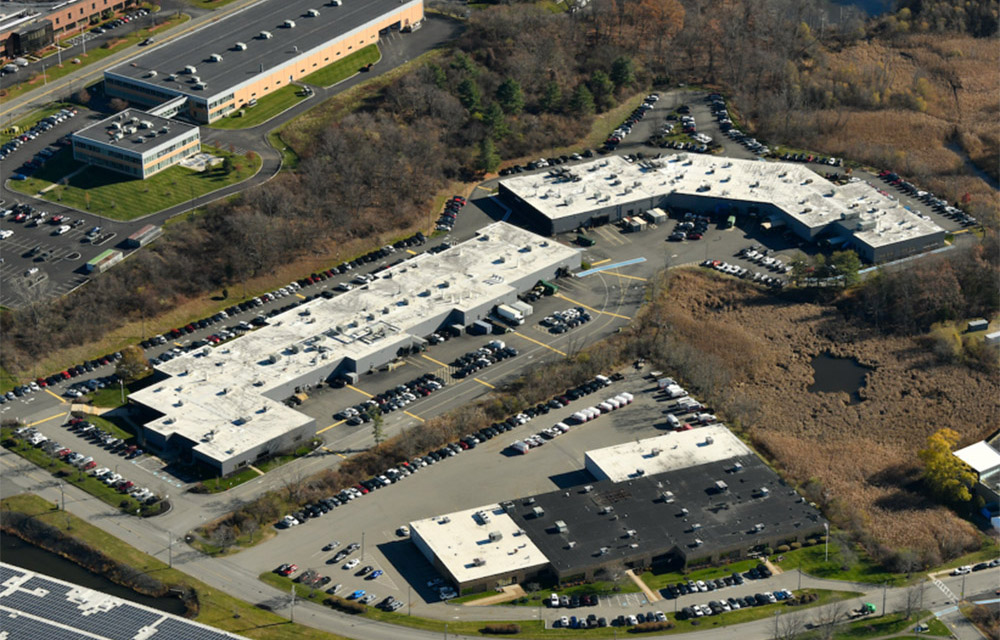
Danvers, MA Northwest Bank provided $34.5 million in financing to support Luzern Associates LLC’s $47.75 million acquisition of the Cherry Hill industrial portfolio, a three-building campus totaling 200,000 s/f.




 (1).gif)


Quick Hits

Columns and Thought Leadership

The focus on price per s/f compared to the comparable sales used in the appraisal report - by Dennis Chanski
Over the past several weeks, I have completed appraisal assignments for private clients. Interestingly, after submitting these appraisals, I received several phone calls – not to question the value, content, or any incorrect information, but rather to discuss the price per s/f compared to the comparable sales used in the report.

Massachusetts real estate transfers over $1 million face new tax rules as of November 1st - by Daniel Meyer
Attention to owners of real estate in the Commonwealth (and the title companies and other professionals who advise them), the Massachusetts Department of Revenue (the “DOR”) recently adopted a new “millionaire’s tax” via 830 CMR 62B.2.4

Are appraisers on the same page as the assessor? - by Richard Seman
The purpose of this article is to address problematic or confusing issues which may help assessors and appraisers to better understand how to value real estate for tax assessment purposes.

Reverse exchanges and the challenges of a competitive real estate market - by Michele Fitzpatrick
Our current, highly competitive real estate market poses specific challenges for investors who are considering taking advantage of a tax-deferred 1031 exchange. In this market, investors will have no problem selling their current property if priced properly, but they may find it difficult to find a suitable replacement property
