


 (1).png)
News:
Owners Developers & Managers
Posted: February 27, 2026
Histoury to host “Colonials of Old Lyme” tour featuring access to historic home interiors
Old Lyme, CT In 2026, Histoury is celebrating America’s 250th birthday throughout the entire year with a special goal: to pass or include 250 colonial homes across their 2026 tours. One of the season’s most exclusive offerings is “Colonials of Old Lyme: A Tour of Connecticut Historic Home Interiors,” a one-day-only charter bus experience taking place Saturday, May 2, 2026.
This tour brings guests inside several colonial-era homes in Old Lyme, with many additional historic buildings highlighted along the route from the comfort of a private charter bus. Architectural themes include vernacular New England styles, Georgian, and Federal homes, paired with guided storytelling about the people, preservation, and pivotal moments of Old Lyme’s past.
Because this tour includes private home interiors, it is offered one day only and will not be repeated — this year or in years to come.
Located where the Connecticut River meets Long Island Sound, Old Lyme was a coveted spot for European colonists. First part of the Saybrook Colony established in 1635, it became the epicenter of the new town of Lyme in 1667 before officially forming its own boundaries in 1727. By the time the community held its own “Boston Tea Party” in 1774, local dwellings were evolving from simple Cape Cod-style homes into larger, more stately residences — an architectural variety that still defines Old Lyme’s landscape today.
Interior stops include a 1699 home that may have later served as a stop on the Underground Railroad, a beautiful saltbox-style home, and more (select interior stops are private; capacity is limited).
What’s Included
Guided exploration of historic buildings, architecture, and local history
Multiple interior stops inside colonial-era homes
Charter-bus format for comfortable point-to-point travel
Photo previews of select interior stops included in promotional materials
MORE FROM Owners Developers & Managers
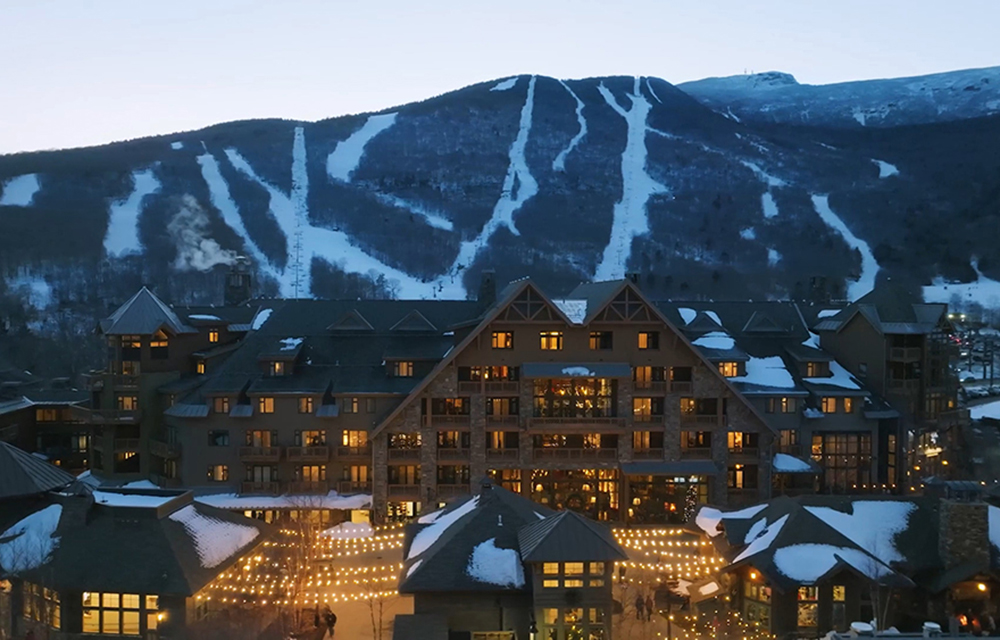
The Lodge at Spruce Peak recognized with Condé Nast Traveler’s 2026 Readers’ Choice Award - #3 in New England
Stowe, VT Condé Nast Traveler revealed the results of its annual Readers’ Choice Awards, with The Lodge at Spruce Peak recognized as the #3 U.S. Resort in New England.






Columns and Thought Leadership

Revitalized Town Centers: Retail??? - by Carol Todreas
It is now widely accepted that customers want to shop in person at physical stores. Brands know that they do better business in a physical store than just on line so they want to open stores. Demand for retail space by digital merchants, local entrepreneurs, and newly developed national chains

Retail infill strategy to activate Pawtucket’s Conant Thread District - by Gaetan Kashala
Until recently, the Conant Thread District consisted of approximately 150 acres of underutilized industrial land spanning Pawtucket and Central Falls. Today, the area is one of the most significant

The legislature has spoken: New Hampshire doubles down on housing in commercial zones - by John Sokul
Last year, the New Hampshire Legislature enacted HB 631, a landmark housing measure requiring municipalities to permit multifamily housing in commercially zoned districts. The law generated

IREM president’s message: Our new reality - Staying ahead of supply chain delays - by Yoany Vargas
Supply chain delays are slowing construction, ratcheting up operating costs, and extending turnover timelines across Greater Boston, directly reducing revenue and increasing the workload for multifamily and