


 (1).png)
News:
Owners Developers & Managers
Posted: March 17, 2017
Hotel lenders have become prudent, as it pertains to new hotel construction projects - by James O'Connell

Yes, hotel lenders have become prudent. Especially as it pertains to lending on new hotel construction projects. In year’s past, this wasn’t always the case. On many occasions, lenders were the last ones to know the market had turned or the cycle had ended. Not this time. In the age of instant, around the clock news, lenders have tuned into the experts and have taken precautions and have exhibited great restraint in shutting down the flow of capital for new hotel construction. This began during the summer of 2016 and is now a full blown national phenomenon. I understand that it has also become more difficult to borrow construction money for the other segments of the real estate market. The market for debt has tightened for retail, office and even multi-family projects.
We are late in the real estate cycle that began with an abrupt halt in 2008. Some would say that 2017 begins a new cycle. A new trend of slow and steady growth has begun. Lender’s new found prudence will enable the hotel industry to continue to progress. New hotel supply was becoming the most important issue for hotel owners and making investors turn away from acquisitions. This pull back, not an increase in interest rates, caused capitalization rates to increase and hotel values to go down. Along with values, the number of transactions dropped as well. By as much as 40% in comparison to 2015. HREC is conducting marketing assignments and consulting services across the country. There isn’t one market that doesn’t have a new supply component. Couple that with rising construction costs and a downward spiral of market performance for many markets could be predicted. However, Prudence has won out! Caution will cause proposed hotel projects to die on the vine and enable existing hotels to flourish in this time of slow growth.
The rate of growth for of Revenue Per Available Room (RevPar) measured for hotels across the country has been declining for a couple years. Revenue growth remains positive, however the rate of growth, which was actually measured in double-digit expansion in many markets has steadily transformed to mirror our weak GDP growth measurements of 1% - 3% per year. Lenders have noted that an increase in supply of one to three or more hotels in many cases can cause that paltry rate growth to turn negative very easily. Hence, the spigot of free-flowing capital has been turned off or at least significantly restricted.
Unfortunately for the developers that have projects ready to come out of the ground, this lending environment has caused many problems. They’ve fought the neighbors, wrestled town boards and were beat up by contractors too busy to consider new projects. Now that those battles are over, no one will lend the money to complete the project. However, a belief that revenue and cash flow have stabilized will cause skittish investors to return to the transaction markets. More markets with healthier longer term projects will cause capital to compete for quality investments. This will push down capitalization rates which have crept up over the past 18 months. An improvement in the value of hotel investment cash flow is great news for everyone concerned.
During a recent Colliers Real Estate event it was noted that over the past four years, construction costs rose 6% per year. Looking at the hotel industry, over those same four years, RevPar rose approximately 4% per year. Costs to run the hotel increased more than 3% per year. If the construction industry begins to feel some pain as inventory of projects declines, we should see a rollback of construction costs. This would be another fundamentally healthy move for long term resiliency of the value of hotel investments.
A roll back of construction costs may not happen in Boston. The noncyclical demand generators of Boston, the colleges, universities and hospitals all have ongoing and proposed construction projects that support many contractors and keep costs high. Since many hotels feed off of these demand generators, the investors of these hotel projects will just have to accept lower investment returns.
As someone who remembers “RECOLL Management Corp.,†the FDIC, the RTC and more recently, Lehman Bros, mortgage backed securities, AIG and 1-800-get-a-loan, prudence is a watch-word for the next cycle. Many thanks to the lenders who have jumped out in front, took the lead and enabled positive growth to keep us in a stable path.
"If Passion drives, let reason hold the reins." Benjamin Franklin, 1749.
James O'Connell is the principal of O'Connell Hospitality Group, LLC, Danvers, Mass.
O'Connell Hospitality Group, LLC, (OHG) was formed in 2000 and has grown to become one of the nation's top real estate firms specializing in hotel investment transactions. In that time, O'Connell has presided over more than $2 billion of hotel investments ranging from oceanfront resorts, major urban hotel projects and suburban, upscale-limited service hotels.
Previous to OHG, James O'Connell was senior managing director for Insignia ESG/Hotel Partners and ran the hospitality practice in the northeastern U.S. region. He is a proud alumnus of RECOLL Management Corp., where he managed hotel dispositions from the failed Bank of New England, an active member of the International Society of Hospitality Consultants, and a REFA sponsor. He is a 1982 graduate of Massachusetts Maritime Academy.
MORE FROM Owners Developers & Managers
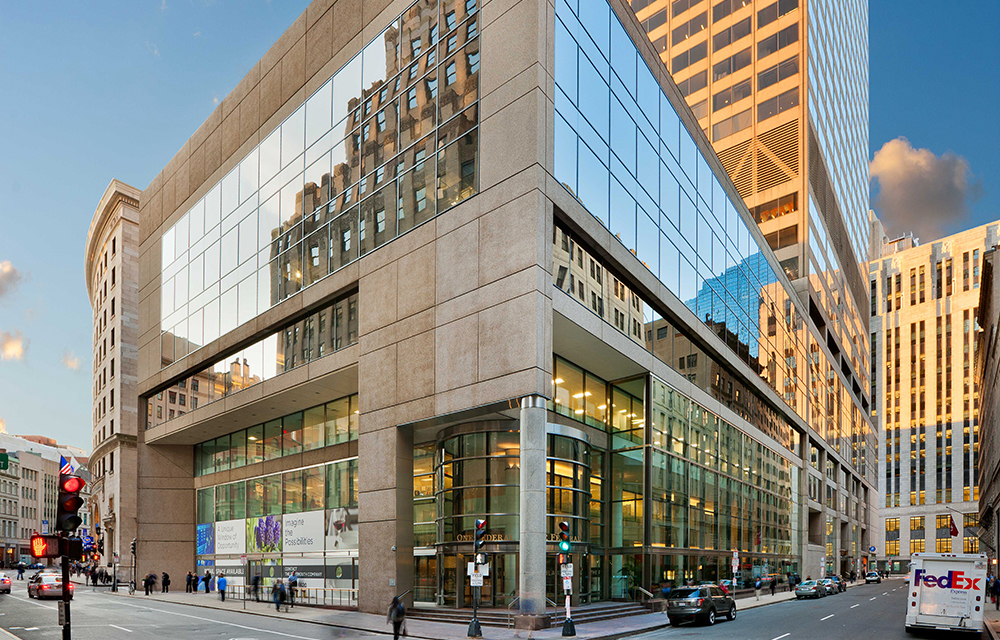
Rubin Rudman to establish headquarters at Tishman Speyer’s One Federal St.
Boston, MA Tishman Speyer has secured a new headquarters lease with Rubin Rudman at One Federal St., its 38-story, 1.1 million s/f tower in the Financial District. Under a 15-year lease, Rubin Rudman’s new headquarters will span 57,844 s/f across One Federal’s entire 23rd and 24th floors and a portion of the 25th floor.







Columns and Thought Leadership

Retail infill strategy to activate Pawtucket’s Conant Thread District - by Gaetan Kashala
Until recently, the Conant Thread District consisted of approximately 150 acres of underutilized industrial land spanning Pawtucket and Central Falls. Today, the area is one of the most significant

The legislature has spoken: New Hampshire doubles down on housing in commercial zones - by John Sokul
Last year, the New Hampshire Legislature enacted HB 631, a landmark housing measure requiring municipalities to permit multifamily housing in commercially zoned districts. The law generated

Revitalized Town Centers: Retail??? - by Carol Todreas
It is now widely accepted that customers want to shop in person at physical stores. Brands know that they do better business in a physical store than just on line so they want to open stores. Demand for retail space by digital merchants, local entrepreneurs, and newly developed national chains

IREM president’s message: Our new reality - Staying ahead of supply chain delays - by Yoany Vargas
Supply chain delays are slowing construction, ratcheting up operating costs, and extending turnover timelines across Greater Boston, directly reducing revenue and increasing the workload for multifamily and