


 (1).png)
News:
Owners Developers & Managers
Posted: March 14, 2025
Improvement or construction exchanges under IRC Section 1031 - by Brendan Greene

Internal Revenue Code (IRC) Section 1031 allows a property owner, who holds property for “the productive use in a trade or business or for investment,” to defer paying any capital gains taxes if the property owner sells such property, identifies “like kind” property within forty-five days of the sale, and acquires other “like kind” property within 180 days of the sale.
There are many circumstances in which an investor wants or needs to acquire “replacement property” prior to selling the “relinquished property.” An investor may come across an investment property that must be purchased quickly, and there are also instances where the sale of the relinquished property is delayed or falls apart and the investor is still under contract to purchase the replacement property. A Reverse 1031 Exchange allows for an investor to still defer paying capital gains taxes by acquiring the replacement property first and then selling relinquished property within 180 days of the purchase of the replacement property.
Internal Revenue Code Section 1031 does not specifically authorize so-called Reverse Exchanges and up until year 2000, taxpayers were at a loss as to how to properly structure a Reverse Exchange. However, on September 15, 2000, the IRS issued Revenue Procedure 2000-37 which provides a “safe harbor” for Improvement and/or Reverse Exchanges completed as part of a properly structured “parking transaction.” Revenue Procedure 2000-37 provides that the parking arrangement is not the only way to properly structure a reverse exchange. However, if an exchanger follows these guidelines, then the exchange will withstand IRS scrutiny.
In a “parking transaction,” the Exchanger does not initially take title to the replacement property. Instead, the replacement property is “parked” with an Exchange Accommodation Titleholder (EAT), which is typically the Qualified Intermediary (QI), and the Exchanger and the EAT enter into a written Qualified Exchange Accommodation Agreement (QEAA). The EAT holds title to the replacement property until such time as the exchanger arranges for the transfer of the relinquished property to the buyer in a simultaneous or deferred exchange. The EAT is typically a single member limited liability company (LLC) where the QI is the sole member.
When the replacement property is purchased and “parked” with the EAT, the taxpayer has 45 days from the date of purchase to identify the relinquished property or properties, and 180 days from the date of purchase by the EAT to sell the relinquished property.
We continue to see a large increase in Improvement and/or reverse exchanges as investors have become more familiar and knowledgeable as to how they work. Also, lenders have also become more comfortable with them and are more willing to lend on these transactions.
Improvement and/or reverse exchanges are more complicated than the typical forward tax-deferred exchanges, but with proper structuring from GBEC, a reverse exchange gives the exchanger more options in the pursuit of finding replacement properties. Let us help you properly structure your reverse exchange.
This article is a very brief overview of safe-harbor Improvement and/or reverse 1031 exchanges. Improvement and/or reverse 1031 exchange transactions must be very carefully planned and structured, and investors should always engage experienced legal, financial and tax advice before beginning an Improvement and/or reverse 1031 exchange transaction.
Greater Boston Exchange Company is always ready to assist you in structuring a 1031 exchange. Please do not hesitate to contact us for additional information or assistance.
Brendan Greene, Esq. is a principal of Greater Boston Exchange Co., LLC and is partner in the law firm McCue, Lee & Greene, LLP, Boston, Mass.
MORE FROM Owners Developers & Managers
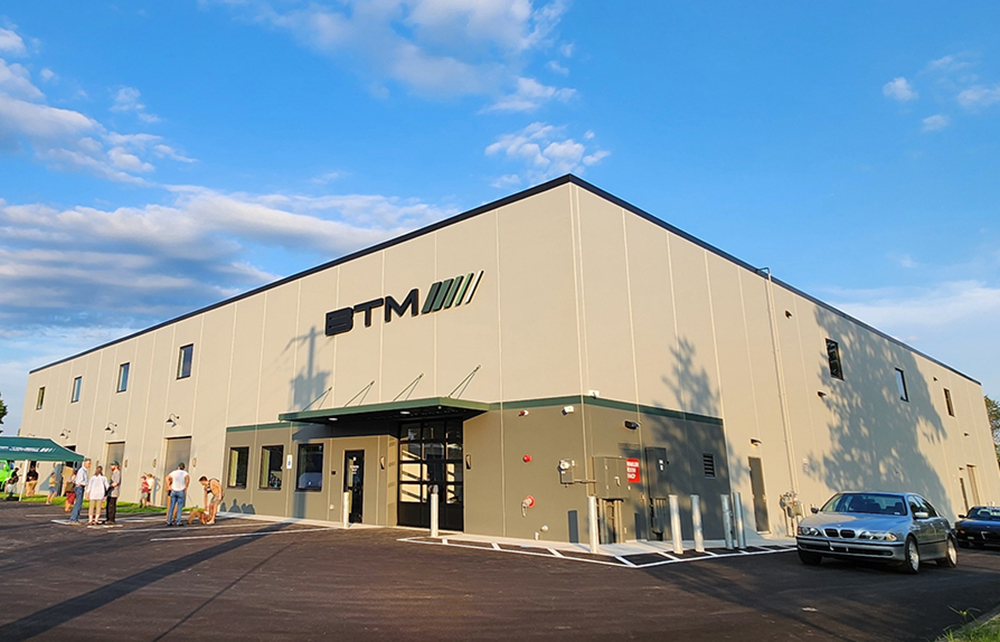
Blair Talbot Motors celebrates opening of new Dover facility designed and built by PROCON
Dover, NH Blair Talbot Motors celebrated the grand opening of its new facility at 34 Industrial Park Rd., marking an exciting new chapter for one of New England’s premier destinations for European automotive service and professional vehicle storage.





Quick Hits
 (1).png)

Columns and Thought Leadership

IREM president’s message: Our new reality - Staying ahead of supply chain delays - by Yoany Vargas
Supply chain delays are slowing construction, ratcheting up operating costs, and extending turnover timelines across Greater Boston, directly reducing revenue and increasing the workload for multifamily and

The legislature has spoken: New Hampshire doubles down on housing in commercial zones - by John Sokul
Last year, the New Hampshire Legislature enacted HB 631, a landmark housing measure requiring municipalities to permit multifamily housing in commercially zoned districts. The law generated

Revitalized Town Centers: Retail??? - by Carol Todreas
It is now widely accepted that customers want to shop in person at physical stores. Brands know that they do better business in a physical store than just on line so they want to open stores. Demand for retail space by digital merchants, local entrepreneurs, and newly developed national chains

Retail infill strategy to activate Pawtucket’s Conant Thread District - by Gaetan Kashala
Until recently, the Conant Thread District consisted of approximately 150 acres of underutilized industrial land spanning Pawtucket and Central Falls. Today, the area is one of the most significant