


 (1).gif)
News:
Finance
Posted: June 12, 2014
Innovation is a life style, and real estate is where it happens!
Real estate is a place where things happen. Virtual connectiveness has blurred the lines between residential and commercial real estate for happenings. However, commercial real estate and the built environment are still integral to socio-economic patterns of our day-to-day living. Innovation places are increasingly different from traditional places. The way we live, work and play is dramatically different and the places are increasingly different. Innovation is a life style, curriculum, strategy and spirit, and commercial real estate is the box and place where it happens! This megatrend is already causing economic and functional obsolescence on commercial real estate investments. Innovation demands energy efficiency, environmentally friendly and technologically advanced places and more. As mundane and profound as the traces of this trend have become, the time to join the parade is now!
Innovation is occurring for, among other matters, improved comfort, convenience and creativity. Innovation districts and curriculums are still just places and learning programs; however, collateral real estate activity is certainly identifiable. Not all activity is technology related. We still like food and a haircut. We do it differently. We like fitness, healthcare and shopping at lunch and before and after work. Ever evolving, personal services are retro and new, entertaining and relaxing.
For innovation districts, commercial and mixed use, the built environment is markedly different. In addition to the threshold improvements of green and efficient mechanical systems and design, specialized spaces are required for innovative research, such as wet lab benching, interstitial floors for flexibility in utility distribution, open spans for plan flexibility, power capacity for redundancy, emergency, and surge. Occupancy and rent patterns are already reflecting the demand for innovation space and the functional and economic obsolescence in the built inventory. Business and personal services are changing for the innovators.
On a simplistic and basic sidebar for the mobile pedestrian doing business and enjoying the day, most places and the spaces in between, are increasingly wireless hot spots with more benches, chairs, tables, charging stations, arts and entertainment. These environmental enhancements are generating traffic as well as pleasure and reducing crowding and stress.
Not all locations can be the Innovation District in Boston's Seaport Neighborhood in the CBD with its harbor breezes and pathways, waterfront cafes and abundant street furniture. Unique locational attributes will persist. However, the vocabulary of the built and natural environment has changed, incrementally and otherwise, and anecdotal evidence of change abounds in traditional submarkets.
David Kirk, CRE, MAI, FRICS, is principal and founder of Kirk & Company, Real Estate Counselors, Boston.
MORE FROM Finance
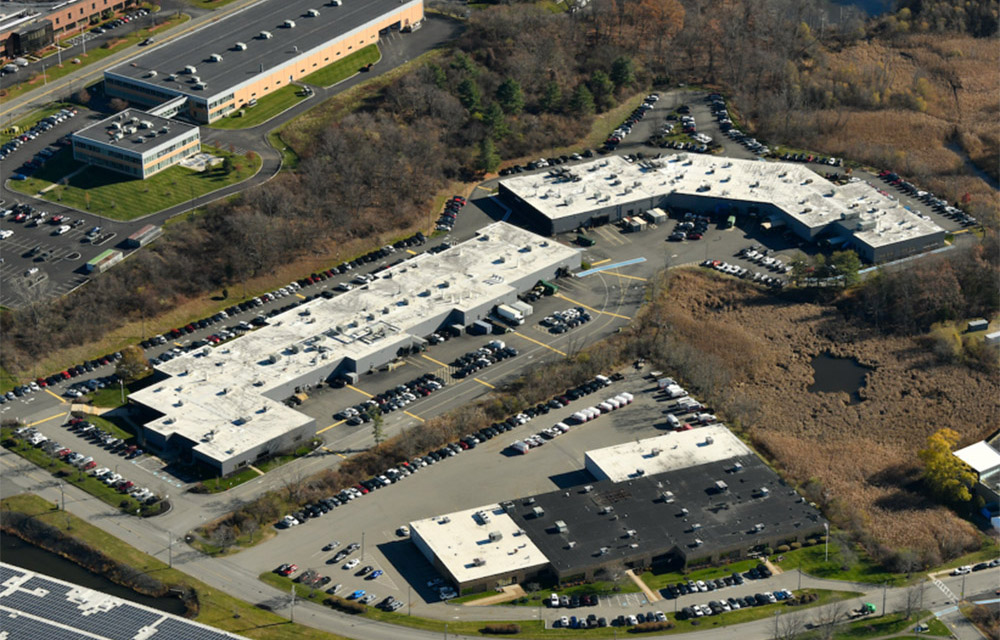
Northwest Bank finances Luzern Associates’ $47.75m acquisition
Danvers, MA Northwest Bank provided $34.5 million in financing to support Luzern Associates LLC’s $47.75 million acquisition of the Cherry Hill industrial portfolio, a three-building campus totaling 200,000 s/f.

 (1).gif)


Quick Hits

Columns and Thought Leadership

Massachusetts real estate transfers over $1 million face new tax rules as of November 1st - by Daniel Meyer
Attention to owners of real estate in the Commonwealth (and the title companies and other professionals who advise them), the Massachusetts Department of Revenue (the “DOR”) recently adopted a new “millionaire’s tax” via 830 CMR 62B.2.4

Are appraisers on the same page as the assessor? - by Richard Seman
The purpose of this article is to address problematic or confusing issues which may help assessors and appraisers to better understand how to value real estate for tax assessment purposes.

The focus on price per s/f compared to the comparable sales used in the appraisal report - by Dennis Chanski
Over the past several weeks, I have completed appraisal assignments for private clients. Interestingly, after submitting these appraisals, I received several phone calls – not to question the value, content, or any incorrect information, but rather to discuss the price per s/f compared to the comparable sales used in the report.

Reverse exchanges and the challenges of a competitive real estate market - by Michele Fitzpatrick
Our current, highly competitive real estate market poses specific challenges for investors who are considering taking advantage of a tax-deferred 1031 exchange. In this market, investors will have no problem selling their current property if priced properly, but they may find it difficult to find a suitable replacement property
