


 (1).gif)
News:
Finance
Posted: May 13, 2022
Less is more, as in balance sheets. - by David Kirk

The FOMC announces a 0.5% increase on rates to 0.75%-1% for a soft landing. More job offerings than job seekers and wage gains should persist. Lending should increase the rate in borrowings, easing expansion, fueling inflationary pressures, softly hopefully. The uncertainty of the rippling impact rates should slow the market dynamics, but we will see. Traditional patterns of economic trends are flummoxed, or the economists are wondering and hedging forecasts. Whatever happens, pricing should push and recessionary conditions bubble, even if the boil is short lived.
Because. Depends. Extraordinary job switching during the pandemic and ongoing impacts underscore a sectoral shift that is already historical and will only continue. The life-sciences are leading several metropolitan job markets where the multiplier effect is already spreading impact. Implosions are also reaching scale. Healthcare and infrastructure are moving forward and expected to similarly cause further rippling. No forecast, yet, impacting economic short-term conditions because it depends. Training on the job and academies for growth are proliferating. Dropping education requirements is a trend, no longer anecdotal. New problems need new solutions.
A pause in the markets is predictable. Stabilization in rates could well result from the collision of the downside and upside pressures and momentum of economic balance if not buoyancy and expectations. Economies come in all sizes and interdependencies. Monitoring and preparedness are certainties. Nimble and deliberate, the stewards of the built environment should move through this storm. Metaphors aside, the performance and appeal of commercial property investments have been stable to strong. Probably persist.
If all seems optimistic, much is still in process. Similar to emergency efforts to deal effectively with the pandemic, sectoral enterprise for climate change readiness and amelioration is proliferating. Much to do and to follow, and this a national priority with burdens and benefits. The built environment is the place to implement these priorities. Credits and abatements galore. Technological advancements in abundance. Funding with preferences.
Meeting the challenge is the hallmark of good stewardship of the built environment. Buildings and bridges, bathrooms and benches. WiFi and welfare. It is all connected. More is better. Much higher, as in rates. Longer lasting. Less is more, as in balance sheets.
Happy Springtime!
David Kirk is founder, CEO of Kirk & Company, Real Estate Counselors of Boston, Mass.
MORE FROM Finance
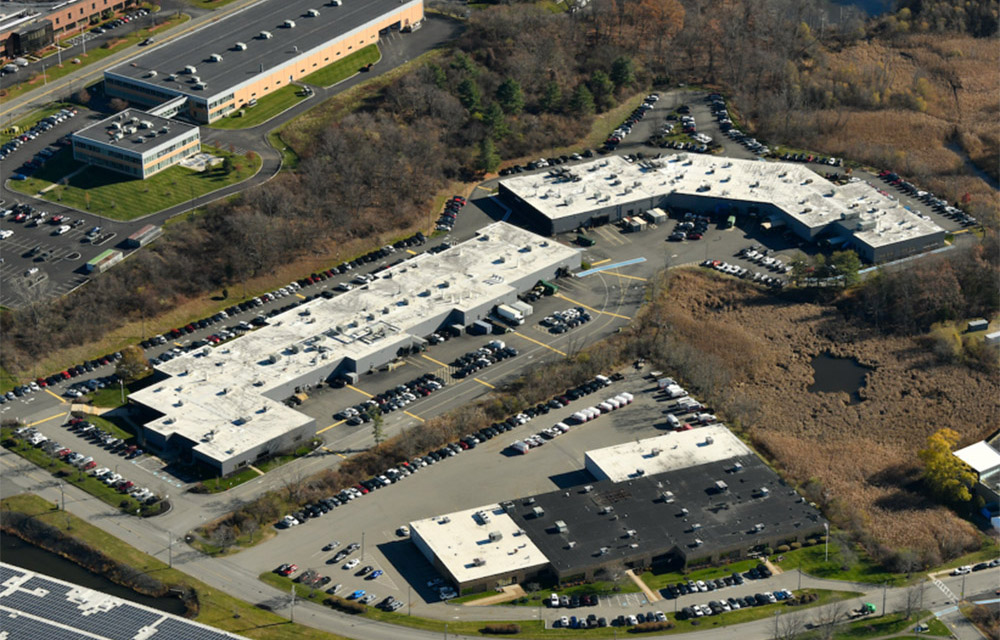
Northwest Bank finances Luzern Associates’ $47.75m acquisition
Danvers, MA Northwest Bank provided $34.5 million in financing to support Luzern Associates LLC’s $47.75 million acquisition of the Cherry Hill industrial portfolio, a three-building campus totaling 200,000 s/f.


 (1).gif)


Columns and Thought Leadership

Are appraisers on the same page as the assessor? - by Richard Seman
The purpose of this article is to address problematic or confusing issues which may help assessors and appraisers to better understand how to value real estate for tax assessment purposes.

Massachusetts real estate transfers over $1 million face new tax rules as of November 1st - by Daniel Meyer
Attention to owners of real estate in the Commonwealth (and the title companies and other professionals who advise them), the Massachusetts Department of Revenue (the “DOR”) recently adopted a new “millionaire’s tax” via 830 CMR 62B.2.4

The focus on price per s/f compared to the comparable sales used in the appraisal report - by Dennis Chanski
Over the past several weeks, I have completed appraisal assignments for private clients. Interestingly, after submitting these appraisals, I received several phone calls – not to question the value, content, or any incorrect information, but rather to discuss the price per s/f compared to the comparable sales used in the report.

Reverse exchanges and the challenges of a competitive real estate market - by Michele Fitzpatrick
Our current, highly competitive real estate market poses specific challenges for investors who are considering taking advantage of a tax-deferred 1031 exchange. In this market, investors will have no problem selling their current property if priced properly, but they may find it difficult to find a suitable replacement property
