


 (1).png)
News:
Owners Developers & Managers
Posted: November 4, 2014
Life sciences corridor collaboration will strengthen Quincy and the region - by Dean Rizzo
 Dean Rizzo, Quincy Chamber of Commerce
The city of Quincy, located seven miles south of Boston is well positioned to further strengthen and diversify its economic future through a regional collaboration with four neighboring communities. In recent years, Quincy leaders actively engaged their counterparts in Boston and Cambridge within the context of a state-wide initiative to support and grow the Life Sciences Industry Cluster in the Commonwealth. Working side-by-side in a variety of national and international conferences it soon became evident that the three communities, and the Commonwealth as a whole, will have much to gain through a regional identity and branding.
On May 13 at the Museum of Science in Boston, the three cities along with the communities of Somerville and Braintree, formally announced the “Life Sciences Corridor” - a regional branding strategy designed to create a larger economic target area for the ever expanding life sciences industry cluster. The communities are connected through numerous transportation networks, with the most prevalent being the MBTA Red Line. Recognized as the Life Sciences “Life Line”, the Red Line provides convenient accessibility within arguably the Commonwealth’s most economically diverse and dynamic commercial region.
It is evident that each community has a unique identity and palette of resource/space opportunities for companies to consider – especially national and international companies that will look at location opportunities from both a local and a regional perspective. Building on their individual strengths the communities will collectively offer a diversity of location opportunities for companies along with a vibrant cosmopolitan lifestyle for their employees.
Individually each community offers unique and attractive characteristics that complement rather than compete with one another. For example, Cambridge is home to over 325 life science companies, hosting the largest segment of this industry cluster while providing a dynamic eco-system fueled by MIT, Harvard and the high concentration of life science companies. Boston has an incredible international identity, supported by its rich history, social diversity, higher education institutions, world renowned medical facilities and a dynamic concentration of commercial entities.
The dense commercial environment within these two world-renowned communities can however create economic and space challenges for many companies looking to be a part of this market. This is where the city of Quincy becomes an important asset to the region. A cosmopolitan urban community in its own right, Quincy offers more land area for manufacturing opportunities, as well as less expensive Class A office space for those companies that do not have the economic means to locate within the Boston and Cambridge market area, but want to be within close proximity.
Linked through public transportation, higher education facilities and convenient access to a quality, diversified and abundant workforce, the region can offer a company an office presence in one community and R&D or manufacturing in another – a collective win for all. It is far more important to ensure that a company, regardless of its size, chooses the life sciences corridor region to call home, rather than lose them to markets beyond the Commonwealth.
There are numerous connections between the communities that comprise the life sciences corridor. From the evolution of the regions rich history, the sharing of natural resources, to the many workers and residents that transverse between the communities daily – the region has always been interconnected in many ways. Now, through the wisdom of community leaders, each will benefit from a regional collaboration that will capitalize on their individual strength’s, shared resources and a newly formed collective vision.
Dean Rizzo is president of the chamber of commerce, Quincy, Mass.
MORE FROM Owners Developers & Managers
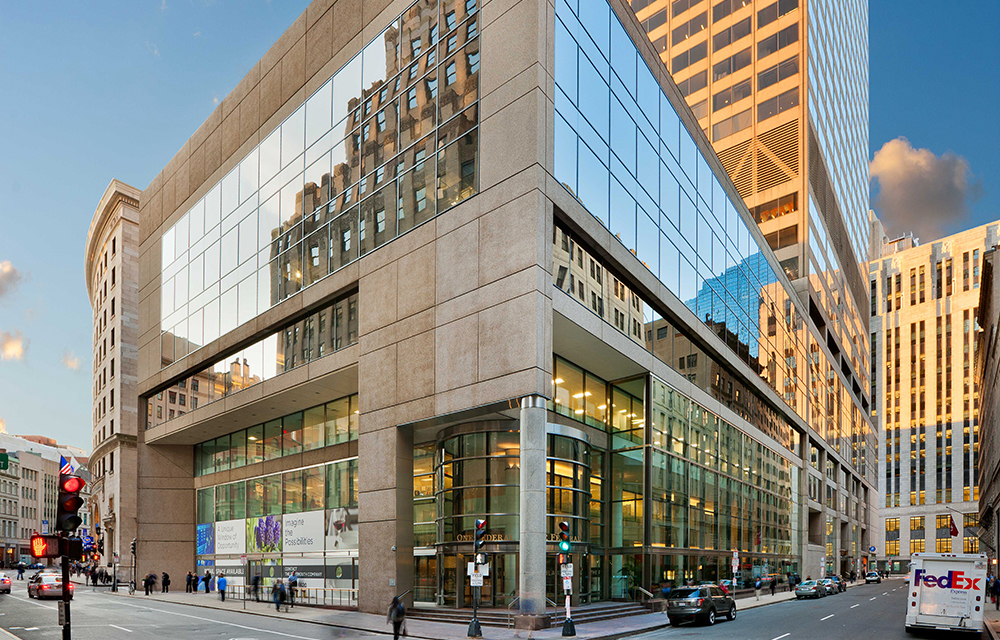
Rubin Rudman to establish headquarters at Tishman Speyer’s One Federal St.
Boston, MA Tishman Speyer has secured a new headquarters lease with Rubin Rudman at One Federal St., its 38-story, 1.1 million s/f tower in the Financial District. Under a 15-year lease, Rubin Rudman’s new headquarters will span 57,844 s/f across One Federal’s entire 23rd and 24th floors and a portion of the 25th floor.






Columns and Thought Leadership
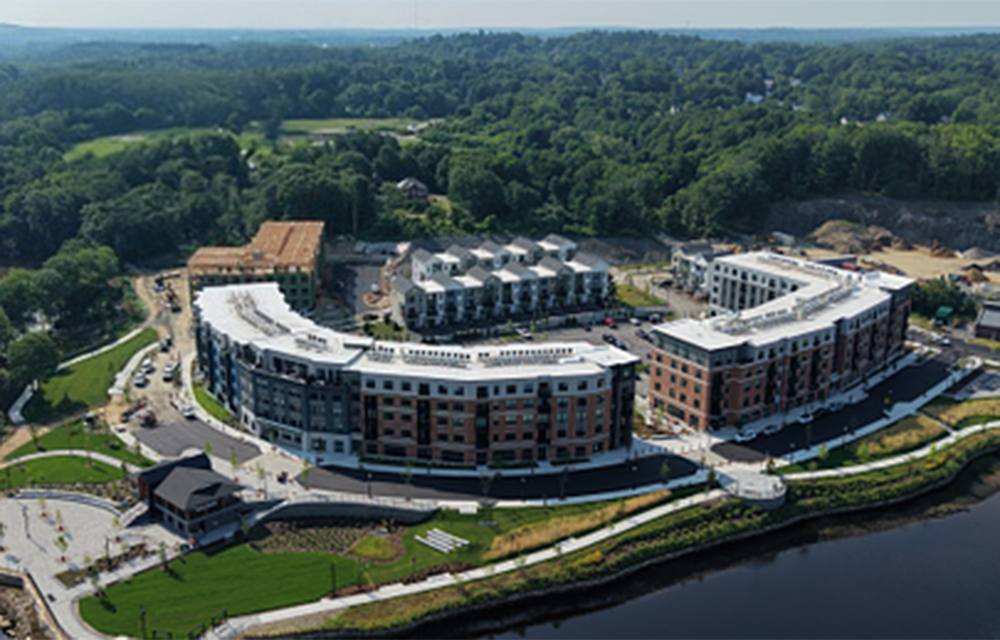
Retail infill strategy to activate Pawtucket’s Conant Thread District - by Gaetan Kashala
Until recently, the Conant Thread District consisted of approximately 150 acres of underutilized industrial land spanning Pawtucket and Central Falls. Today, the area is one of the most significant

The legislature has spoken: New Hampshire doubles down on housing in commercial zones - by John Sokul
Last year, the New Hampshire Legislature enacted HB 631, a landmark housing measure requiring municipalities to permit multifamily housing in commercially zoned districts. The law generated
IREM president’s message: Our new reality - Staying ahead of supply chain delays - by Yoany Vargas
Supply chain delays are slowing construction, ratcheting up operating costs, and extending turnover timelines across Greater Boston, directly reducing revenue and increasing the workload for multifamily and
Revitalized Town Centers: Retail??? - by Carol Todreas
It is now widely accepted that customers want to shop in person at physical stores. Brands know that they do better business in a physical store than just on line so they want to open stores. Demand for retail space by digital merchants, local entrepreneurs, and newly developed national chains