


 (1).png)
News:
Owners Developers & Managers
Posted: November 19, 2007
Lighting upgrades boost workplace productivity
In addition to the financial and environmental benefits driven by energy-efficient lighting upgrades, another very tangible benefit of upgrades is the positive impact they can have on boosting employee productivity. Employee productivity is classically defined as the level of output received from an employee based on the investment made in them. Significantly influenced by the workplace environment, employee productivity can increase as the result of a lighting upgrade and can significantly improve a company's bottom line, as shown in the following examples:
*A new study recently revealed that brighter office light can increase employee performance by more than 10%. Subjects tested in varying lighting conditions were found to experience mood elevation and be more alert under brighter lighting.
*A $300,000 lighting upgrade within the Reno, Nevada Main Post Office not only improved workplace morale, but significantly improved productivity - to the tune of a sustained 6% increase, as measured by the number of pieces of mail that the group was able to sort per hour before versus after the upgrade. In addition, employee error rates fell to the lowest level in the region. While the energy cost and maintenance savings resulting from the upgrade amounted to $50,000 a year, it was the value of the gains in productivity - estimated at $400,000 - $500,000 per year - which more than covered the cost of the initial investment in less than one year's time.
*The Verifone Company, a California-based manufacturer of electronic verification systems, tracked the results of its "Costa Mesa Experiment," the impact on employees which resulted from the 1993 upgrade of Verifone's expansion facility to "healthy building" status. Following a building overhaul, which involved the aggressive use of skylights and lighting controls to maximize the use of natural daylighting, the company experienced a 5% boost in productivity and a 40% reduction in absenteeism.
*At Pennsylvania-based American Hardware Supply Company, a lighting upgrade within the company's 318,000-square-foot distribution center enabled employees to work faster and make fewer errors. This improved productivity by over 1%, which was valued at nearly $40,000 annually to the company.
*Studies by research firms BOSTI and ASID report that up to 30% of the nation's office workers are uncomfortable with their facility's general lighting systems.
*A Cornell University study conducted within a Xerox facility in upstate New York found that 1 out of 4 workers experienced a loss in work time based on vision problems and discomfort caused by poor lighting. The lost time amounted to 15 minutes per day or over an hour a week per employee, the eventual equivalent of a full week of lost time per affected employee per year. Subsequently, improvements in the average office lighting system can result in up to 3-5% gains in employee productivity on an annual basis.
An estimated 90% of the nation's commercial buildings were built before 1985, with many still containing outmoded lighting products or systems configured before the onset of the computer era. Fortunately, numerous lighting products readily available in the marketplace can both enhance worker comfort and productivity as well as reduce energy costs. Upgrades involving such technologies as energy-efficient T8 fluorescent lamps, electronic ballasts, and controllable systems can attune lighting levels to the tasks being performed in the space and enhance employee comfort while providing energy cost savings of 20-50%. Don't wait to take advantage of these opportunities in your facility today!
Susan Bloom is director of corporate communications for Philips Lighting & Advance
MORE FROM Owners Developers & Managers
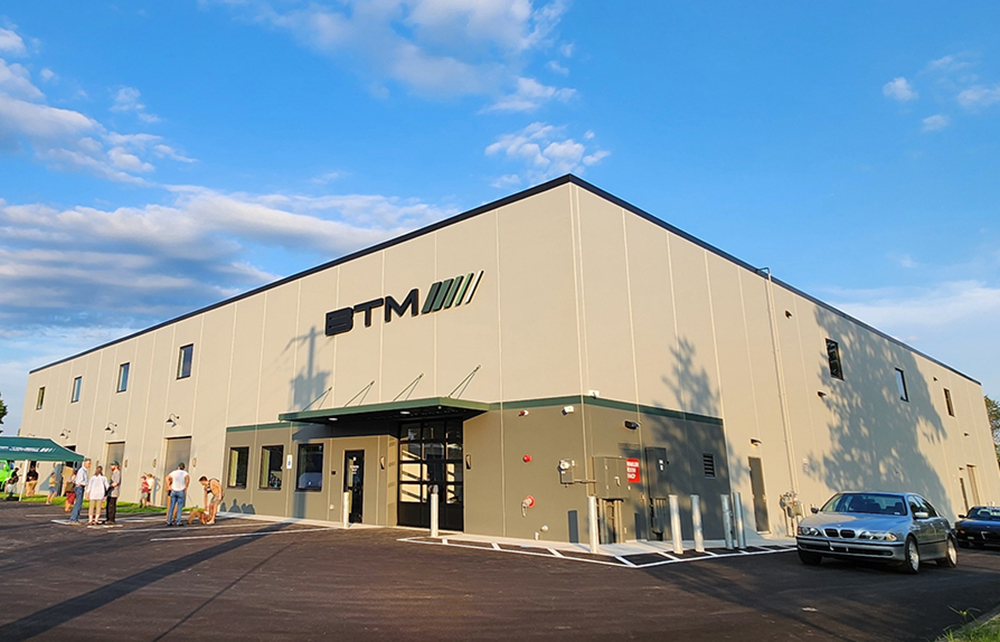
Blair Talbot Motors celebrates opening of new Dover facility designed and built by PROCON
Dover, NH Blair Talbot Motors celebrated the grand opening of its new facility at 34 Industrial Park Rd., marking an exciting new chapter for one of New England’s premier destinations for European automotive service and professional vehicle storage.







Columns and Thought Leadership

The legislature has spoken: New Hampshire doubles down on housing in commercial zones - by John Sokul
Last year, the New Hampshire Legislature enacted HB 631, a landmark housing measure requiring municipalities to permit multifamily housing in commercially zoned districts. The law generated

Retail infill strategy to activate Pawtucket’s Conant Thread District - by Gaetan Kashala
Until recently, the Conant Thread District consisted of approximately 150 acres of underutilized industrial land spanning Pawtucket and Central Falls. Today, the area is one of the most significant

IREM president’s message: Our new reality - Staying ahead of supply chain delays - by Yoany Vargas
Supply chain delays are slowing construction, ratcheting up operating costs, and extending turnover timelines across Greater Boston, directly reducing revenue and increasing the workload for multifamily and

Revitalized Town Centers: Retail??? - by Carol Todreas
It is now widely accepted that customers want to shop in person at physical stores. Brands know that they do better business in a physical store than just on line so they want to open stores. Demand for retail space by digital merchants, local entrepreneurs, and newly developed national chains