(1).gif)
News:
Finance
Posted: March 10, 2023
Liquidity and default and workouts - by David Kirk

The capital markets turbulence persists and lending in the commercial property market is still sluggish. The rates are sticky. All of these conditions relate to Fed rate increases. And uncertainties related Fed action. The high employment, wage gains, job growth, and consumer spending are supporting a resilient economy. Commercial real estate is dependent upon the economy, the commercial property markets are impacted by the related capital markets. Slack. Defaults. Workouts.
Stewards of the built environment are dealing with daily decisions on priorities for cash flow. Lenders and investors are also dealing, playing the cards as dealt, daily. Defaults are coming in all shapes and sizes, covenants and clauses. Payments and accruals and escrows. Since the beginning of COVID, the financing and the related agreements have been strained. Defaults occurring and noted. Loan to own. Not much. Throwing in the keys. Some, not so much. Most assets are in good hands and most players are observant and diligent and earnest. Workouts.
COVID challenged most agents of change. The realities of the market were recognized, more or less. Together, most parties negotiated and mediated through the storm and mist of extraordinary economic turmoil.
Rather than litigate force majeure (greater force FR) or covenants or disbursements, parties linked arms and soldiered on. Workouts. COVID behaviors and natural disasters were unprecedented. Supply chain tangles and skilled labor shortages and COVID protocols created a maze that somehow were navigated by owners, contractors and subs, lenders and investors, and bonding companies. Without headlines. Commercial property professionals were candid and transparent in zoomed and in/person forums about the solutions, workouts, often without interference from legal advisors.
The law and the legal profession and the courts have helped dealing with how to get the job done. Without giving up the rights of the parties, or caving in, and proceeding with care and trust. On a daily basis. Construction, repair, hygiene and occupancy, somehow, got done. Not over yet.
These matters are not trivial. These matters are not acknowledged by the Fed as highly disruptive, destabilizing the markets. Inflation. Three months or so ago, Boston had five or so major projects in the range of $1 billion. Now, one is opening, and the others are still under construction. And many others are in steel. Workouts.
Commercial property markets are local. Best practices do migrate, and professional real estate organizations have provided a variety of zooming and in-person forums for ideas and data. Anecdotal and aggregations to support dealing with the headwinds and tailwinds.
Public sectors are participating with accelerated permitting and approval processes. Infrastructure spending. Demand for the built environment persists. What and how to produce appropriate supply to meet demand is best described as a scramble of nimble stewards.
The commercial property sector is stronger than in most previous recoveries. Not all markets have the stability and vibrancy of the strong economic markets. Local oversupplies and weaker recoveries mean more defaults and more workouts while shakeouts continue.
David Kirk is founder, chief executive officer of Kirk & Co., Boston, Mass.
MORE FROM Finance
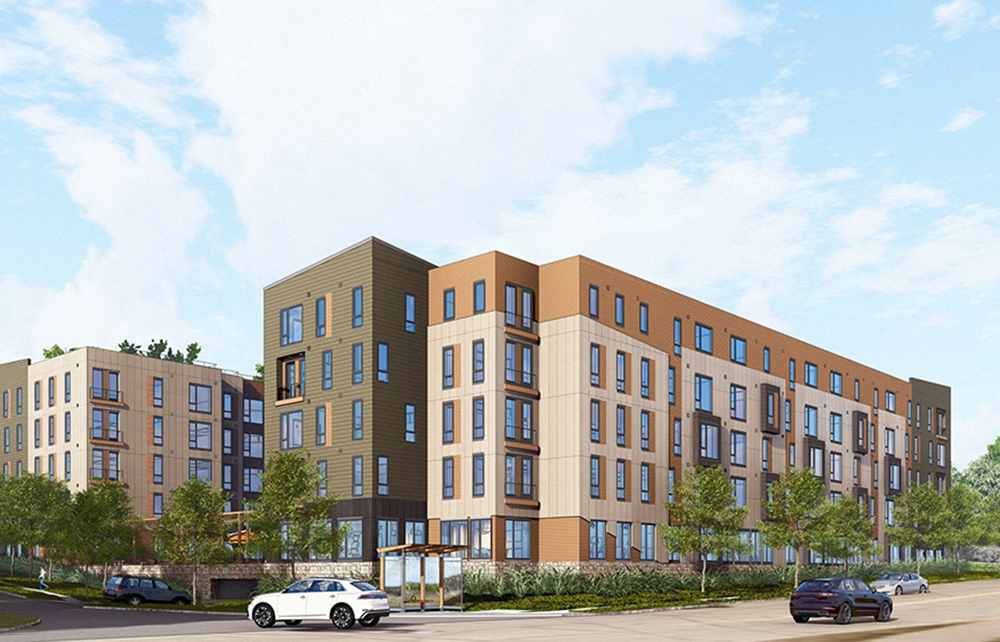
Affinius Capital and Axonic Capital provide $45.8 million construction loan for 130-unit multifamily
Lexington, MA Affinius Capital LLC (Affinius Capital), in partnership with Axonic Capital LLC (Axonic), originated a $45.8 million loan to finance the ground-up development of 7 Hartwell Ave., a to-be-built, 130-unit, Class A multifamily property with 400 s/f of retail.




 (1).gif)


Quick Hits

Columns and Thought Leadership

Are appraisers on the same page as the assessor? - by Richard Seman
The purpose of this article is to address problematic or confusing issues which may help assessors and appraisers to better understand how to value real estate for tax assessment purposes.

The focus on price per s/f compared to the comparable sales used in the appraisal report - by Dennis Chanski
Over the past several weeks, I have completed appraisal assignments for private clients. Interestingly, after submitting these appraisals, I received several phone calls – not to question the value, content, or any incorrect information, but rather to discuss the price per s/f compared to the comparable sales used in the report.

Reverse exchanges and the challenges of a competitive real estate market - by Michele Fitzpatrick
Our current, highly competitive real estate market poses specific challenges for investors who are considering taking advantage of a tax-deferred 1031 exchange. In this market, investors will have no problem selling their current property if priced properly, but they may find it difficult to find a suitable replacement property

Massachusetts real estate transfers over $1 million face new tax rules as of November 1st - by Daniel Meyer
Attention to owners of real estate in the Commonwealth (and the title companies and other professionals who advise them), the Massachusetts Department of Revenue (the “DOR”) recently adopted a new “millionaire’s tax” via 830 CMR 62B.2.4

September Promotion