


 (1).gif)
News:
Finance
Posted: December 9, 2010
Location, location…How real estate varies in different areas
My location as I write this article is Breckenridge, Colorado, that well known ski resort town that is definitely becoming a four seasons' haven for the outdoor enthusiast. The downtown area is an eclectic array of quaint boutiques, restaurants, personal services and night life entertainment venues. The recreation center has an Olympic-size swimming pool complete with a water slide, weight room, indoor running track, climbing wall and locker rooms with a gizmo that spin dries your bathing suit. The local hospital has a décor more like a class A resort hotel and even has a grand piano in the waiting area (more about why I know so much about the hospital below).
Town leaders over the years have perfected their community to attract the touro-dollar. Building codes are very strict to ensure that architectural integrity and construction quality are promoted and preserved. Pan handling became illegal several decades ago to discourage underfunded ski bums. Every winter, the community sponsors an international ice sculpting contest that attracts artists and spectators from around the world. A paved off-road bike trail extends in either direction for many miles. The local community college cleverly holds a wide variety of reasonably priced three hour long one-night classes on topics to attract skiing and non-skiing visitors alike. The real estate tax rate on vacant land is significantly higher than on improved properties to discourage land speculation.
The natural beauty of the area is beyond description. Stunning jaw-dropping mountain views greet your eyes no matter which direction you look. The cold weather is quite acceptable due to the relatively low humidity. As the locals say, "We live in a postcard."
Every time I visit an area, I always pick up real estate brochures and when I read the local newspapers, I always turn to the real estate section. It's an occupational hazard of mine. I cannot help myself. The real estate market in Breckenridge is extremely different than most areas of the country, including my own. One look at the prices of real estate makes me realize that real estate is indeed a very local event.
According to the 2000 US Census data (2010 is not yet available), 74.7% of the total housing units in Breckenridge are vacant indicating that these are most likely second (or even third or fourth) homes. Of the 25.3% of homes that are occupied, only 39.4% are owner occupied with the remainder renter occupied. These statistics are very typical of a resort area. In today's newspaper, the range in asking price for a single family dwelling ranges from $219,000 for a two-bedroom, one-bath 676 s/f condominium to $1.995 million (just reduced by $450,000) for a home with panoramic mountain views, a separate apartment, media room, wine cellar and spa. The town has a very limited inventory of housing units under $1 million.
In Breckenridge the most desirable amenity for which buyers are willing to pay large sums is expansive mountain views, and in my geographic area, it is bold ocean views with pounding surf. Local realtors indicate that a starter home in Breckenridge is at least $500,000. In my area, a starter home typically sells in the $125,000 to $150,000 price range. Breckenridge has not totally escaped the Great Recession. Bank owned properties are on the market, but they do not make up the market as is the case for many areas.
With such a large number of vacation homes, real estate taxes are largely paid by non-residents of the town. These non-residents, who essentially consume very few services, allow residents to enjoy a quality of life that would otherwise not be affordable. This quality of life includes very well maintained roadways (Breckenridge has no potholes), a school system of extraordinary caliber, and, yes, a top of the line hospital. I have just welcomed two adorable grandbabies (twins) into the world!
Pat Amidon, MAI, is president of Amidon Appraisal, Portland, ME.
MORE FROM Finance
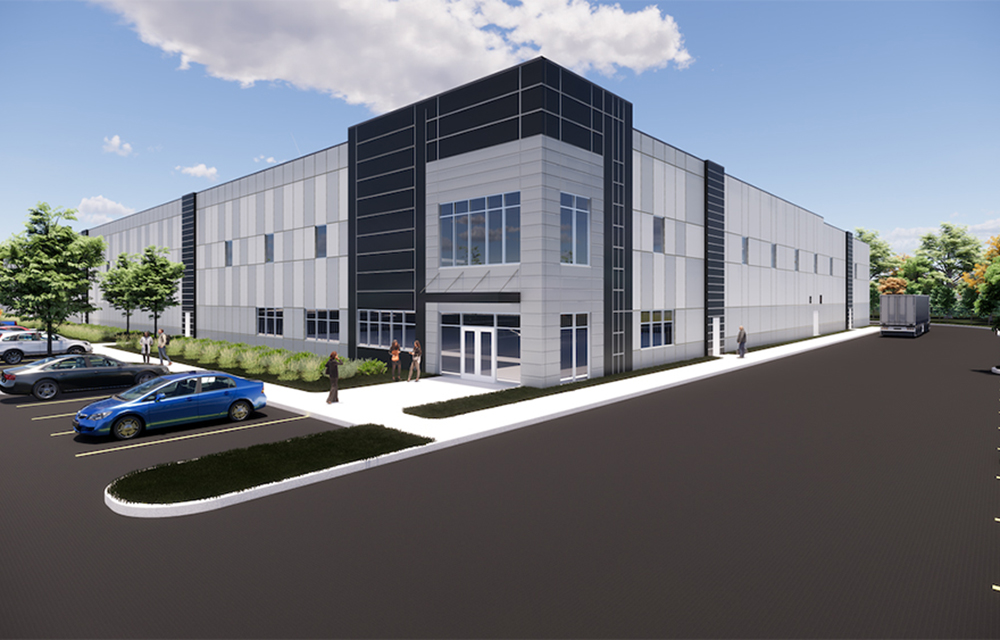
Berkeley Garbe secures $35.4 million debt financing with MetLife Investment Management
Billerica, MA Berkeley Garbe has secured a $35.4 million financing package for 161 Concord Rd., a new advanced manufacturing and innovation hub that is 30% complete following the start of construction in June. The project is on track to be completed in April 2027.
 (1).gif)


.png)
Columns and Thought Leadership

Are appraisers on the same page as the assessor? - by Richard Seman
The purpose of this article is to address problematic or confusing issues which may help assessors and appraisers to better understand how to value real estate for tax assessment purposes.

Reverse exchanges and the challenges of a competitive real estate market - by Michele Fitzpatrick
Our current, highly competitive real estate market poses specific challenges for investors who are considering taking advantage of a tax-deferred 1031 exchange. In this market, investors will have no problem selling their current property if priced properly, but they may find it difficult to find a suitable replacement property

The focus on price per s/f compared to the comparable sales used in the appraisal report - by Dennis Chanski
Over the past several weeks, I have completed appraisal assignments for private clients. Interestingly, after submitting these appraisals, I received several phone calls – not to question the value, content, or any incorrect information, but rather to discuss the price per s/f compared to the comparable sales used in the report.

Massachusetts real estate transfers over $1 million face new tax rules as of November 1st - by Daniel Meyer
Attention to owners of real estate in the Commonwealth (and the title companies and other professionals who advise them), the Massachusetts Department of Revenue (the “DOR”) recently adopted a new “millionaire’s tax” via 830 CMR 62B.2.4
