


 (1).gif)
News:
Finance
Posted: August 10, 2018
Markets are recording some pushback on rates and rents - by David Kirk

Kirk & Co.
Seemingly unrelated, current commercial real estate capital markets and property markets are recording some pushback on rates and rents respectively. Also, a marginal decline in activity, volume and velocity. Summer stickiness was often historically attributed to summer vacations of loan and investment committee and board members, and summer vacations are probably still an overhanging factor. Labor markets are lively, and personal income is still sluggish. Fundamentals are sound if not robust.
The administration has suggested the FED hold the rates. Turns out that the Federal Open Market Committee (FOMC) is already diverse in the outlook and necessity of lock stepping through 2018 with two or three rate increases. The FOMC will pass at the July meeting today on rates. The FOMC minutes for the recent meeting will likely display the discord if not the reasoning for a pause. Economic trends plot a persistently gradual expansion with unemployment and inflation meeting FED targets. Only personal income, not a target just an expectation, lags in consistent persistent gains. Even the European Union is recording traces of outpacing the U.S. in periodic income gains. Let’s let it run its course. Consistency for the sake of consistency is nowhere. Although commercial real estate cycles are independent of economic or business cycles, mostly, the demand derived from job and income growth will certainly extend the so-called real estate cycle as well.
Capital markets have digested FED rate increases reasonably well, with gradual stable upward pressure. FOMC has communicated with the markets with diligence, transparency and consistency, all except mapping precisely the trajectory of the rates. Rippling rate activity has been orderly for most market segments with limited extraordinary risk and liquidity re-pricing. Commercial real estate capital markets have also been stable with some marginal upticks. Spreads have irregularly even contracted to leave rates unchanged.
Property markets are experiencing pipeline deliveries, contracting demand from existing tenants, and uncertainty from volatility in securities markets, disruption from reverberating trade talks and anxiety over cyclical durability. Complex global economic environment without a long or dire watchlist, almost mostly net upside risk, with nevertheless uncertainty. Landlords and investors as well as tenants are seeking a sustainable economic arrangement. Multifamily rents include concessions and commercial rents are stabilizing with some enticements. Sustainable rent rolls and occupancy are targets.
So, summer vacations are good!
Enjoy the summer!
David Kirk, CRE, MAI, FRICS, is principal and founder of Kirk & Company, Real Estate Counselors, Boston.
Tags:
Finance
MORE FROM Finance
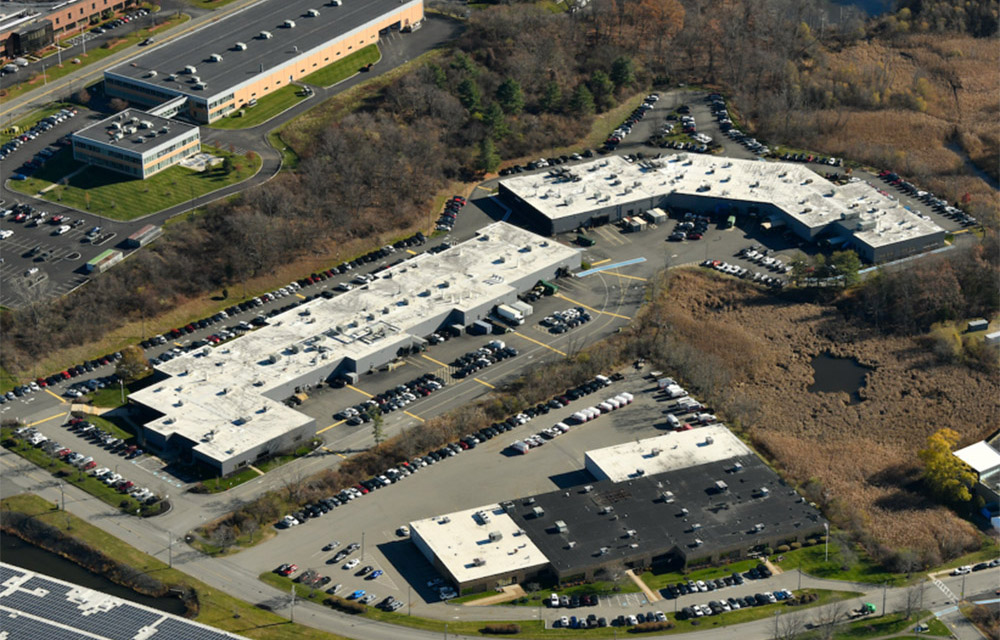
Northwest Bank finances Luzern Associates’ $47.75m acquisition
Danvers, MA Northwest Bank provided $34.5 million in financing to support Luzern Associates LLC’s $47.75 million acquisition of the Cherry Hill industrial portfolio, a three-building campus totaling 200,000 s/f.



 (1).gif)



Columns and Thought Leadership

Massachusetts real estate transfers over $1 million face new tax rules as of November 1st - by Daniel Meyer
Attention to owners of real estate in the Commonwealth (and the title companies and other professionals who advise them), the Massachusetts Department of Revenue (the “DOR”) recently adopted a new “millionaire’s tax” via 830 CMR 62B.2.4

Are appraisers on the same page as the assessor? - by Richard Seman
The purpose of this article is to address problematic or confusing issues which may help assessors and appraisers to better understand how to value real estate for tax assessment purposes.

The focus on price per s/f compared to the comparable sales used in the appraisal report - by Dennis Chanski
Over the past several weeks, I have completed appraisal assignments for private clients. Interestingly, after submitting these appraisals, I received several phone calls – not to question the value, content, or any incorrect information, but rather to discuss the price per s/f compared to the comparable sales used in the report.

Reverse exchanges and the challenges of a competitive real estate market - by Michele Fitzpatrick
Our current, highly competitive real estate market poses specific challenges for investors who are considering taking advantage of a tax-deferred 1031 exchange. In this market, investors will have no problem selling their current property if priced properly, but they may find it difficult to find a suitable replacement property
