


 (1).gif)
News:
Finance
Posted: February 16, 2016
MassHousing will be providing $3.5 million for Mass Mill III - 3rd phase of redevelopment of the Mass. Mills complex
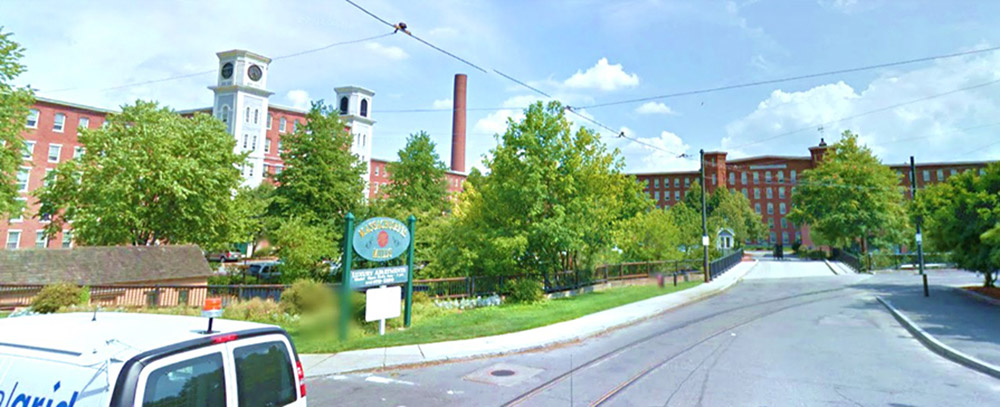 Mass Mills III - Lowell, MA
Lowell, MA MassHousing will be providing $3.5 million in financing for Mass Mills III, which will convert a long vacant mill building into 70 new apartments for low- and moderate-income families.
Mass Mills III is being developed by R-M Developer LLC, a partnership between the Mullins Company, represented by Joseph Mullins, and Rees-Larkin Development, represented by Jon Rudzinski.
Mass Mills III will be the third phase of redevelopment of the former Massachusetts Mills complex in downtown. Mass Mills I and II were previously developed by the Mullins Company and feature 281 units of mixed-income housing. The first two phases received $28 million in MassHousing financing.
“Lowell has done a tremendous job in working to convert vacant or underused mill properties into new, attractive affordable housing and Mass Mills III is the latest example,’’ said MassHousing’s Timothy Sullivan. “We are pleased to be partnering with R-M Developer to help transform downtown Lowell and create quality housing for working families.’’
Located on the south side of Bridge St. and the west side of the Merrimack River, the new housing will be constructed in the historic five-story Picker Building which was constructed in the early 20th century. The building is currently vacant and in poor condition. About one third of the building will be demolished to create a courtyard and allow for public safety access.
MassHousing is providing $3.5 million in permanent financing. Other funding sources for the $27.8 million project are federal Low-Income Housing Tax Credits, federal and state Historic Tax Credits, the state Department of Housing and Community Development and the city of Lowell.
The contractor will be Dellbrook Construction and the architect is Russell Scott Steedle and Capone Architects, Inc. The management agent will be Corcoran Management Company.
“This is one of the last mill buildings to be redeveloped in downtown Lowell and has been a priority for the city for a long time,’’ said Rudzinski. “Previous attempts to redevelop this building were unsuccessful but we are pleased to be moving forward on this project which will create more affordable housing as part of the ongoing revitalization of the city.’’
MassHousing (The Massachusetts Housing Finance Agency) is an independent, quasi-public agency created in 1966 and charged with providing financing for affordable housing in Massachusetts. The Agency raises capital by selling bonds and lends the proceeds to low- and moderate-income homebuyers and homeowners, and to developers who build or preserve affordable and/or mixed-income rental housing. MassHousing does not use taxpayer dollars to sustain its operations, although it administers some publicly funded programs on behalf of the Commonwealth. Since its inception, MassHousing has provided more than $18.5 billion for affordable housing.
Tags:
Finance
MORE FROM Finance
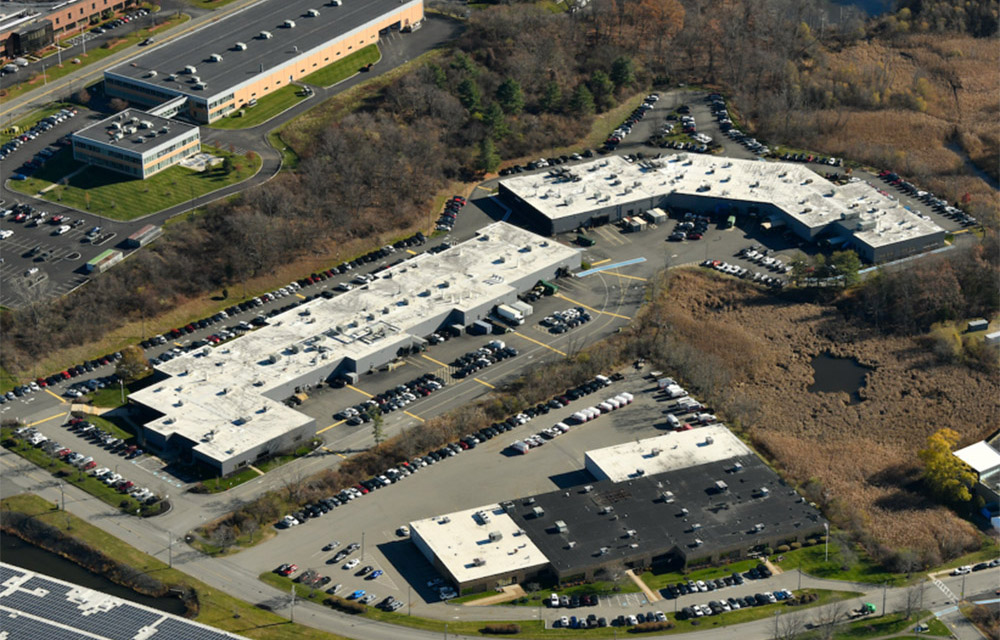
Northwest Bank finances Luzern Associates’ $47.75m acquisition
Danvers, MA Northwest Bank provided $34.5 million in financing to support Luzern Associates LLC’s $47.75 million acquisition of the Cherry Hill industrial portfolio, a three-building campus totaling 200,000 s/f.


 (1).gif)


Quick Hits

Columns and Thought Leadership

Massachusetts real estate transfers over $1 million face new tax rules as of November 1st - by Daniel Meyer
Attention to owners of real estate in the Commonwealth (and the title companies and other professionals who advise them), the Massachusetts Department of Revenue (the “DOR”) recently adopted a new “millionaire’s tax” via 830 CMR 62B.2.4

The focus on price per s/f compared to the comparable sales used in the appraisal report - by Dennis Chanski
Over the past several weeks, I have completed appraisal assignments for private clients. Interestingly, after submitting these appraisals, I received several phone calls – not to question the value, content, or any incorrect information, but rather to discuss the price per s/f compared to the comparable sales used in the report.

Are appraisers on the same page as the assessor? - by Richard Seman
The purpose of this article is to address problematic or confusing issues which may help assessors and appraisers to better understand how to value real estate for tax assessment purposes.

Reverse exchanges and the challenges of a competitive real estate market - by Michele Fitzpatrick
Our current, highly competitive real estate market poses specific challenges for investors who are considering taking advantage of a tax-deferred 1031 exchange. In this market, investors will have no problem selling their current property if priced properly, but they may find it difficult to find a suitable replacement property
