


 (1).png)
News:
Owners Developers & Managers
Posted: September 8, 2011
McKenzie, Lashar and Byrne of Richards Barry Joyce & Partners represent KBS Capital Advisors in 110,194 s/f lease extension
KBS Capital Advisors, an affiliate of KBS Realty Advisors of Newport Beach, Calif., has signed a long-term lease extension with Illinois Tool Works, Inc. for 110,194 s/f at the KBS Real Estate Investment (KBS REIT I)-owned 825 University Ave. property. The 166,574 s/f, two-story office/R&D complex is 100% leased to Illinois Tool Works and LTX Corp.
Mike Frisoli and JR McDonald from Cushman & Wakefield's Boston office negotiated the lease on behalf of Illinois Tool Works and Brian McKenzie, John Lashar and Rob Byrne from Richards Barry Joyce & Partners in Boston represented KBS.
Illinois Tool Works, a Fortune 200 global diversified industrial manufacturer headquartered in Glenview, Ill., has been an 825 University Ave. tenant since April 2005.
825 University Ave. is situated 20 miles southeast of Boston along Rte. 128, convenient to the University Park MBTA train station that services Boston and surrounding suburbs. The station also provides direct Amtrak Acela service to Hartford, New Haven, New York, Philadelphia and Washington, D.C. Developed in 1980 on an 18.8-acre parcel, 825 University Avenue is a fully renovated modern corporate research campus, which was acquired by KBS in 2006.
About KBS
KBS Capital Advisors is an affiliate of KBS Realty Advisors, which is a private equity real estate company and SEC-registered investment advisor founded by Peter Bren and Charles Schreiber, Jr. Since 1992, KBS Realty Advisors and its affiliated companies have completed transactional activity of approximately $20 billion via 14 separate accounts, six commingled funds, five sovereign wealth funds and five non-traded REITs. For information, visit www.kbsrealty.com.
This release may contain forward-looking statements within the meaning of Section 27A of the Securities
Act of 1933 and Section 21E of the Securities Exchange Act of 1934, including discussions regarding the REIT's use of proceeds and certain other factors that may affect future earnings or financial results. Such statements involve risks and uncertainties which could cause actual results to vary materially from those expressed in or indicated by the forward-looking statements. Factors that may cause actual results to differ materially include changes in general economic conditions, changes in real estate conditions, construction delays, changes in interest rates, lease-up risks, lack of financing availability and lack of capital proceeds.
MORE FROM Owners Developers & Managers
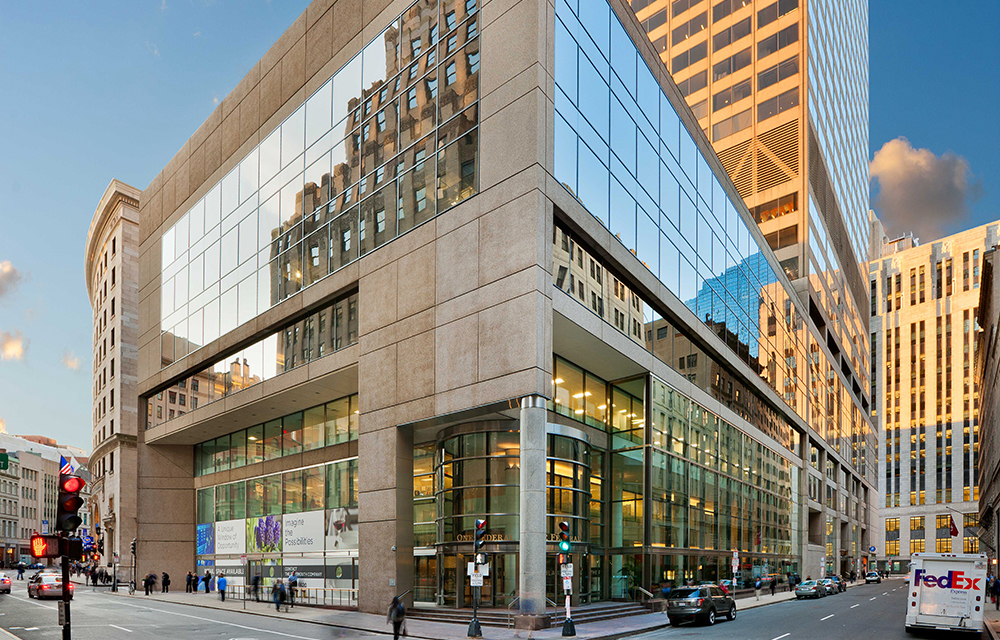
Rubin Rudman to establish headquarters at Tishman Speyer’s One Federal St.
Boston, MA Tishman Speyer has secured a new headquarters lease with Rubin Rudman at One Federal St., its 38-story, 1.1 million s/f tower in the Financial District. Under a 15-year lease, Rubin Rudman’s new headquarters will span 57,844 s/f across One Federal’s entire 23rd and 24th floors and a portion of the 25th floor.





Quick Hits


Columns and Thought Leadership

Retail infill strategy to activate Pawtucket’s Conant Thread District - by Gaetan Kashala
Until recently, the Conant Thread District consisted of approximately 150 acres of underutilized industrial land spanning Pawtucket and Central Falls. Today, the area is one of the most significant

Revitalized Town Centers: Retail??? - by Carol Todreas
It is now widely accepted that customers want to shop in person at physical stores. Brands know that they do better business in a physical store than just on line so they want to open stores. Demand for retail space by digital merchants, local entrepreneurs, and newly developed national chains

The legislature has spoken: New Hampshire doubles down on housing in commercial zones - by John Sokul
Last year, the New Hampshire Legislature enacted HB 631, a landmark housing measure requiring municipalities to permit multifamily housing in commercially zoned districts. The law generated

IREM president’s message: Our new reality - Staying ahead of supply chain delays - by Yoany Vargas
Supply chain delays are slowing construction, ratcheting up operating costs, and extending turnover timelines across Greater Boston, directly reducing revenue and increasing the workload for multifamily and